After losing his father, a young orphan goes to live with his uncle, hoping to find care and protection. Instead, his uncle becomes jealous of his cleverness and repeatedly plots to get rid of him. From losing his beloved calf to surviving dangerous journeys, the boy faces one challenge after another. Each time, he finds a way to survive, while his uncle’s greed and cruelty lead to devastating consequences.
The Orphan and the Calf
A young boy lost his father and was taken into the home of his uncle. The boy owned a small calf, while his uncle had two oxen. Each day, the boy accompanied his uncle to the fields, where they took the animals out to graze.
The boy allowed his calf to roam freely in the meadow. His uncle, however, kept the oxen tied up.
After a month, the difference between the animals was striking. The calf had grown fat and healthy, while the uncle’s oxen had become thin.
The uncle demanded to know why his animals were losing weight.
The boy replied that he did not know the reason. He explained that he took all the animals to the fields together.
Suspicious, the uncle decided to watch him the following day. From a distance, he discovered the truth: the calf was free to graze, but the oxen remained tied.
The uncle returned home without confronting the boy immediately. Instead, he began planning how to use the discovery against him.
The Uncle’s Cruel Trick
The following day, the uncle invited the orphan to accompany him on a hunting trip.
They travelled towards a wooded area. Before they entered the forest, the uncle handed the boy a gun and instructed him to wait at a particular spot. He said that he would drive the game through the undergrowth and call out when the boy should shoot.
The uncle then returned home, covered the calf with dust, and drove it towards the place where the boy was waiting.
When he reached the area, he shouted for the boy to fire.
The orphan took aim and shot. Only after approaching the fallen animal did he realise that he had killed his own calf.
The boy had been tricked into destroying the one possession that was truly his.
Nevertheless, he did not abandon the carcass or allow his grief to stop him from thinking. He returned to the village and invited its inhabitants to take the meat. In exchange, he asked only to keep the hide.
Explore more stories from our West African Folk-Tales collection.
Once the hide was given to him, he left it in a corner without treating it. As it began to decay and smell, he eventually carried it to the marketplace to sell.
A Hide Worth a Fortune
The orphan took the unpleasant hide to the market, hoping to find a buyer. People showed little interest in it. One passerby even spat on it.
By evening, however, the boy managed to sell the hide for a pierced coin.
As he continued his journey, he encountered two men carrying a woollen garment. They sold the garment for a hundred francs.
The orphan quietly slipped his pierced coin into their money before raising an alarm. He accused the men of stealing his money and demanded that they return both the hundred francs and the coin.
The men denied taking anything from him. People gathered to settle the dispute.
They agreed to count the money. If the men possessed only the hundred francs, they would be innocent. If the pierced coin was also among their money, they would have to answer for the accusation.
When the money was counted, the pierced coin was found with the hundred francs.
The orphan received the money, turning his apparently worthless hide into a considerable fortune.
His success reached his uncle’s ears, and the older man wanted to repeat the trick.
The Uncle Loses His Oxen
The uncle summoned the orphan and asked what he should do with his own animals.
The boy advised him to slaughter his two oxen, distribute the meat among the villagers, and keep the hides. He explained that he had sold his calf’s hide for a hundred francs and a pierced coin.
Eager to make the same profit, the uncle followed the advice. He invited the villagers to share the meat and kept the hides for himself.
He left the hides in a corner without treating them, just as the boy had done. When they began to smell, he carried them to the market.
But his luck was different. Nobody wanted to buy the hides. As night approached, he abandoned them and returned home in tears.
He had sacrificed both oxen and gained nothing from their skins.
His humiliation turned into anger against the orphan. Rather than recognise that he had acted foolishly, he decided that the boy had to be punished.
The Orphan Is Left in a Tree
One day, the uncle called the orphan to accompany him to gather wood.
They climbed an ash tree to cut branches. While they were up in the tree, the uncle tied the boy to a branch with a rope and left him hanging there.
The orphan was trapped, with no easy way to free himself.
Later, an elderly man passed by riding a mule. With him was his son’s wife. The old man heard the boy singing a strange song about having once been old and now becoming young.
Curious, the elderly man asked the boy to repeat the song. After hearing it again, he wondered whether the same transformation might happen to him.
The orphan encouraged him to climb the tree. He explained that the old man should first untie him and then secure himself to the branch.
The elderly man followed the instructions. The boy was freed, but the old man remained tied to the tree and died.
The orphan descended, took the mule and the woman who had accompanied the old man, and returned to his uncle’s home.
He told his uncle that the man had freed him from the tree and explained how the incident had happened.
The uncle, instead of recognising the danger of his own behaviour, interpreted the story as an opportunity to try another scheme.
Another Son Is Lost
The uncle had two sons. Believing that the orphan’s story revealed a way to acquire valuable possessions, he decided to imitate what had happened.
He took one of his sons and tied him high in the ash tree, expecting the same outcome. He then waited for his son to return.
When the boy did not come back, the uncle went to the tree and discovered that his son had died.
His attempt to copy the orphan’s supposed good fortune had brought tragedy into his own household.
Yet the uncle’s anger remained. He blamed the orphan and decided to make another attempt to destroy him.
The Journey to the Sea
The following day, the uncle told his wife to prepare provisions for a journey. He planned to travel with her and the orphan.
They travelled for several days until they reached the sea. There, the uncle seized the boy and threw him into the water, believing that he had finally rid himself of him.
The uncle returned home convinced that the orphan could not survive.
But when evening came, the boy appeared again. He told his uncle that he had been thrown into the sea and remarked that, had he been thrown farther out, he might have obtained something even more valuable.
He also brought a flock of black sheep.
The uncle was astonished. He had expected the sea to kill the boy, yet the orphan had returned with something that appeared valuable.
Still determined to imitate him, the uncle took his remaining son and threw him into the sea. This time, the boy did not return.
The uncle had now lost both his sons through his own cruel actions.
The Final Journey
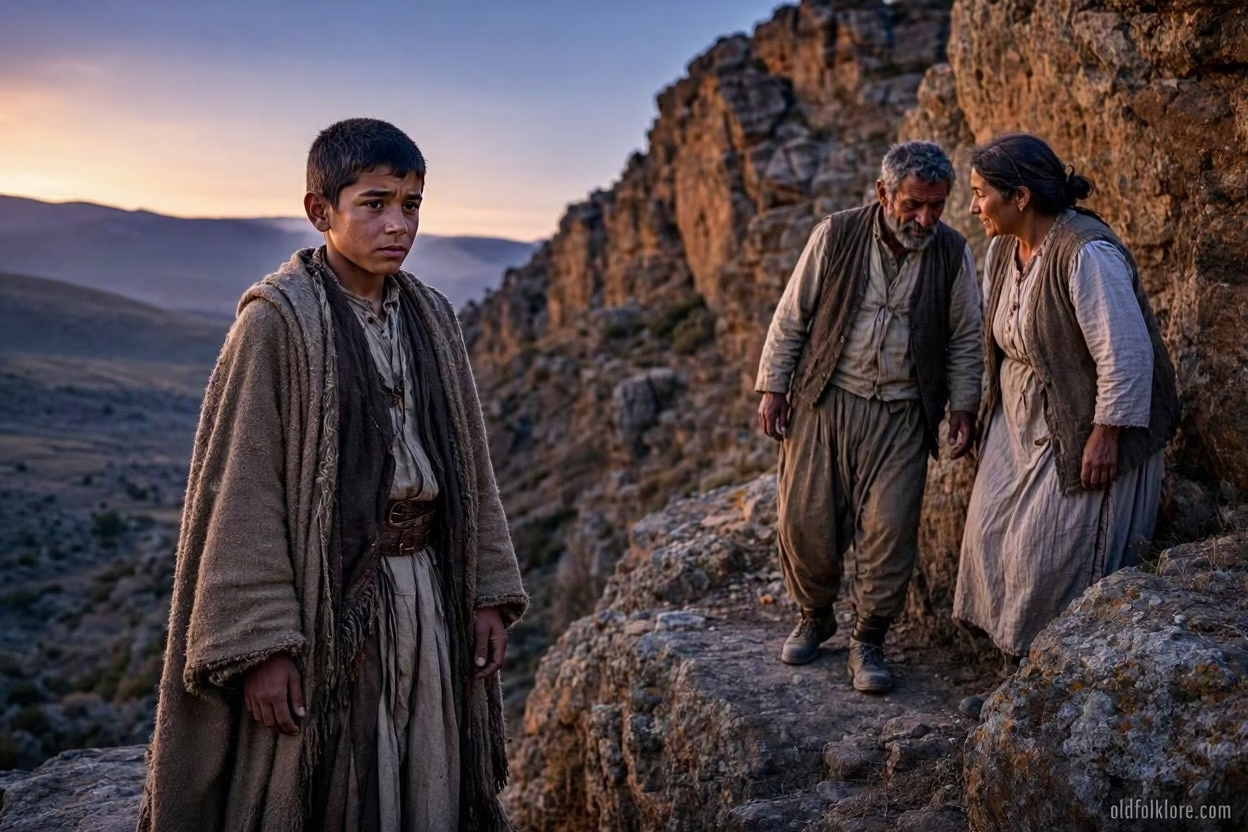
Despite these losses, the uncle did not stop plotting against the orphan. He arranged another journey, this time taking his wife and the boy with him.
After travelling for three days, they reached the edge of a deep precipice. The uncle decided that they would spend the night there.
The orphan quietly placed a stake near the edge and stretched a rope forward, covering it with earth so that it could not easily be seen.
When night came, the uncle told the boy to lie down near the precipice. He and his wife settled beside him.
The uncle complained that they were crowded together and ordered the orphan to move farther over.
The boy moved towards the edge, holding onto the rope he had prepared. As he continued moving, the uncle and his wife followed, trying to make room for themselves.
Eventually, both adults lost their footing and fell into the ravine.
The orphan returned to their home and inherited their possessions.
The tale ends with the orphan surviving the uncle’s repeated attempts to harm him, while the uncle’s own cruelty brings about the destruction of his family.
Explore our complete Algerian Folktales archive.
Moral Lesson
This folktale explores the consequences of cruelty, jealousy, and greed. The uncle repeatedly mistreats the orphan, attempts to take advantage of him, and refuses to learn from the consequences of his actions. The story also portrays the orphan’s resourcefulness, showing how he responds to danger through quick thinking. However, the ending is harsh and reflects the severe moral world of this particular traditional tale. Readers can consider not only the orphan’s cleverness but also the destructive cycle of revenge and the terrible cost of allowing resentment to govern one’s choices.
Knowledge Check
1. Why did the orphan live with his uncle?
The boy’s father died, so his uncle took him into his household.
2. Why did the uncle become suspicious of the orphan?
The orphan’s calf grew fat while the uncle’s oxen became thin. When the uncle watched the animals, he discovered that the calf was allowed to graze freely while his own oxen were tied up.
3. How did the orphan lose his calf?
The uncle tricked him into shooting the calf during what the boy believed was a hunting trip.
4. How did the orphan turn the calf’s hide into money?
He sold the hide for a pierced coin and then used a trick involving the coin and two men carrying a woollen garment to obtain a hundred francs as well.
5. What happened when the uncle tried to imitate the orphan’s success?
The uncle slaughtered his oxen and tried to sell their hides, but nobody wanted them. His attempt to copy the orphan brought him a loss instead of a profit.
6. How did the story end?
After several attempts to harm the orphan, the uncle and his wife fell into a ravine during their final journey. The orphan returned home and inherited their possessions.
Source
Adapted from “L’Orphelin” (“The Orphan”), recorded by Joseph Rivière in Recueil de contes populaires de la Kabylie du Djurdjura (Paris, 1882), pages 61 to 64.
Explore More Algerian Folktales
- The Two Sisters and the Trial
- The Man in the Cave of Spirits
- Loundja, Daughter of Tseriel: A Strange Kabyle Folktale
- The Woman who Ate a serpent’s egg