Hoichi the Earless is one of the best known ghost stories in Lafcadio Hearn’s Kwaidan: Stories and Studies of Strange Things, published in 1904. Set near the Japanese coast associated with the historic Battle of Dan no Ura, the tale follows a blind musician whose extraordinary performances attract visitors from the world of the dead. When a Buddhist priest discovers the danger surrounding him, he attempts to protect the musician with sacred writing. However, one small omission leaves Hoichi exposed to a terrifying encounter.
The Battle That Haunted the Shore
According to the story, more than seven hundred years before Hoichi’s time, a great battle took place at Dan no Ura, in the Straits of Shimonoseki. The conflict was fought between the Taira clan, known in Hearn’s account as the Heike, and the Minamoto clan, called the Genji.
The Heike suffered a devastating defeat. Many warriors died, along with women and children, and the young Emperor Antoku was lost in the disaster.
Hearn’s tale describes the coast as a place where the spirits of the defeated continued to linger. Fishermen were said to see mysterious lights over the sea at night and hear sounds resembling the cries of warriors engaged in battle.
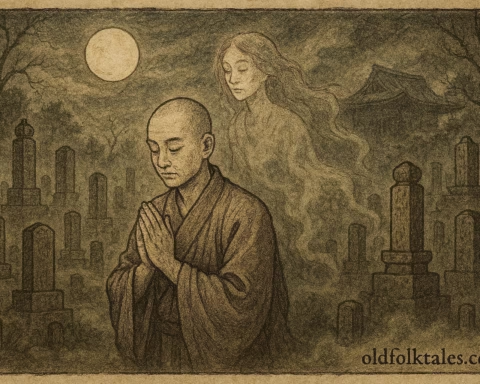
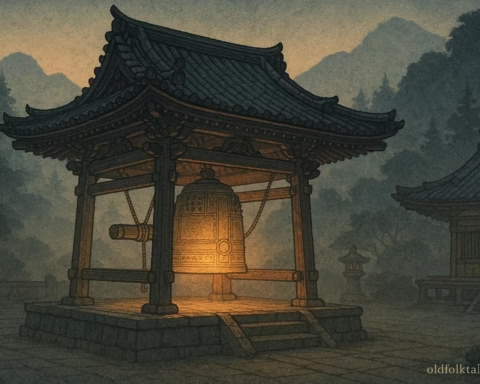
Stories about these restless spirits formed part of the atmosphere surrounding the Buddhist temple of Amidaji. The temple had been established to offer prayers for the dead, and monuments commemorated the drowned emperor and important Heike figures.
Although the religious services were intended to bring peace to the dead, the story suggests that the spirits had not entirely disappeared from the world of the living.
The Blind Musician of Amidaji
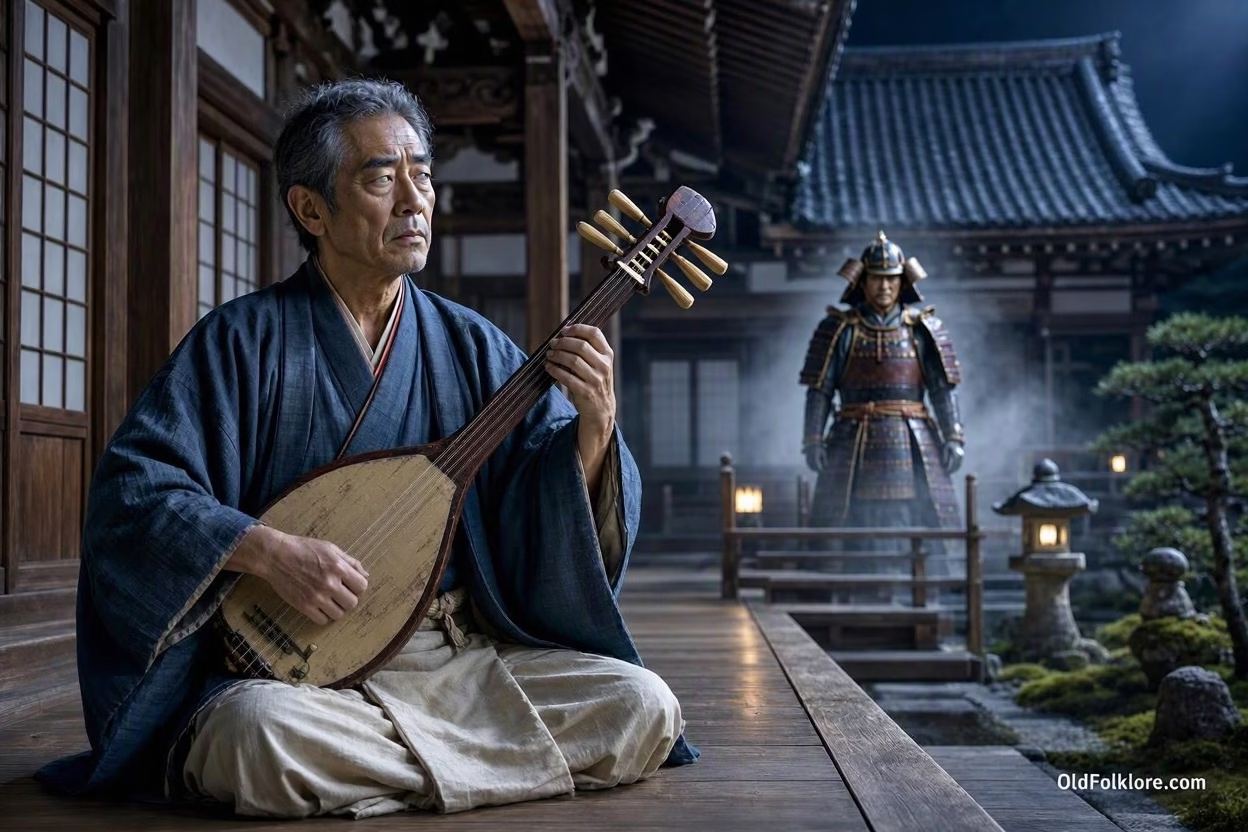
Several centuries after the battle, a blind man named Hoichi lived near Akamagaseki. He was skilled at playing the biwa, a traditional Japanese stringed instrument used to accompany musical recitations.
From childhood, Hoichi had trained in music and storytelling. He became especially celebrated for reciting the history of the Heike and Genji clans. His performances were so moving that, according to the legend, even supernatural listeners could not resist their emotional power.
At the beginning of his career, Hoichi was poor. Fortunately, the chief priest of Amidaji appreciated poetry and music and invited him to perform at the temple.
Impressed by the young musician’s talent, the priest eventually offered him a place to live. Hoichi accepted, receiving food and shelter in return for entertaining the priest when his duties allowed.
Explore more stories from our Lafcadio Hearn’s Kwaidan collection
For a time, the arrangement brought Hoichi a measure of security. He lived peacefully at the temple, unaware that his talent would soon attract an audience unlike any he had encountered before.
The Mysterious Warrior
One hot summer night, the chief priest left the temple to conduct a Buddhist service at the home of a deceased parishioner. His acolyte accompanied him, leaving Hoichi alone.
The blind musician sat on the veranda outside his room, practising his biwa while waiting for the priest to return.
Suddenly, he heard the sound of approaching footsteps.
A powerful voice called to him, ordering him to rise and prepare himself. The speaker sounded like a samurai of high rank and addressed Hoichi with authority.
Hoichi was frightened, but he obeyed. The stranger explained that his master, a person of great importance, wished to hear the musician perform. He instructed Hoichi to take his instrument and follow him.
The visitor led him away from the temple. Although Hoichi could not see the road, he heard the warrior’s footsteps and followed closely.
They eventually reached a place where Hoichi heard the voices of many people. He could distinguish the rustle of silk, the movement of clothing and the formal speech of attendants. Everything suggested that he had arrived at the residence of a noble household.
He was led into a room and asked to perform the story of the Heike’s defeat at Dan no Ura.
Hoichi began to play and recite.
As he described the battle, the deaths of the warriors and the tragedy of the drowned imperial family, his unseen audience listened in complete silence. When he reached the most sorrowful passages, the listeners responded with cries of grief and admiration.
The performance continued for a long time. At last, Hoichi was told to return to the temple.
Before he left, the warrior instructed him to come again on the following night. He was also warned not to tell anyone about the visit, because the household wished to keep its affairs secret.
Hoichi returned to Amidaji exhausted but deeply impressed by the honour he believed he had received.
Nightly Performances for the Dead
The mysterious visits continued.
Each night, the warrior arrived to escort Hoichi away, and the blind musician performed for the same unseen audience. His hosts appeared increasingly eager to hear his recitations, particularly the tragic account of the Heike defeat.
Hoichi kept his promise of secrecy. He said nothing about his nightly journeys, even though they left him tired during the day.
The chief priest gradually became concerned. Hoichi was disappearing after dark, and nobody at the temple could explain where he went.
One night, the temple servants heard him leave and attempted to follow. The weather was dark and rainy, making the road difficult to navigate. By the time they reached the roadway, Hoichi had vanished.
They searched but could not find him.
When Hoichi eventually returned, the priest questioned him about his movements. The musician gave an evasive answer, claiming that he had attended to private business.
The priest suspected that Hoichi had been deceived or placed under the influence of dangerous spirits. He did not press the matter immediately, but he instructed the servants to watch the musician more carefully.
On the following night, Hoichi disappeared again.
This time, the priest became determined to discover what was happening and protect the young man before it was too late.
The Priest’s Plan of Protection
The chief priest arranged for the servants to watch Hoichi and follow him if he left the temple after dark. Yet the watchers were unable to locate him in time.
The priest concluded that ordinary precautions would not be enough. Believing that Hoichi had become entangled with supernatural beings, he decided to use a Buddhist prayer text as protection.
Before the next nightfall, the priest and his acolyte prepared Hoichi by writing the sacred text of the Hannya Shingyo sutra across his body.
They covered his chest, back, head, face, neck, arms, hands, legs and feet. The purpose was to make him invisible to the spirits that had been summoning him.
The priest then gave Hoichi strict instructions.
He was to sit quietly on the veranda after the priest left. If the warrior called for him, he must not answer. He must neither move nor make a sound, even if the visitor appeared close to him.
The priest warned that disobedience could expose him to terrible danger. If Hoichi remained perfectly still and silent, the protection would keep him safe.
Hoichi agreed to follow the instructions.
As darkness settled over the temple, the priest and his acolyte departed. Hoichi sat alone on the veranda with his biwa beside him, waiting for the night to pass.
The Forgotten Ears
Before long, Hoichi heard the familiar footsteps approaching.
The warrior called his name, but the blind musician remained silent. The visitor searched for him and complained that he could not find the person he had come to collect.
Still, Hoichi did not answer.
The warrior eventually approached the veranda. He could not see Hoichi’s body, which was protected by the sacred writing, but he could hear the musician’s breathing and feel the presence of someone sitting there.
The visitor muttered that he could not return to his master empty handed. If the musician could not be found, he would take the only parts of him he could locate as proof that he had carried out his duty.
Hoichi felt the warrior seize his ears.
The pain was sudden and severe. The spirit tore both ears from his head, then departed, believing that he had obtained the only visible evidence of the missing musician.
Hoichi remained seated, obeying the priest’s instructions not to cry out or move. Blood flowed from his injuries, but he was too frightened to break his silence.
The footsteps gradually faded into the darkness.
At last, the veranda became quiet again.
Hoichi had survived the encounter, but the priest’s protection had failed at one crucial point.
The Priest Discovers His Mistake
Before sunrise, the chief priest returned to the temple and hurried to the veranda to check on Hoichi.
He slipped on something wet and immediately realised that something was wrong. When he brought his lantern closer, he discovered blood on the veranda and saw Hoichi sitting in the same position in which he had been left.
The musician’s ears were gone.
Horrified, the priest questioned him. Only then did Hoichi explain the terrible encounter and the warrior’s visit.
The priest quickly understood what had happened. He had ordered the sacred sutra to be written over Hoichi’s entire body, but he had failed to make certain that the writing covered his ears.
He had trusted the acolyte to complete that part of the task, and neither of them had checked the work carefully enough.
The missing writing had left Hoichi’s ears exposed to the spirits.
The priest regretted his oversight and arranged for a doctor to treat the injured musician. Although Hoichi had suffered a serious wound, he eventually recovered.
The danger, the priest believed, had now passed. The spirits would no longer be able to find him in the same way.
The Fame of Hoichi the Earless
News of Hoichi’s strange experience spread throughout the region.
People came to hear the blind musician perform, fascinated by the story of his encounters with the dead. His reputation grew, and he received generous gifts from those who admired his talent.
In time, he became wealthy and widely known.
Yet the name by which people remembered him came from his terrible experience. He became known as Mimi nashi Hoichi, meaning Hoichi the Earless.
Hearn presents the tale as a haunting account of music, devotion, supernatural danger and human error. The musician’s skill brought him extraordinary attention, but it also drew him into a world he could not understand.
The priest’s attempt to protect him was almost successful. One forgotten detail, however, left Hoichi vulnerable to the final encounter.
Thus ends Hoichi the Earless, Lafcadio Hearn’s literary retelling of a Japanese ghost story.
Explore our complete Historic Folklore & Fairy-Tale Collections archive.
Moral Lesson
Carelessness can undermine even the best intentions, while secrecy and blind trust can leave people vulnerable to danger. The tale also reminds readers that talent and recognition may bring unexpected challenges, and that careful attention to important details can make a difference when protecting someone from harm.
Knowledge Check
1. Who was Hoichi, and what made him famous?
Hoichi was a blind musician who became famous for playing the biwa and reciting the history of the Heike and Genji clans.
2. Where did Hoichi live at the beginning of the story?
He lived at the Buddhist temple of Amidaji, where the chief priest provided him with food and shelter.
3. Who summoned Hoichi to perform at night?
A mysterious warrior summoned him to perform for what Hoichi believed was a noble household. The story later reveals that the audience consisted of spirits associated with the defeated Heike clan.
4. Why did the chief priest write a Buddhist sutra over Hoichi’s body?
He believed the sacred writing would protect Hoichi from the supernatural beings that had been summoning him.
5. Why did the protection fail to cover Hoichi completely?
The priest had entrusted the acolyte with writing the sutra over Hoichi’s ears, but he failed to check that the task had been completed.
6. How did Hoichi become known as Hoichi the Earless?
After the spirit tore off both his ears, Hoichi recovered from his injuries and became famous by the name Mimi nashi Hoichi, meaning Hoichi the Earless.
Source
Adapted from Lafcadio Hearn, Kwaidan: Stories and Studies of Strange Things, first published in 1904. The source story is titled “The Story of Mimi-Nashi-Hōïchi.”