In the ancient age of emperors and monks, when Kyoto stood as the shining heart of Japan, a shadow began to move across the northern mountains. Travelers vanished without a trace. Farmers spoke of strange lights among the pines and screams carried by the wind. People whispered of a horned being that drank human blood and commanded an army of monstrous spirits. His name was Shuten dōji, the Drunken Ogre of Mount Oe.
They said he had once been human, a youth of great strength but wicked heart. When his arrogance led him to mock the gods and torment the innocent, the heavens cursed him. His body grew vast and red, his eyes glowed with hunger, and horns sprouted from his brow. Cast out of human company, he fled into the high mountains, where the mist never lifted and the cries of lost spirits echoed without end.
There he gathered others who had fallen into evil. They were spirits of envy, wrath, and greed, drawn to his power and cruelty. Together they built a fortress of black stone that stood like a wound in the earth. By night they descended from Mount Oe to plunder Kyoto, stealing gold, wine, and young maidens whom they held captive in their mountain hall. The city trembled each night, for no one dared to face the Oni horde.
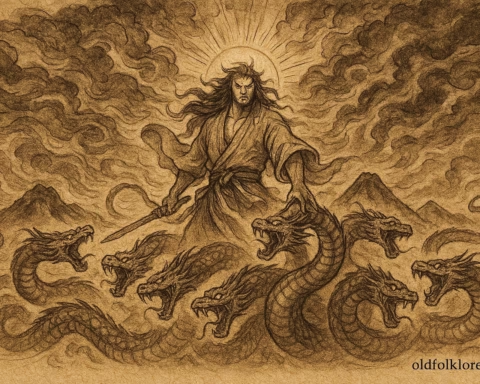
The emperor, grieved by the endless terror, called for the bravest men in the land. Among those who answered was the noble warrior Minamoto no Raiko and his loyal retainers. Guided by a heavenly dream, Raiko learned that only divine protection could defeat the demon. A spirit disguised as a monk appeared before him and offered a sacred plan. The gods would bless the warriors with enchanted sake that would render demons helpless once it touched their tongues.
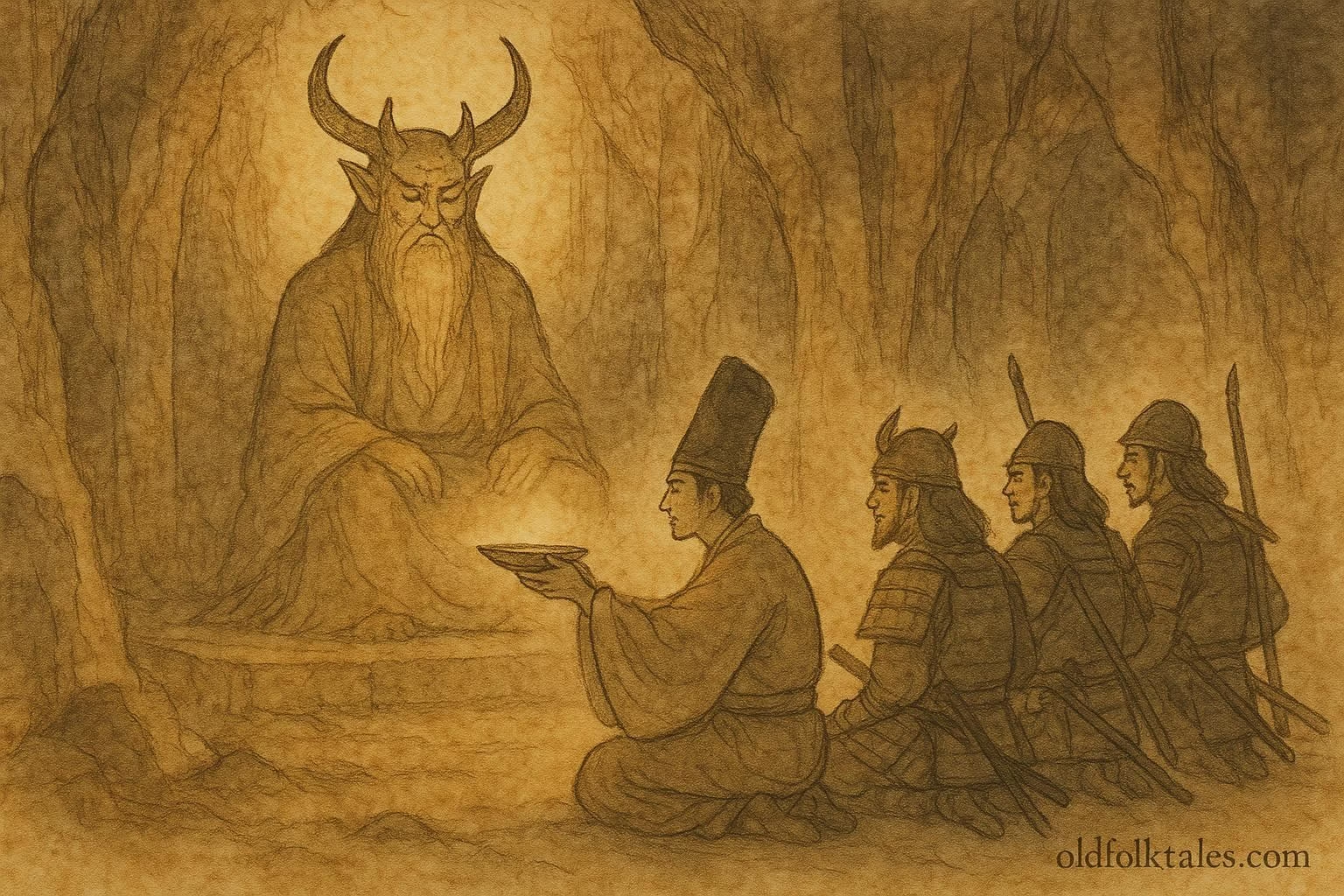
Raiko and his men disguised themselves as wandering priests, carrying the sacred drink in flasks hidden beneath their robes. They climbed Mount Oe, chanting prayers as they ascended through forests twisted by dark magic. When they reached the fortress gate, monstrous guards blocked their way. The warriors bowed low and said they had come to pay tribute to the mighty Shuten dōji with gifts of wine and prayer.
The Oni, drunk with pride, allowed them entry. Inside, the great hall blazed with torchlight. Shuten dōji sat on a throne of skulls, his body immense, his face both beautiful and terrible. Around him danced lesser demons, laughing and spilling blood red wine across the floor. The air reeked of smoke and iron.
Raiko approached the demon king and bowed deeply. “We bring you the finest sake from the valleys below,” he said. “A gift to honor your strength.”
Shuten dōji roared with laughter and demanded the drink. He lifted the flask and poured it down his throat. The enchanted wine burned like fire through his veins. His eyelids grew heavy, his voice slurred, and his monstrous head began to droop. Soon the great demon fell into a deep sleep, surrounded by his drunken followers.
Raiko gave the signal. The warriors threw off their robes and drew their swords, which had been blessed in temple fire. They fell upon the sleeping Oni and his minions, cutting down the smaller demons before they could awaken. Then Raiko approached the giant form of Shuten dōji and raised his blade high. With one stroke he severed the demon’s head from its shoulders.
But even in death, Shuten dōji’s fury was not ended. His severed head leapt from the ground and bit down upon Raiko’s helmet, its fangs clamping so tightly that sparks flew from the iron. The warrior prayed to the gods and struck again, driving his sword through the demon’s skull. At last the terrible head fell still, its eyes fading into darkness.
The warriors carried the head back to Kyoto, sealed in a heavy chest, and offered thanks at the shrines of the gods. Yet it is said that on stormy nights, the faint sound of growling can still be heard from the place where the chest was buried.
The tale of Shuten dōji has lived for centuries as more than a story of victory. It warns that evil cannot be destroyed by force alone. It changes, hides, and waits. True purification comes only through humility, vigilance, and moral strength. The Oni remain symbols of both punishment and redemption, reflecting the deep balance of justice within the human soul.
Author’s Note
The story of Shuten dōji is one of Japan’s most enduring myths, uniting Buddhist morality with warrior heroism. The Oni, while terrifying, represent the shadows within the human heart pride, desire, and cruelty. Raiko’s victory is not simply a triumph of might but of spiritual discipline and divine favor. This myth reminds us that conquering darkness begins from within.
Knowledge Check
1. Who was Shuten dōji before becoming an Oni?
He was once a proud human youth whose arrogance and cruelty caused the gods to curse him.
2. Why did the emperor of Kyoto call for Minamoto no Raiko?
Because the people were suffering under the terror of the Oni, and only the bravest warriors could face them.
3. How did Raiko and his men disguise themselves?
They dressed as wandering priests to enter the demon’s fortress without suspicion.
4. What special property did the sake possess?
It was enchanted by divine power to weaken and lull demons into sleep.
5. What happened to Shuten dōji’s head after he was slain?
The severed head bit Raiko’s helmet even after death, showing the lingering power of evil.
6. What deeper message does the story convey?
That evil cannot be destroyed by strength alone and must be overcome through moral courage and divine guidance.
Source:
Adapted from the Japanese folktale “Shuten dōji” in Japanese Demon Lore: Oni from Ancient Times to the Present, by Noriko T. Reider (2010), Logan, Utah: Utah State University Press.
Cultural Origin:
Japan