In the beginning of days, when the world was young and still learning its shape, Nyambi the Creator walked upon the earth alongside the people he had made. He was not distant then, not hidden behind clouds or veiled in mystery. He dwelt among humanity as a father dwells among his children, teaching them the ways they would need to survive and flourish in the world he had given them.
Nyambi showed the people how to plant seeds and tend crops, how to recognize which plants would nourish and which would poison. He taught them to track animals through the forest, to read the signs written in broken grass and disturbed soil, to hunt with skill and respect for the creatures who gave their lives. He demonstrated how to kindle fire from dry wood, how to weave baskets from reeds, how to craft tools from stone and bone. He walked among them freely, speaking in a voice like thunder when he was pleased and like gentle rain when he offered comfort.
Click to read all Myths & Legends – timeless stories of creation, fate, and the divine across every culture and continent
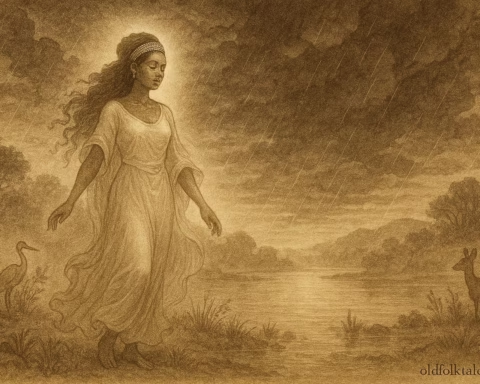
With Nyambi came his wife, Nasilele, radiant and wise, who taught the women their own sacred knowledge how to prepare food, how to heal with herbs, how to birth children safely, how to keep the home fire burning through long nights. Together, the divine couple made humanity’s life possible, transforming them from helpless creatures into people who could shape their own destiny.
The people loved Nyambi and honored him, for they knew that without his teachings they would perish. They brought him gifts of gratitude the first fruits of harvest, the finest fish from the river, beautifully woven cloth. They sang songs in his praise and told stories of his generosity around their evening fires.
But among all the people, there was one man whose heart held a different sentiment. His name was Kamunu, and he watched Nyambi with eyes that saw not a teacher but a rival. When Nyambi created life, Kamunu’s chest burned with envy. When the people praised the Creator, Kamunu’s pride festered like an untended wound.
“If Nyambi can create,” Kamunu muttered to himself, “then so can I. Am I not made in his image? Do I not have hands like his, a voice like his, a will like his?”
So Kamunu began to imitate everything Nyambi did, but his imitations were twisted, for he lacked the divine wisdom that guided the Creator’s actions. When Nyambi brought forth life, Kamunu tried to do the same but where Nyambi created with love and purpose, Kamunu’s attempts produced only suffering. He killed animals not for food but for the pride of matching Nyambi’s power over life and death. He destroyed what he could not create, thinking that destruction was creation’s equal.
When Nyambi shaped tools to help humanity, Kamunu made weapons to harm. When Nyambi spoke truth, Kamunu crafted elaborate lies, believing that if he could fool people as skillfully as Nyambi could enlighten them, he would prove himself equal to the Creator. When Nyambi walked humbly among the people despite his infinite power, Kamunu strutted and boasted, proclaiming loudly of his own achievements, demanding that others acknowledge his greatness.
“Look at what I can do!” Kamunu would shout. “Am I not as mighty as Nyambi? Do I not deserve the same honor?”
The people grew uncomfortable with Kamunu’s behavior, but they did not know how to stop him. He was one of their own, after all, and they hoped his madness would pass like a fever breaking in the night.
But Nyambi watched with growing sorrow. He saw in Kamunu the seed of something terrible the human capacity for pride that knew no limits, for envy that consumed gratitude, for imitation without understanding, for power wielded without wisdom. And Nyambi understood that if Kamunu represented what humanity could become, then his own presence among them might do more harm than good. For how could people learn to make their own choices, to develop their own wisdom, to grow into their full humanity, if the Creator remained among them to copy and compete with?
More troubling still, Nyambi saw that Kamunu’s behavior was beginning to spread like sickness through a village. Other people began to wonder: if Kamunu could challenge Nyambi, why couldn’t they? If humans could imitate the Creator, why should they remain grateful and humble? Why should they not seek to become gods themselves?
Nyambi called Nasilele to him, and together they spoke long into the night about what must be done. The decision broke Nyambi’s heart, for he loved humanity and had delighted in dwelling among them. But love sometimes requires distance, and wisdom sometimes demands withdrawal.
“We must leave them,” Nyambi said finally, his voice heavy with sorrow. “If we remain, their pride will consume them. They must learn to stand alone, to face the consequences of their choices, to grow through struggle rather than remain children forever dependent on our presence.”
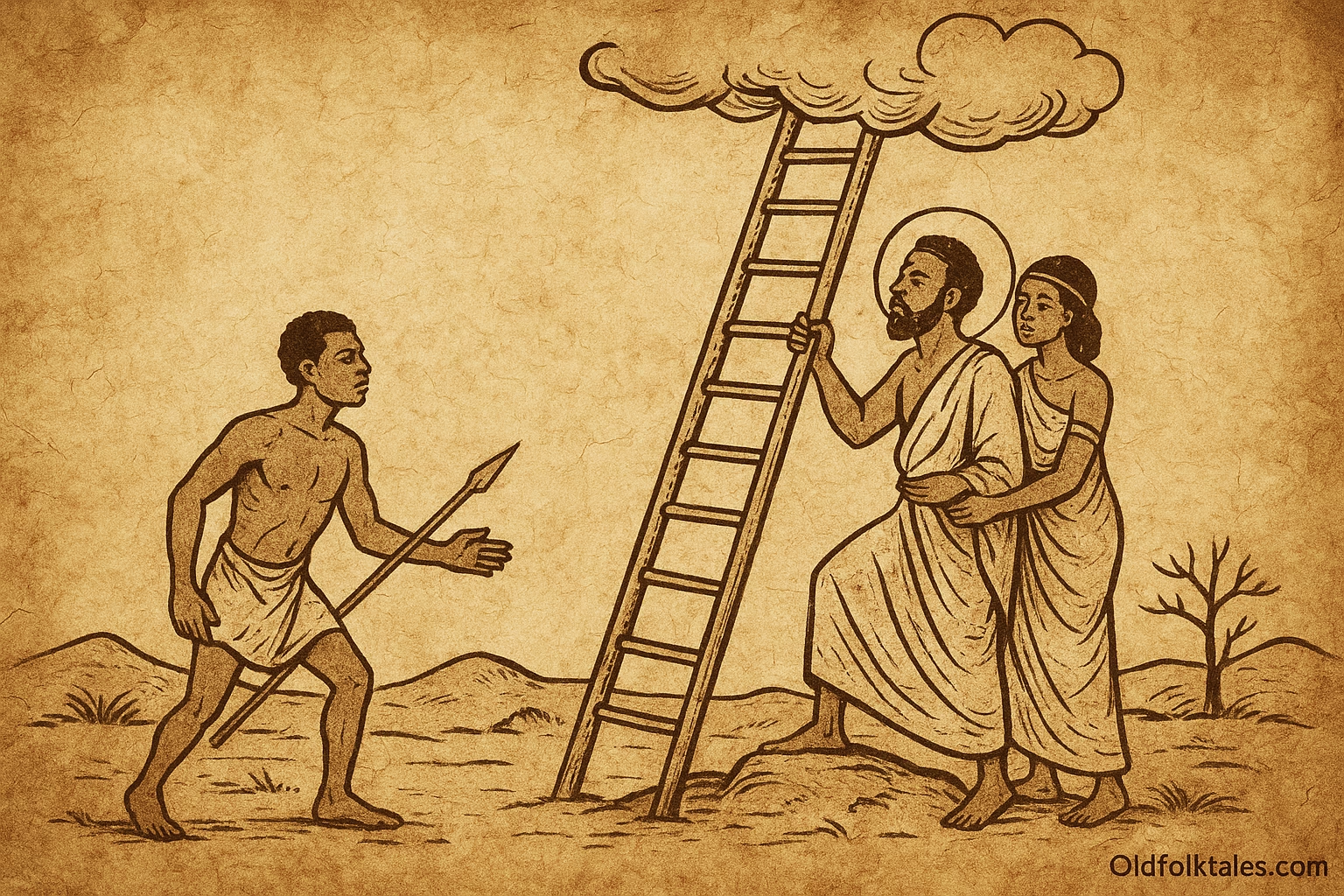
So Nyambi commanded the greatest craftsmen among the people to build something that had never existed before a ladder of immense height, stretching from earth toward the sky. The people worked with confusion in their hearts, not understanding why the Creator who had always walked among them would need such a thing. The ladder grew taller and taller, rung by rung, until it pierced the clouds and disappeared into realms beyond mortal sight.
When the ladder was complete, Nyambi gathered the people for a final farewell. Kamunu stood among them, still defiant, still convinced of his own equality with the divine.
“I have loved you,” Nyambi said, and his voice rolled across the land like distant thunder. “I have taught you all that you need to know to live well in this world. But you must now walk your own path. Kamunu has shown me that my presence here prevents you from becoming what you must become truly human, with all the freedom and responsibility that entails.”
Then Nyambi and Nasilele began to climb. Up and up they went, ascending rung by rung while the people watched in horror and grief, finally understanding what was being lost. They cried out for Nyambi to return, they begged forgiveness for Kamunu’s pride, they promised to be better if only the Creator would remain.
But Nyambi climbed steadily upward until he disappeared into the sky itself, entering a heaven that lay beyond the reach of mortal eyes. When he and Nasilele were safely in their celestial realm, Nyambi reached down and pulled the ladder up behind them, rung by rung, until nothing remained below no way to follow, no way to bridge the gap between earth and heaven, between human and divine.
From his distant throne, Nyambi’s voice descended like thunder rolling across mountains: “From now on, I will answer through thunder and the voice of wind. I will send rain when you need it and drought when you must learn. I will speak through signs and dreams, but I will not walk among you. You chose pride over gratitude, competition over humility. Now you must live with the space your choices have created.”
And so death entered the world, for without Nyambi’s immediate presence, human bodies became mortal and subject to decay. Sickness came, and suffering, and all the sorrows that follow when the divine withdraws. The people learned what it meant to live without the Creator’s daily guidance, to make choices whose consequences they would bear alone, to seek Nyambi through prayer and ritual rather than conversation and companionship.
Kamunu, seeing what his pride had cost humanity, was consumed by guilt and grief. Some say he was the first to die, his heart breaking under the weight of what he had done. Others say he wandered the earth forever after, a warning of what happens when humans seek to make themselves equal to the divine.
To this day, the Lozi people pray to Nyambi in his distant heaven. They hear his voice in thunder, feel his presence in wind, see his blessings in rain. But his heaven remains closed to their feet, and the ladder that once connected earth and sky exists now only in memory and story a reminder of the intimacy that was lost when humanity chose pride over gratitude, when one man’s envy created a distance that all must bear.
The people learned to honor Nyambi from afar, to seek his guidance through priests and diviners, to listen for his voice in the natural world. But they never forgot the time when the Creator walked among them, and they passed down the story of Kamunu as a warning to each new generation be careful what you imitate, guard against pride’s poison, remember that distance from the divine is often a consequence of human choice, not divine caprice.
Author’s Note
The Lozi myth of Nyambi’s withdrawal addresses one of humanity’s most painful questions: why does God seem distant? Rather than blaming divine indifference, the story places responsibility squarely on human behavior. Kamunu represents the danger of imitation without wisdom trying to wield divine power without divine character. His pride doesn’t just affect himself; it changes the fundamental relationship between humanity and the Creator for all time. The myth suggests that spiritual maturity sometimes requires divine distance, that we cannot grow while remaining perpetually dependent on God’s immediate presence. Yet it also affirms that the relationship isn’t severed Nyambi still speaks through nature, still responds to prayer. The withdrawal is spatial, not relational. This story teaches humility, personal responsibility, and the understanding that our actions affect not only ourselves but the spiritual inheritance we leave for future generations.
Knowledge Check
1. What role did Nyambi play in the early world before his withdrawal?
Nyambi lived among humanity as a teacher and father figure, instructing them in essential survival skills like hunting, farming, crafting tools, and making fire. He walked freely on earth with his wife Nasilele, providing direct guidance and companionship.
2. Who was Kamunu and what did he do wrong?
Kamunu was a man who became enviously obsessed with imitating Nyambi’s creative power. He killed animals not for food but for pride, destroyed rather than created, lied instead of speaking truth, and boasted constantly, trying to prove himself equal to the Creator.
3. Why did Nyambi decide to leave humanity and ascend to heaven?
Nyambi recognized that Kamunu’s behavior revealed a dangerous human tendency toward pride and envy. He understood that his continued presence prevented humanity from developing their own wisdom and taking responsibility for their choices. His withdrawal was an act of tough love.
4. What was the ladder and what happened to it?
The ladder was an immense structure built by human craftsmen that stretched from earth to heaven, allowing Nyambi and Nasilele to climb to their celestial realm. After they ascended, Nyambi pulled the ladder up behind them, permanently closing the direct path between earth and heaven.
5. How does Nyambi continue to communicate with humanity after his withdrawal?
Nyambi speaks through natural phenomena his voice is heard in thunder, his presence felt in wind, and his blessings seen in rain. He also communicates through signs, dreams, and the guidance sought through priests and diviners.
6. What consequence entered the world after Nyambi’s departure?
Death entered the world after Nyambi withdrew. Without the Creator’s immediate presence, human bodies became mortal and subject to decay. Sickness and suffering also came, as humanity now had to face life’s challenges without daily divine guidance.
Cultural Context: Lozi/Barotse (Zambia) mythology, Southern African spiritual traditions, Bantu cosmology
Source Reference: Parrinder, Geoffrey African Mythology (1967); Smith, Edwin W. & Dale, Andrew Murray The Ila-Speaking Peoples of Northern Rhodesia (1920)