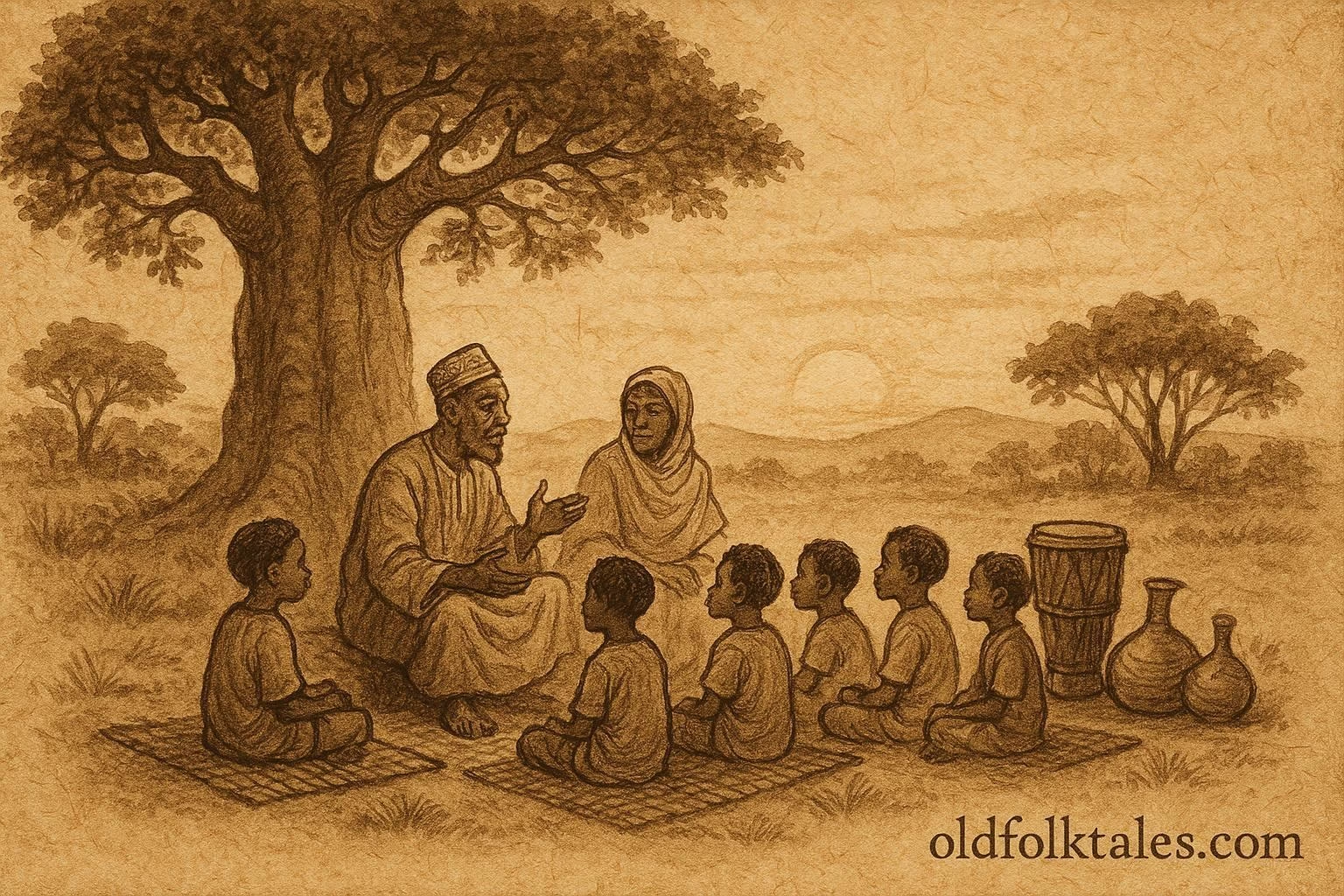
In Nigerian traditions, wisdom is deeply tied to character, the belief that knowledge without virtue is empty. Across the country’s many ethnic groups, proverbs are not merely sayings; they are moral compasses passed down through generations. They guide speech, temper behavior, and preserve the dignity of communal life. A proverb, in Nigerian culture, is often a mirror held up to one’s conscience, revealing truth without insult, and teaching humility without humiliation.
Through the voices of the Yoruba, Igbo, Hausa, and countless other peoples, these ancient words form a moral bridge between past and present. They teach that character defines destiny, that no one thrives in isolation, and that fate favors the disciplined heart. Together, they remind us that a person’s worth lies not in wealth or words, but in integrity, respect, and service to others.
Traditional Nigerian Proverbs and Their Meanings
-
“A tree does not make a forest.” (Yoruba) Meaning: Individual effort alone cannot achieve what a community working together can.
-
“The river that forgets its source will surely dry up.” (Igbo) Meaning: Those who forget their origins or benefactors lose their strength and purpose.
-
“Even if the goat frowns, it still ends up in the soup.” (Hausa) Meaning: Complaining does not change inevitable outcomes; fate cannot be resisted.
-
“He who throws a stone in the market may hit his own relative.” (Yoruba) Meaning: Be careful with your actions; harm done carelessly may return to you.
-
“If the drumbeat changes, the dance steps must adapt.” (Igbo) Meaning: Wisdom lies in the ability to adjust to changing circumstances.
-
“You do not tell a deaf man that war has begun; he will see it in the confusion.” (Hausa) Meaning: Reality reveals itself; truth needs no long explanation.
-
“When the roots of a tree begin to decay, it spreads death to the branches.” (Igbo) Meaning: Corruption at the foundation destroys the whole.
-
“A person is like a pepper; each one has its own heat.” (Yoruba) Meaning: Every individual has unique strengths and temperament.
-
“He who eats alone cannot discuss the taste of the meal.” (Hausa) Meaning: Sharing experiences builds connection; selfishness isolates.
-
“No matter how beautiful a bird’s feathers are, it still needs to fly.” (Igbo) Meaning: Talent is meaningless without purpose and action.
-
“One finger cannot lift a pebble.” (Yoruba) Meaning: Cooperation is necessary for success.
-
“When a man is respected, he respects himself.” (Hausa) Meaning: Honor inspires dignity and moral confidence.
-
“A cracked pot still carries water.” (Igbo) Meaning: Imperfection does not erase usefulness.
-
“The chicken does not forget the person who plucked its feathers in the rain.” (Yoruba) Meaning: People remember both kindness and cruelty.
-
“A horse may carry a king, but it still eats grass.” (Hausa) Meaning: Status does not change one’s nature; humility is wisdom.
-
“He who does not know where the rain began to beat him cannot say where he dried his body.” (Igbo) Meaning: To solve a problem, one must understand its origin.
-
“When two elephants fight, it is the grass that suffers.” (Yoruba) Meaning: The weak suffer when the powerful clash.
-
“A lizard that falls from a high tree nods its head to console itself.” (Igbo) Meaning: Self-encouragement builds resilience.
-
“If you don’t know where you are going, any road will take you there.” (Hausa) Meaning: Without purpose, one drifts aimlessly.
-
“The sun does not forget a village because it is small.” (Yoruba) Meaning: Every person or place is worthy of attention.
-
“A child who knows how to wash his hands will dine with elders.” (Igbo) Meaning: Discipline and respect open doors of opportunity.
-
“The man who cannot dance blames the drum.” (Hausa) Meaning: The unskilled often blame others for their failures.
-
“Character is like smoke; it cannot be hidden.” (Yoruba) Meaning: One’s true nature always reveals itself.
-
“A person who sells his friend’s secret sells his own peace.” (Igbo) Meaning: Betrayal brings unrest and loss of trust.
-
“If you climb a good tree, people will push you up.” (Yoruba) Meaning: The community supports good causes and honest effort.
-
“He who spits in the sky spits on his face.” (Hausa) Meaning: Evil deeds eventually backfire on their doer.
-
“When the bush burns, the antelope runs without being told.” (Igbo) Meaning: Wisdom recognizes danger without instruction.
-
“A lie may last for years, but truth never dies.” (Yoruba) Meaning: Truth always prevails in the end.
-
“Even the smallest calabash can carry truth.” (Hausa) Meaning: Wisdom is not measured by size or age.
-
“The hand that gives never lacks.” (Igbo) Meaning: Generosity sustains blessings.
-
“A dog destined to get lost does not hear the hunter’s whistle.” (Yoruba) Meaning: Those bent on destruction ignore wise counsel.
-
“Rain does not fall on one roof alone.” (Hausa) Meaning: Everyone faces trials in life.
-
“A word is like an egg; once dropped, it cannot be taken back.” (Igbo) Meaning: Speak with caution, for words have power.
-
“The tortoise said he travels slowly, but he never stops.” (Yoruba) Meaning: Steady effort achieves results.
-
“No matter how long the night, the day will surely break.” (Hausa) Meaning: Hard times will pass eventually.
-
“The child who washes his father’s feet will have his own washed by his children.” (Igbo) Meaning: Kindness returns in future generations.
-
“He who ignores his elders’ advice walks into darkness.” (Yoruba) Meaning: Wisdom grows through listening to experience.
-
“The monkey that eats alone soon eats poison.” (Hausa) Meaning: Greed invites ruin.
-
“Even the strongest man was once a crying baby.” (Igbo) Meaning: Humility remembers one’s beginnings.
-
“The drum sounds sweet because many hands beat it.” (Yoruba) Meaning: Success is a collective effort.
-
“A house built with saliva will collapse in the dew.” (Hausa) Meaning: Weak foundations cannot stand.
-
“An elder does not sit idly while a goat delivers in its tether.” (Igbo) Meaning: The wise intervene when responsibility calls.
-
“When there is no enemy within, the enemy outside can do no harm.” (Yoruba) Meaning: Inner strength defeats external threats.
-
“The cow does not run away from her calf.” (Hausa) Meaning: Love and responsibility bind families together.
-
“The eye that will see clear must not fear tears.” (Igbo) Meaning: Understanding often requires courage.
-
“When the moon shines, it shines for all.” (Yoruba) Meaning: Blessings are meant to be shared.
-
“A king is only a king when his people call him so.” (Hausa) Meaning: Leadership depends on the respect of the people.
-
“The mouth that eats salt does not forget the taste.” (Igbo) Meaning: True experiences leave lasting impressions.
-
“He who has people is richer than he who has money.” (Yoruba) Meaning: Relationships are greater than wealth.
-
“If you see a toad in daylight, something is chasing it.” (Hausa) Meaning: Unusual actions have hidden causes.
-
“The broom sweeps well because its sticks are bound together.” (Yoruba) Meaning: Unity creates strength and effectiveness.
-
“A single bracelet does not jingle.” (Igbo) Meaning: Companionship makes life meaningful.
-
“The drum of character beats louder than the drum of wealth.” (Hausa) Meaning: Good character outshines riches.
-
“No matter how long a log floats on water, it will never become a crocodile.” (Yoruba) Meaning: Pretending cannot change true identity.
-
“The chick that will grow into a cock is known the very day it hatches.” (Igbo) Meaning: Greatness often shows early signs.
-
“The road does not close because the traveler is tired.” (Hausa) Meaning: Life continues despite one’s weakness; perseverance is key.
-
“The one who asks questions never gets lost.” (Yoruba) Meaning: Seeking counsel leads to wisdom.
-
“A person’s name follows him like a shadow.” (Igbo) Meaning: Reputation endures beyond presence.
-
“The mouth that tells lies kills the soul.” (Hausa) Meaning: Dishonesty destroys trust and integrity.
-
“Even the elephant was once a child.” (Yoruba) Meaning: Everyone starts small before becoming great.
-
“The knife that cuts yam for the child will one day cut for the parent.” (Igbo) Meaning: Kindness and cruelty both return to the doer.
-
“He who plants honesty reaps peace.” (Hausa) Meaning: Truthfulness brings calm and contentment.
-
“A river does not flow through the forest without making a sound.” (Yoruba) Meaning: Every action leaves an impression.
-
“When a lizard nods, it remembers the tree it fell from.” (Igbo) Meaning: Experience teaches humility.
-
“The ear that refuses to hear will accompany the head when it is cut off.” (Hausa) Meaning: Disobedience brings shared consequences.
-
“A good name is better than bags of gold.” (Yoruba) Meaning: Reputation is more valuable than wealth.
-
“When the lion roars, even the grass trembles.” (Igbo) Meaning: Authority commands respect.
-
“The one who walks with wise men becomes wise.” (Hausa) Meaning: Character is shaped by companionship.
-
“A snake does not run without reason.” (Yoruba) Meaning: Every action has a cause.
-
“The pot calls the kettle black because both are stained by fire.” (Igbo) Meaning: Hypocrisy blinds judgment.
-
“The cow with no tail depends on God to chase away flies.” (Hausa) Meaning: The helpless rely on divine help.
-
“The palm wine tapper does not fear climbing the same tree every day.” (Yoruba) Meaning: Familiarity and consistency breed mastery.
-
“The ear that listens to advice sleeps peacefully.” (Igbo) Meaning: Wisdom brings rest and assurance.
-
“The eye that cries also sees.” (Hausa) Meaning: Pain can lead to understanding.
-
“You cannot stand under a leaking roof and complain of rain.” (Yoruba) Meaning: One must act to solve their own problems.
-
“When the right hand washes the left, both become clean.” (Igbo) Meaning: Cooperation benefits all.
-
“The hen does not crow in the presence of the rooster.” (Hausa) Meaning: Respect must be shown to authority.
-
“When you remove a fly from your friend’s eye, remove one from yours too.” (Yoruba) Meaning: Correct others with humility.
-
“The lizard that jumped from the high wall said he would praise himself if no one else did.” (Igbo) Meaning: Self-encouragement is vital in hard times.
-
“The corn that refuses to grow straight will be bent by the wind.” (Hausa) Meaning: Stubbornness leads to downfall.
-
“The child who mocks the father’s beard will never grow one.” (Yoruba) Meaning: Disrespect prevents one from attaining honor.
-
“A man’s road is blocked only by his character.” (Igbo) Meaning: Attitude determines destiny.
-
“The hunter does not boast before the kill.” (Hausa) Meaning: True strength shows in results, not talk.
-
“Even the smallest drum can call a village together.” (Yoruba) Meaning: Every contribution, however small, has value.
-
“He who refuses to learn from the river will drink from the mud.” (Igbo) Meaning: Ignoring wisdom leads to regret.
-
“A camel cannot pass through the eye of a needle.” (Hausa) Meaning: Pride prevents progress.
-
“The tongue and the teeth may quarrel, but they must still live in the same mouth.” (Yoruba) Meaning: Disagreements should not destroy relationships.
-
“The kola nut lasts long in the mouth of the patient.” (Igbo) Meaning: Patience preserves blessings.
-
“The millet that grows tall must remember its roots.” (Hausa) Meaning: Success should not erase humility.
-
“A market does not close because one trader has gone home.” (Yoruba) Meaning: Life goes on regardless of one’s absence.
-
“The toad does not run in the daytime for nothing.” (Igbo) Meaning: Every unusual act has a reason.
-
“When the wind blows, the hen’s secret feathers are revealed.” (Hausa) Meaning: Truth eventually exposes deceit.
-
“Even the river must bend around the rock to reach the ocean.” (Yoruba) Meaning: Flexibility overcomes obstacles.
-
“He who mocks another’s misfortune invites his own.” (Igbo) Meaning: Compassion protects against pride.
-
“A tree that forgets its roots will fall with the next storm.” (Hausa) Meaning: Gratitude sustains strength.
-
“No matter how fast the rabbit runs, it cannot outrun its shadow.” (Yoruba) Meaning: One cannot escape their true self or past.
-
“The fire that burns the neighbor’s house is a warning to yours.” (Igbo) Meaning: Learn from the misfortunes of others.
-
“When the head is too big, it forgets the body carries it.” (Hausa) Meaning: Pride blinds one to interdependence.
-
“Even the rain knows its season.” (Yoruba) Meaning: Timing is vital in all things.
-
“The person who eats with the devil must use a long spoon.” (Igbo) Meaning: Be cautious when dealing with dangerous people.
-
“He who follows the crowd will miss the narrow path.” (Hausa) Meaning: Independence of thought is wisdom.
-
“When the right words are spoken, peace returns to the compound.” (Yoruba) Meaning: Wise speech restores harmony.
-
“The snail moves slowly, but it reaches home safely.” (Igbo) Meaning: Patience guarantees success.
-
“The axe forgets, but the tree remembers.” (Hausa) Meaning: The offender forgets, but the hurt lingers.
-
“Even the smallest lamp can light the darkness.” (Yoruba) Meaning: Small efforts bring great change.
-
“The tongue has no bone, yet it can break hearts.” (Igbo) Meaning: Words have great power for harm or healing.
-
“He who climbs a tree carefully will descend safely.” (Hausa) Meaning: Caution prevents disaster.
-
“The eye cannot see its own eyelashes.” (Yoruba) Meaning: Self-awareness requires others’ perspectives.
-
“A stubborn goat ends up at the butcher’s table.” (Igbo) Meaning: Defiance leads to ruin.
-
“The hand that gives is the hand that receives blessing.” (Hausa) Meaning: Generosity attracts favor.
-
“When the elephant passes, the ground trembles.” (Yoruba) Meaning: Influence carries weight.
-
“The rat that has one hole is soon caught.” (Igbo) Meaning: Overdependence leads to vulnerability.
-
“The mouth that respects elders eats ripe fruit.” (Hausa) Meaning: Respect brings reward.
-
“When you point one finger, four point back at you.” (Yoruba) Meaning: Judge others cautiously.
-
“The child who breaks the mortar forgets that his mother will still need to pound yams.” (Igbo) Meaning: Thoughtless acts create more trouble later.
-
“The drum does not beat itself; someone beats it.” (Hausa) Meaning: Every effect has a cause.
-
“The hen with chicks does not swallow the worm whole.” (Yoruba) Meaning: Leadership requires consideration for others.
-
“A person who does not know where he came from cannot know where he is going.” (Igbo) Meaning: Identity shapes destiny.
-
“Even the silent stone speaks when it is stepped on.” (Hausa) Meaning: Every injustice provokes a response eventually.
-
“A stream does not forget its course.” (Yoruba) Meaning: Purpose endures despite obstacles.
-
“He who laughs last has understood the joke.” (Igbo) Meaning: Wisdom comes with patience.
-
“The hoe that cultivates peace harvests joy.” (Hausa) Meaning: Peacemakers find lasting happiness.
-
“A calabash that floats on water does not forget the hand that set it there.” (Yoruba) Meaning: Gratitude acknowledges those who help.
-
“The eye that sees far does not boast; it warns.” (Igbo) Meaning: True wisdom is humble and cautious.
-
“The drumbeat of destiny cannot be silenced.” (Hausa) Meaning: Fate always finds its rhythm.
-
“When the rain falls, it does not fall on one man’s roof.” (Yoruba) Meaning: Everyone shares in life’s trials.
-
“A patient man will cook stones and eat them.” (Igbo) Meaning: Endurance makes the impossible possible.
-
“The market does not favor only one trader.” (Hausa) Meaning: Life balances everyone’s fortunes.
-
“A person who forgets yesterday’s favor will not receive tomorrow’s help.” (Yoruba) Meaning: Gratitude sustains relationships.
-
“The fire that warms you can also burn you.” (Igbo) Meaning: Power must be used with wisdom.
-
“The bird that remembers the hunter’s trap flies higher.” (Hausa) Meaning: Experience brings caution.
-
“When the leaf falls, it knows it will return to the soil.” (Yoruba) Meaning: Everything eventually returns to its origin.
-
“The cock that crows before dawn may be eaten before daylight.” (Igbo) Meaning: Premature boasting invites downfall.
-
“The lazy man calls luck what the wise call labor.” (Hausa) Meaning: Effort defines success, not luck.
-
“A house divided against itself cannot stand.” (Yoruba) Meaning: Unity sustains survival.
-
“The lizard that does not respect the wall will fall.” (Igbo) Meaning: Pride leads to downfall.
-
“When you share your food with the poor, you dine with angels.” (Hausa) Meaning: Compassion attracts divine favor.
-
“A lamp cannot light another unless it is burning.” (Yoruba) Meaning: You must possess virtue to inspire others.
-
“The ear of a wise man lies close to the heart.” (Igbo) Meaning: Wisdom listens before acting.
-
“The hyena says he laughs, but his heart is hungry.” (Hausa) Meaning: Appearances can deceive.
-
“Even the stone that is kicked still helps the walker find his balance.” (Yoruba) Meaning: Challenges guide growth.
-
“He who digs a pit for his neighbor falls into it.” (Igbo) Meaning: Evil intentions destroy the doer.
-
“The camel that mocks the donkey forgets its own hump.” (Hausa) Meaning: No one is without flaws.
-
“When elders speak, the wind listens.” (Yoruba) Meaning: True wisdom carries power.
-
“The tongue that speaks peace builds a nation.” (Igbo) Meaning: Gentle words heal divisions.
-
“The hand that sows kindness reaps friendship.” (Hausa) Meaning: Generosity builds relationships.
-
“The seed of truth grows even in the desert.” (Yoruba) Meaning: Integrity thrives under any condition.
-
“He who walks before the drum may lose the rhythm.” (Igbo) Meaning: Patience ensures success.
-
“Even the wind knows the direction of the wise.” (Hausa) Meaning: Wisdom guides every step.
-
“The footprints of good men never fade from the earth.” (Yoruba) Meaning: The legacy of virtue endures beyond life.
Author’s Note
Nigerian proverbs speak with the authority of lived experience. They are not mere words but distilled wisdom, the collective heartbeat of a people who value integrity, humility, and community. Across generations, these sayings have guided kings and farmers alike, teaching that destiny is not random but shaped by the strength of one’s character and the bonds of family and faith.
They remind us that wisdom is not the absence of error, but the courage to learn and live rightly. To walk in truth, to honor one’s elders, to live in peace with neighbors, these are the eternal pillars of character that hold up the Nigerian spirit.
Knowledge Check
- Question: What is the lesson in the proverb “The river that forgets its source will surely dry up”?
Answer: We should remain grateful and connected to our roots or helpers. - Question: How does “If the drumbeat changes, the dance steps must adapt” define wisdom?
Answer: Wisdom involves flexibility and the ability to adapt to change. - Question: What does “One finger cannot lift a pebble” teach about success?
Answer: Success requires teamwork and cooperation. - Question: What moral lesson is conveyed by “When two elephants fight, it is the grass that suffers”?
Answer: The weak are often harmed when powerful individuals or groups clash. - Question: What truth is found in “A cracked pot still carries water”?
Answer: Imperfection does not erase value or usefulness. - Question: According to Nigerian wisdom, what is the relationship between respect and self-worth?
Answer: Being respected encourages individuals to respect themselves and act honorably.
Origin: Nigeria