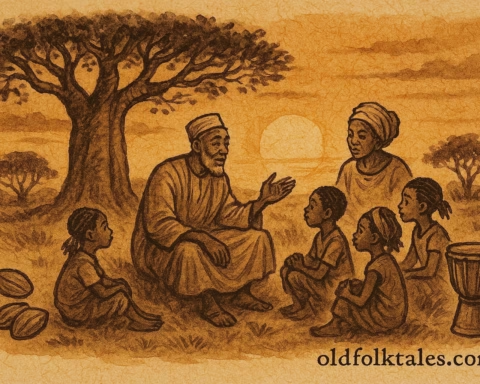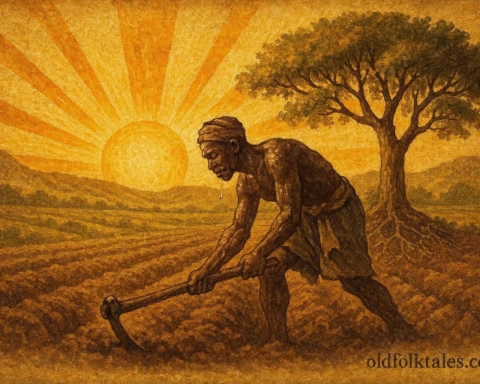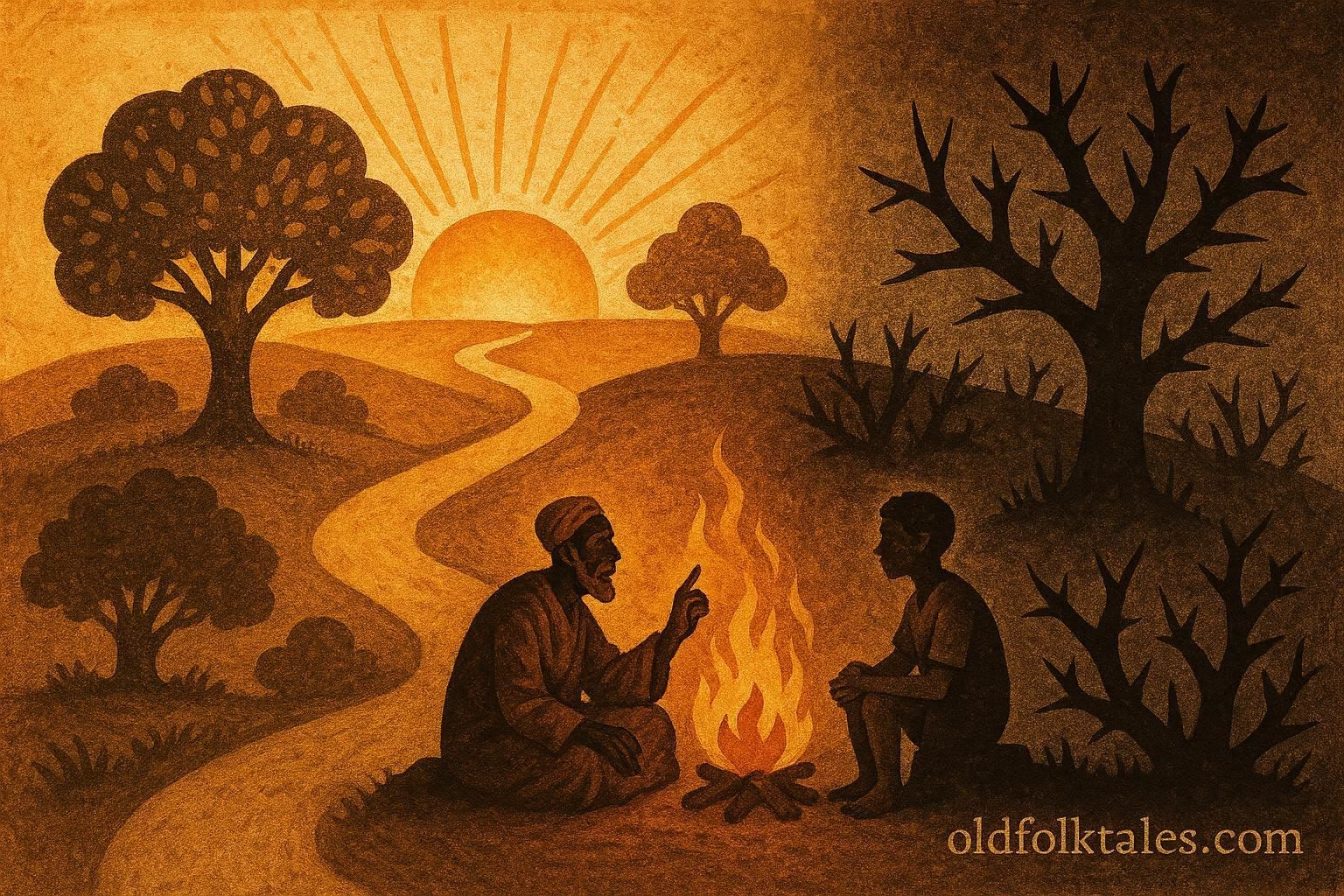
In Nigerian culture, wisdom is not measured by intelligence alone, but by the ability to live rightly, speak carefully, and act with foresight. Folly, in contrast, is viewed as blindness of the heart, ignoring truth, advice, or experience. Across Nigeria’s many ethnic traditions, proverbs about wisdom and folly illuminate the contrast between the thoughtful and the reckless, teaching that wisdom is both a gift and a lifelong discipline.
Learn the moral wisdom of ancient civilizations through proverbs that shaped cultural values
African Proverbs on Wisdom and Folly
Wisdom
-
“The wise man looks ahead; the fool lives for today.” (Yoruba). Meaning: Wisdom plans for the future, while folly focuses only on immediate pleasure.
-
“The wise bird builds its nest before the rain.” (Igbo). Meaning: Preparation is the mark of wisdom; foresight prevents hardship.
-
“Even if a log lies in the water for a long time, it never becomes a crocodile.” (Yoruba). Meaning: Pretending to be wise does not make one wise; true wisdom is proven by character.
-
“The wise listen to advice; the foolish talk all day.” (Igbo). Meaning: Wisdom listens and learns, while folly speaks without understanding.
-
“When an old man dies, a library burns to the ground.” (Yoruba). Meaning: Elders are living vessels of wisdom; their death is the loss of history and knowledge.
-
“Wisdom is like fire, people take it from one another.” (Igbo). Meaning: Wisdom spreads through teaching and learning from others.
-
“The fool speaks, the wise man listens.” (Yoruba). Meaning: Listening reveals understanding; talking too much often exposes ignorance.
-
“If a child washes his hands, he may dine with elders; if he plays with ashes, he eats dirt.” (Igbo). Meaning: Wisdom earns respect, while folly leads to disgrace.
-
“No matter how tall a tree grows, its leaves still fall to the ground.” (Yoruba). Meaning: Wisdom is humble; even the great must remember their limits.
-
“Wisdom is like a goat-skin bag, it only swells with use.” (Igbo). Meaning: Knowledge grows when applied; wisdom strengthens through practice.
-
“The tortoise said, ‘Wisdom is like a snail’s shell, you carry it wherever you go.’” (Yoruba). Meaning: True wisdom stays with a person at all times; it is part of who they are.
-
“The one who refuses counsel cannot see the pit ahead.” (Igbo). Meaning: Rejecting advice leads to downfall; wisdom welcomes correction.
-
“A wise man does not chase a chicken into the bush.” (Yoruba). Meaning: The prudent person knows when to stop before a small problem becomes worse.
-
“Wisdom is not in age but in understanding.” (Igbo). Meaning: Age alone does not make one wise; comprehension and judgment do.
-
“He who learns, teaches.” (Yoruba). Meaning: Wisdom grows when shared with others.
-
“The river does not forget its course.” (Hausa). Meaning: Wisdom maintains its principles despite challenges.
-
“Patience is the mother of wisdom.” (Igbo). Meaning: Understanding develops through endurance and reflection.
-
“A wise man changes his mind; a fool never does.” (Yoruba). Meaning: Adaptability is a hallmark of intelligence.
-
“Knowledge without humility is like a tree without roots.” (Igbo). Meaning: Wisdom requires humility to be lasting.
-
“The wise sees danger and avoids it; the fool walks blindly.” (Hausa). Meaning: Foresight prevents disaster.
-
“He who knows the way does not stumble.” (Yoruba). Meaning: Awareness and preparation guide success.
-
“Wisdom is like a baobab tree; no one can embrace it alone.” (Igbo). Meaning: Collective knowledge strengthens understanding.
-
“A clever man hides his cleverness; a fool flaunts it.” (Yoruba). Meaning: True wisdom is discreet and humble.
-
“Experience is the best teacher.” (Hausa). Meaning: Wisdom is gained through life, not just instruction.
-
“The wise man learns from the mistakes of others.” (Igbo). Meaning: Observation prevents repeated errors.
-
“A man who counts his chickens before they hatch is unwise.” (Yoruba). Meaning: Patience ensures proper planning.
-
“Wisdom is like a deep well; only the patient can drink from it.” (Igbo). Meaning: Insight requires time and diligence.
-
“A wise man knows when to speak and when to remain silent.” (Yoruba). Meaning: Timing is crucial in conveying wisdom.
-
“Those who respect the elders inherit their wisdom.” (Hausa). Meaning: Humility leads to learning and understanding.
-
“The wise man does not quarrel with the blind.” (Igbo). Meaning: Avoid conflict with those incapable of understanding.
-
“Wisdom is wealth that never diminishes.” (Yoruba). Meaning: Knowledge and insight are lasting treasures.
-
“He who knows the market never goes hungry.” (Hausa). Meaning: Understanding the environment ensures survival.
-
“The wise sees the hidden path in the forest.” (Igbo). Meaning: Insight allows one to navigate complexity.
-
“A wise man learns more from misfortune than a fool from fortune.” (Yoruba). Meaning: Challenges teach deeper lessons than ease.
-
“The fool may laugh at the wise man, but the wise man leads the way.” (Igbo). Meaning: Wisdom endures mockery and guides progress.
-
“Patience and foresight are better than strength.” (Yoruba). Meaning: Strategic thinking surpasses brute force.
-
“Wisdom is like a river; it finds its way through obstacles.” (Hausa). Meaning: Understanding adapts and overcomes challenges.
-
“A wise man fixes the roof before it rains.” (Igbo). Meaning: Preparation prevents problems.
-
“The fool builds a house on sand; the wise builds on rock.” (Yoruba). Meaning: Strong foundations are the mark of foresight.
-
“Wisdom walks with those who listen.” (Hausa). Meaning: Attentive people gain understanding.
-
“The clever man sees the trap before he steps into it.” (Igbo). Meaning: Awareness prevents failure.
-
“Knowledge is like a garden; if it is not cultivated, it dies.” (Yoruba). Meaning: Wisdom requires continual care.
-
“A fool is known by his words before his actions.” (Hausa). Meaning: Folly often reveals itself through speech.
-
“He who asks is a fool for five minutes, but he who does not ask remains a fool forever.” (Igbo). Meaning: Seeking knowledge is a mark of wisdom.
-
“The wise man adapts his sail to the wind.” (Yoruba). Meaning: Flexibility is essential for success.
-
“Wisdom does not come overnight.” (Hausa). Meaning: Insight is developed gradually.
-
“A wise man learns when to leave the battlefield.” (Igbo). Meaning: Avoiding unnecessary conflict is smart.
-
“The fool blames others; the wise takes responsibility.” (Yoruba). Meaning: Accountability distinguishes wisdom from folly.
-
“Wisdom is light in the darkness.” (Hausa). Meaning: Understanding guides through uncertainty.
-
“He who runs after two hares catches neither.” (Igbo). Meaning: Focus is necessary to achieve success.
-
“A wise man uses words like medicine.” (Yoruba). Meaning: Thoughtful speech heals and guides.
-
“Experience without reflection is wasted.” (Hausa). Meaning: True wisdom requires learning from life events.
-
“Wisdom sees the end from the beginning.” (Igbo). Meaning: Foresight allows planning and prudent decisions.
-
“The wise man does not insult a fool.” (Yoruba). Meaning: Avoid wasting effort on those who cannot understand.
-
“Knowledge is a weapon that protects the mind.” (Hausa). Meaning: Insight equips one to face challenges.
-
“A man who knows his limits is wise.” (Igbo). Meaning: Self-awareness prevents overreach.
-
“The wise plant trees under whose shade they will never sit.” (Yoruba). Meaning: True wisdom acts for the future, not immediate gain.
-
“Wisdom is the mother of understanding.” (Hausa). Meaning: Insight creates clarity.
-
“The fool despises learning; the wise cherishes it.” (Igbo). Meaning: Attitude toward learning defines intelligence.
-
“A wise man values time more than gold.” (Yoruba). Meaning: Time management is a cornerstone of wisdom.
Folly
-
-
“A fool at forty is a fool forever.” (Hausa). Meaning: If one fails to learn and grow with age, folly becomes permanent.
-
“The fool speaks before he thinks.” (Igbo). Meaning: Rash words expose ignorance.
-
“Even the clever fool is caught in his own trap.” (Yoruba). Meaning: Folly eventually leads to consequences.
-
“The fool walks into the lion’s mouth and wonders why he is bitten.” (Hausa). Meaning: Ignorance invites danger.
-
“A fool’s wealth is spent on foolish things.” (Yoruba). Meaning: Without wisdom, prosperity quickly disappears.
-
“The foolish man plants millet in a dry riverbed.” (Igbo). Meaning: Folly ignores reality and common sense.
-
“A fool believes every word he hears.” (Hausa). Meaning: Lack of discernment leads to error.
-
“The fool uses fire to boil water and burns the pot.” (Yoruba). Meaning: Poor judgment ruins outcomes.
-
“Even a wise man can be fooled by a fool’s trick once.” (Igbo). Meaning: Folly can deceive temporarily, but it is short-lived.
-
“A fool dances when a storm is coming.” (Hausa). Meaning: Ignorance ignores danger.
-
“The fool eats a fish without knowing if it is cooked.” (Yoruba). Meaning: Rash decisions bring harm.
-
“A fool laughs at his own danger.” (Igbo). Meaning: Folly ignores risk.
-
“He who laughs at misfortune invites it.” (Hausa). Meaning: Mocking reality is unwise.
-
“A fool’s mouth is his ruin.” (Yoruba). Meaning: Reckless speech leads to downfall.
-
“The foolish man climbs the tree to catch the wind.” (Igbo). Meaning: Chasing impossibilities shows folly.
-
“A fool spends a lifetime chasing shadows.” (Hausa). Meaning: Folly wastes effort on illusions.
-
“The fool’s path is full of thorns.” (Yoruba). Meaning: Ignorance brings difficulty and suffering.
-
“A fool counts his money while the world burns.” (Igbo). Meaning: Short-sightedness ignores larger dangers.
-
“Even a blind fool sees when he falls.” (Hausa). Meaning: Consequences eventually teach lessons.
-
“The fool takes fire into the granary.” (Yoruba). Meaning: Folly risks everything.
-
“A fool who knows he is a fool is half wise.” (Igbo). Meaning: Self-awareness mitigates ignorance.
-
“The foolish man follows the crowd to the cliff.” (Hausa). Meaning: Blind conformity leads to disaster.
-
“A fool paints his house with mud and expects it to last.” (Yoruba). Meaning: Poor planning yields poor results.
-
“The fool rides on a donkey to catch a horse.” (Igbo). Meaning: Folly pursues what is beyond reach.
-
“A fool quarrels with the wind.” (Hausa). Meaning: Folly fights unwinnable battles.
-
“The foolish man tries to milk a goat with no udder.” (Yoruba). Meaning: Foolish effort is wasted effort.
-
“A fool opens the door for the snake and wonders why it bites him.” (Igbo). Meaning: Ignorance invites harm.
-
“The fool who plants in the wrong season reaps no harvest.” (Hausa). Meaning: Timing matters; ignorance ignores it.
-
“A fool’s house is full of holes.” (Yoruba). Meaning: Lack of foresight weakens structure.
-
“The fool wears shoes on the wrong feet and blames the road.” (Igbo). Meaning: Folly misattributes responsibility.
-
“A fool throws water into the fire and wonders why it burns.” (Hausa). Meaning: Folly misinterprets cause and effect.
-
“The foolish man counts his chickens before they hatch.” (Yoruba). Meaning: Rash optimism leads to disappointment.
-
“A fool digs a well where there is no water.” (Igbo). Meaning: Folly wastes effort on impossible tasks.
-
“The fool stabs the air and expects to kill the enemy.” (Hausa). Meaning: Folly achieves nothing through empty action.
-
“A fool breaks his spear on a tree.” (Yoruba). Meaning: Folly wastes strength on the wrong target.
-
“The fool walks barefoot on thorns and cries at pain.” (Igbo). Meaning: Ignorance causes predictable suffering.
-
“A fool who chases two hares catches neither.” (Hausa). Meaning: Lack of focus prevents success.
-
“The foolish man eats bitter herbs and blames the garden.” (Yoruba). Meaning: Folly misplaces blame.
-
“A fool builds a house on quicksand.” (Igbo). Meaning: Folly constructs on weak foundations.
-
“The fool counts his friends on the day of battle.” (Hausa). Meaning: Folly only realizes loyalty too late.
-
Learn the moral wisdom of ancient civilizations through proverbs that shaped cultural values
Author’s Note
Nigerian proverbs about wisdom and folly speak to the core of human nature. They remind us that knowledge without discipline becomes folly, and that humility is the path to understanding. The elders knew that the wise person is not the one who never errs, but the one who learns from every mistake and teaches others through it. Wisdom, in their eyes, is a light that never fades, while folly walks in circles, lost in its own shadow.
Knowledge Check
- Question: What does “The wise bird builds its nest before the rain” mean?
Answer: A wise person prepares for the future before problems come. - Question: What lesson does “A foolish man tests the depth of a river with both feet” teach?
Answer: Wisdom requires caution; folly acts recklessly. - Question: How does “Wisdom is like fire, people take it from one another” define learning?
Answer: Wisdom spreads through teaching and shared experience. - Question: What does “The fool looks for honey in salt” symbolize?
Answer: Foolish people expect good results from foolish actions. - Question: Which proverb shows that wisdom comes from understanding, not just age?
Answer: “Wisdom is not in age but in understanding.” - Question: What happens when people reject advice, according to Nigerian wisdom?
Answer: They cannot see danger ahead and end up in trouble.
Origin: Nigeria