
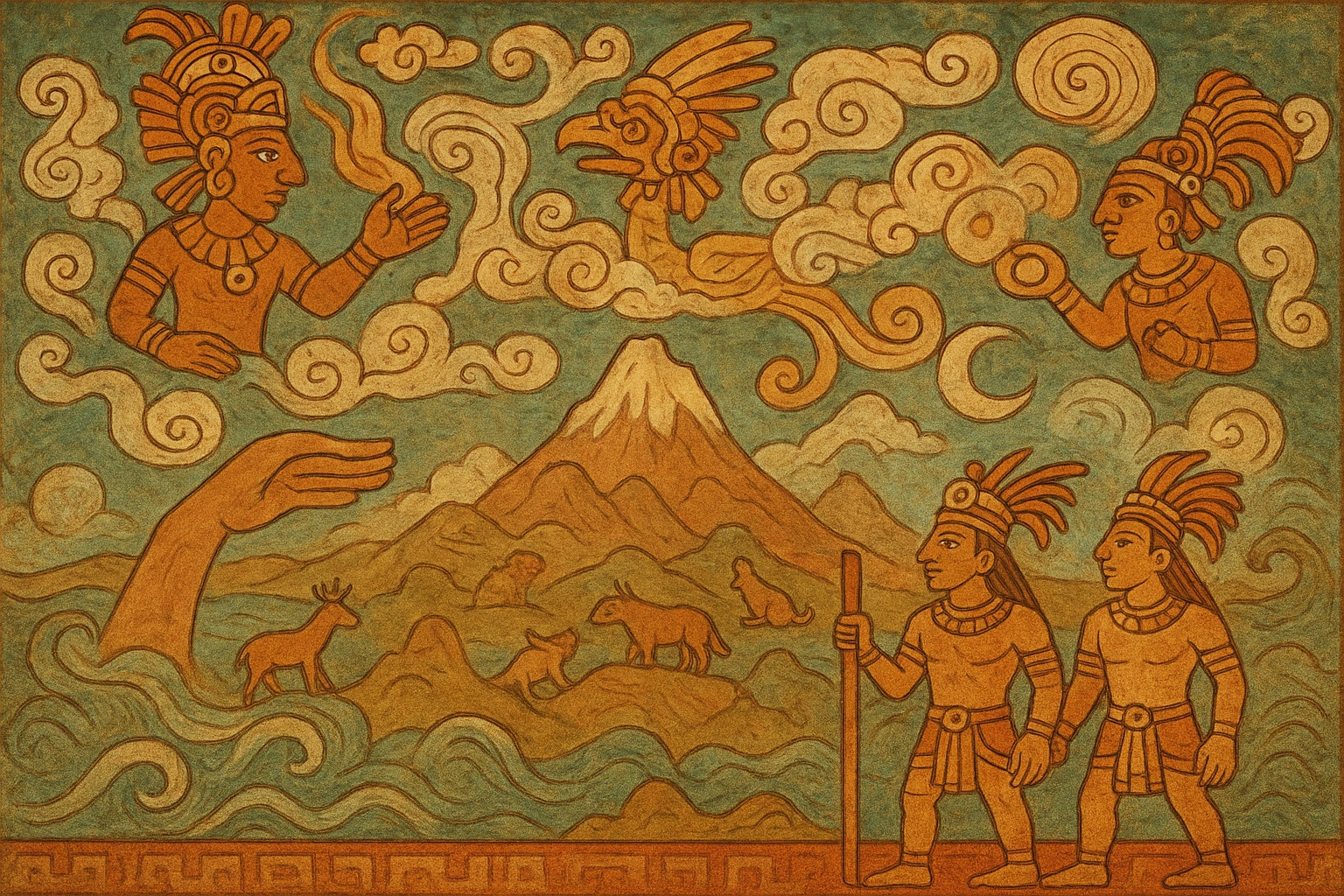
In the time before time, when the world had not yet taken shape, there was only stillness. Above stretched an endless sky, and below lay a vast, motionless sea. No wind stirred the waters. No voice broke the silence. In this profound emptiness, the gods existed in quiet contemplation: Heart of Sky, Hurricane, Newborn Thunderbolt, Raw Thunderbolt, Maker, Modeler, and the magnificent Sovereign Plumed Serpent. These divine beings floated in the void, waiting for the moment when creation would begin.
Then, in a moment of divine inspiration, the gods spoke together. Their words rippled through the emptiness like thunder across water. “Let it be done!” they proclaimed. “Let the earth rise from the depths! Let there be light and life!” And so, through the power of their speech alone, the waters began to part. Land emerged from the sea, solid and firm. Mountains rose toward the sky, their peaks reaching upward like prayers. Valleys carved themselves between the hills, and rivers began their endless journey to the ocean.
Click to read all Myths & Legends – timeless stories of creation, fate, and the divine across every culture and continent
The gods looked upon this new earth with satisfaction, but they knew their work was incomplete. A world of stone and water was not enough it needed life, movement, sound. So, they filled the forests with animals of every kind: deer that bounded through the undergrowth, jaguars that prowled in shadows, birds that painted the sky with color, and serpents that wound through the grass. The gods gathered these creatures before them and made a simple request: “Speak our names. Praise us who made you. Honor us with your voices.”
But the animals could only cry out in their natural tongues the jaguar roared, the bird sang wordless melodies, the deer merely bleated. No matter how the gods instructed them, the creatures could not form words of worship or remembrance. Disappointed but not defeated, the gods decided they needed to create beings capable of speech, thought, and devotion.
Their first attempt was to fashion people from mud and clay. The gods molded these beings with care, shaping arms and legs, faces and bodies. But when they stepped back to admire their work, they watched in dismay as the mud-people began to dissolve. Their faces melted away, their limbs crumbled, and their words came out as meaningless babble. These beings could not stand upright, could not see clearly, and most importantly, could not remember or honor their creators. The gods swept away this failed creation and began again.
Next, they carved people from wood. These wooden people were much more successful they walked, they talked, they built homes and had children. They spread across the earth, multiplying and filling the land with their presence. But as time passed, a terrible flaw revealed itself: these wooden beings had no hearts, no souls, no memory of the divine. They went about their lives mechanically, consumed with their own affairs, never once looking up to thank the gods who had given them existence. They grew arrogant and cold, treating the world around them with disrespect.
The gods’ patience finally broke. They sent a great flood that swept across the earth, destroying the wooden people. Those who survived this catastrophe found themselves transformed they became the monkeys that still swing through the forest canopy, a reminder of humanity’s failed arrogance. Their faces still bear a resemblance to human features, forever marking their origin.
But the story does not end in destruction. From this chaos, a new chapter began with the birth of the Hero Twins, Hunahpu and Xbalanque. These remarkable brothers came into the world under miraculous circumstances, born to continue the divine mission of establishing true order in the cosmos. Their father and uncle had been summoned to Xibalba, the fearsome underworld, by its cruel lords to play the sacred ball game. Those elders had been defeated and killed through treachery, their story seemingly ended. But the Twins were determined to avenge their ancestors and prove that light could triumph over darkness.
As they grew, Hunahpu and Xbalanque developed extraordinary wisdom and supernatural power. They trained themselves in the ways of the ball game, preparing for the challenge they knew awaited them. But first, they had to confront the monsters that terrorized the earth. Chief among these was Seven Macaw, a vain creature who falsely declared himself to be the sun and moon, demanding worship from all beings. The Twins saw through his deception and, through clever strategy, brought down this false god, restoring honesty to the heavens.
When they were ready, the Hero Twins accepted the summons to Xibalba. They descended into the underworld, where the death lords awaited with malicious glee. The Twins were forced to navigate the treacherous Crossroads of Xibalba, where four roads met in confusion. They endured the House of Darkness, where no light could penetrate. They survived the House of Knives, the House of Cold, the House of Jaguars, and the House of Fire each trial designed to break their spirit and end their lives.
But through intelligence, courage, and their unshakable bond as brothers, the Hero Twins overcame every challenge. They outmaneuvered the death lords at the ball game, turning trickery back upon the tricksters. They transformed themselves to escape death and ultimately defeated the powers of Xibalba, proving that chaos and cruelty could not stand against those who fought for cosmic balance and proper order.
In their final triumph, the Hero Twins ascended to the heavens. Hunahpu became the Sun, bringing light and life to the world each day. Xbalanque became the Moon, guiding the night with his gentle glow. Their victory established the proper cosmic order at last day following night, seasons turning in their cycles, and the balance between light and darkness finally achieved.
With the world now in harmony, the gods made one final attempt at creating humanity. This time, they used maize sacred corn that would nourish both body and spirit. From this precious substance came true human beings, people with hearts that could feel gratitude, minds that could remember the divine, and voices that could offer proper worship and respect to their creators.
The Moral Lesson
The Popol Vuh teaches us that true humanity requires more than physical form, it demands spiritual substance, gratitude, and remembrance of our origins. Just as the mud-people crumbled without structure and the wooden-people failed without hearts, we cannot thrive if we forget our connection to the sacred or grow arrogant in our accomplishments. The Hero Twins remind us of that courage, wisdom, and respect for cosmic order allow us to overcome even the darkest challenges. We must honor what sustains us, remember those who came before, and maintain balance between our earthly existence and our spiritual purpose.
Knowledge Check
Q1: Who were the Hero Twins in the Popol Vuh and what was their mission?
A1: The Hero Twins were Hunahpu and Xbalanque, miraculous brothers who sought to avenge their father and uncle by defeating the death lords of Xibalba and restoring cosmic order. They triumphed over monsters and underworld trials before ascending to become the Sun and Moon.
Q2: Why did the gods destroy the wooden-people in the Maya creation story?
A2: The wooden-people were destroyed because they lacked hearts and souls. Though they could walk, talk, and reproduce, they forgot their creators and became arrogant, never offering worship or gratitude to the gods who made them. The gods sent a flood, and survivors were turned into monkeys.
Q3: What does Seven Macaw represent in the Popol Vuh?
A3: Seven Macaw (Vucub-Caquix) symbolizes false pride and cosmic disorder. He falsely claimed to be the sun and moon, demanding worship he did not deserve. The Hero Twins defeated him to restore truth and proper order to the universe.
Q4: What material did the gods finally use to successfully create humans?
A4: The gods successfully created humans from maize (sacred corn). Unlike the failed mud-people and wooden-people, these maize-people had proper substance, hearts capable of gratitude, and the ability to remember and worship their creators.
Q5: What is Xibalba in K’iche’ Maya mythology?
A5: Xibalba is the Maya underworld, ruled by death lords who challenged mortals to deadly trials. The Hero Twins descended to Xibalba, survived its many houses of torture, and defeated the death lords through cleverness and courage.
Q6: What does the Popol Vuh teach about the relationship between humans and the divine?
A6: The Popol Vuh teaches that humans have a sacred duty to remember, honor, and worship their creators. Proper humanity requires spiritual awareness and gratitude, not just physical existence. Forgetting the divine or becoming arrogant leads to destruction and loss of true humanity.
Source: Adapted from the Popol Vuh, the sacred creation narrative of the K’iche’ Maya people, originally written in the 16th century.
Cultural Origin: K’iche’ Maya, Highland Guatemala (Mesoamerica)






