
In the time before memory, when the world was young and humanity first walked upon the earth, Taiowa the Creator brought forth all things. He sang the universe into being, and from his song came Sotuknang, his nephew, who shaped the land and sky. To guide the people in their daily lives, Sotuknang created Spider Woman, the wise grandmother who would teach humanity the sacred way of balance and harmony.
The First World was beautiful beyond imagining. The people lived simply, their hearts open to the wisdom of the Creator. They understood that they were caretakers, not masters, of the earth. They spoke not only with their mouths but with the door at the top of their heads the soft spot through which their spiritual connection flowed directly to the Creator. In those days, humans and animals conversed as equals, and all beings lived according to the sacred laws: respect for all life, harmony with nature, and balance in all things.
Click to read all Myths & Legends – timeless stories of creation, fate, and the divine across every culture and continent
But as generations passed, something shifted. People began to forget. They closed the door at the top of their heads, severing their spiritual connection. They became consumed with material things, with power over one another, with greed and conflict. They used their knowledge not to honor creation but to dominate it. The animals withdrew, refusing to speak with humans who had lost their way.
From his place in the heavens, Sotuknang watched with growing sorrow. He saw how far humanity had strayed from the sacred path. The world had become corrupt, filled with chaos and disharmony. Finally, he spoke to Spider Woman: “The people have forgotten why they were created. We must cleanse the world and begin again. But gather those who still remember those whose hearts remain true.”
Spider Woman descended to the earth and called out to the faithful ones. “Come,” she said to those who still kept the door at the top of their heads open, who still practiced balance and respect. “The world is about to be destroyed. I will lead you to safety.”
She guided them deep underground, into vast caverns where the Ant People dwelled. These industrious beings had stored food in their subterranean chambers seeds and grain carefully preserved in earthen vessels. When Spider Woman brought the refugees to their door, the Ant People welcomed them without hesitation, sharing their meager provisions even though it meant their own portions would be smaller. The people marveled at the ants’ discipline, their cooperation, their willingness to sacrifice for others lessons they would carry forward.
Above, Sotuknang unleashed destruction. Volcanoes erupted across the land, rivers of molten rock consuming everything in their path. The sky turned black with ash, and flames devoured the First World until nothing remained but scorched earth and memories. For a long time, the people huddled in the dark caverns below, sustained by the Ant People’s generosity and Spider Woman’s teachings.
When the fires finally cooled, Sotuknang created the Second World. The survivors emerged, blinking in the new light, and began again. They built villages, planted crops, and for a time, they remembered the lessons of destruction. They thanked the Ant People, whose pinched waists still show how they tightened their belts to share their food during the long darkness.
But memory is short, and comfort breeds forgetfulness. As the Second World flourished, people again turned away from the sacred path. They grew proud of their accomplishments, believing they had created their prosperity through their own power alone. They forgot to honor the Creator, forgot the balance that sustained all life. They became greedy, hoarding resources and quarreling among themselves.
Once more, Sotuknang’s heart grew heavy. Once more, he sent Spider Woman to gather the faithful few who had not forgotten. Once more, she led them to the underground refuge of the Ant People, who again shared their stores without complaint.
This time, Sotuknang sent not fire but its opposite. The world froze. Ice covered the land from horizon to horizon, snow fell without ceasing, and the cold was so intense that it turned everything brittle and lifeless. The Second World became a tomb of ice, silent and still. In their deep shelters, the people huddled close to small fires, grateful for the warmth of community and the wisdom of Spider Woman, who taught them songs and stories to keep their spirits alive through the long freeze.
When the ice finally melted, Sotuknang created the Third World. Again, the survivors emerged, and again they built a new civilization. They remembered for a while. They sang the old songs, told the old stories, practiced the old ways. But as the Third World grew prosperous, the pattern repeated. Most people closed the door at the top of their heads once more. They became corrupt, using their knowledge for evil purposes, creating weapons and divisions, pursuing power and pleasure above all else.
Sotuknang looked down and wept. “Will they never learn?” he asked Spider Woman.
“Some will,” she answered. “There are always some who remember.”
And it was true. Even in the corrupt Third World, there were those who kept their spiritual vision clear, who lived in balance and harmony. When Spider Woman came for them one last time, they were ready.
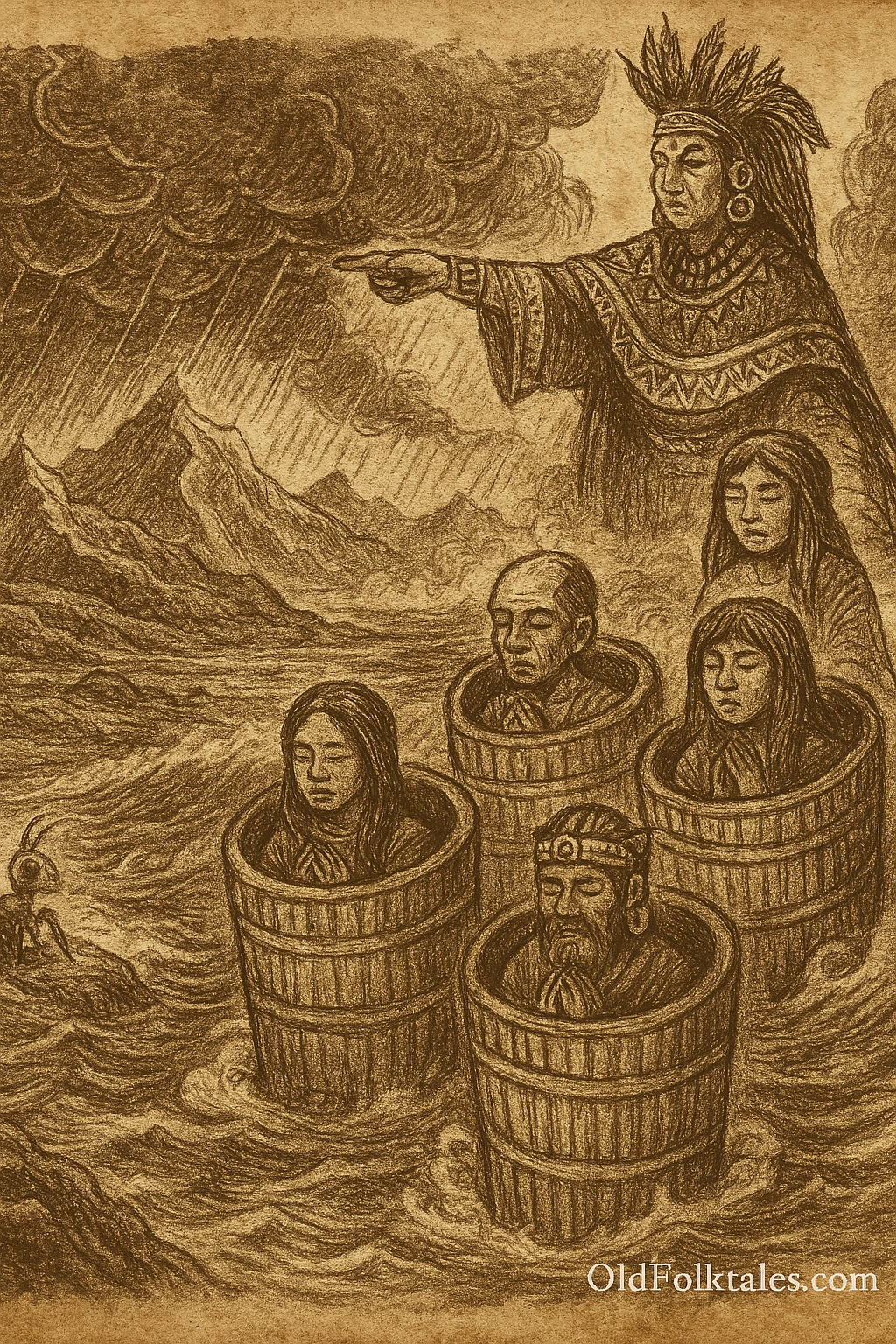
“This destruction will be different,” she told them. She led them to specific locations and instructed them to cut hollow reeds tall, strong bamboo-like plants with sealed chambers inside. “Gather food and fresh water,” she said. “Store them in these reeds. When the flood comes, climb inside and seal yourselves in. The reeds will float, and they will preserve your lives.”
The faithful did as she instructed. They prepared their reeds carefully, loading them with provisions, offering prayers over them. They said goodbye to the Third World, knowing it was about to end.
Sotuknang called upon the waters. Rain fell from the sky in torrents. The oceans rose and swept across the land. Springs burst forth from the ground. The waters met and merged, covering mountains and valleys alike. The Third World disappeared beneath an endless sea.
For countless days, the faithful floated in their reed vessels, tossed by waves, surrounded by water in all directions. Inside the reeds, they sang the songs Spider Woman had taught them. They meditated, keeping the door at the top of their heads open, maintaining their connection to the Creator even as they drifted on the flood. They rationed their food carefully, sharing equally, remembering the lessons of the Ant People.
Finally, the waters began to recede. The reeds bumped against solid ground. The people emerged into the Fourth World the world we inhabit today. The land was clean, washed pure by the flood. Spider Woman greeted them, her eyes warm with approval.
“You have passed through fire, through ice, through water,” she said. “You have survived because you remained faithful, because you kept the door at the top of your heads open. Now you must teach your children, and your children’s children, to remember. For if this world too becomes corrupt, it will be destroyed, and the final destruction will be the worst of all.”
The people built new villages, planted new crops, and began life in the Fourth World. They established ceremonies to remember the destructions, to honor Spider Woman and the Ant People, to keep the sacred teachings alive. They understood now that the world’s survival depends on humanity’s spiritual integrity, on maintaining balance and harmony with all creation.
And some say that even now, the prophecies warn of a potential end to the Fourth World not by fire, ice, or water, but by something else. The people who remember still keep the door at the top of their heads open, still practice the old ways, hoping that enough will remember to preserve this world a little longer.
Journey through the world’s most powerful legends, where gods, mortals, and destiny intertwine
The Moral Lesson
The Hopi myth of world destructions teaches that spiritual connection, humility, and living in balance with creation are essential for humanity’s survival. Each destruction came because people forgot their purpose, closed their spiritual vision, and became consumed with material concerns and power. Those who survived were not the strongest or richest, but those who remained faithful to sacred principles: respect for all life, harmony with nature, and community cooperation. The story emphasizes that humans are caretakers, not masters, of the earth, and that our choices have cosmic consequences. The generosity of the Ant People and the guidance of Spider Woman show that survival requires both communal support and spiritual wisdom.
Knowledge Check
Q1: Who is Spider Woman in Hopi mythology and what role did she play during the world destructions?
A: Spider Woman is a divine grandmother figure created by Sotuknang to guide humanity. During each world destruction, she identified and gathered the faithful people who still maintained their spiritual connection, led them to safety in the underground refuge of the Ant People, and taught them the wisdom and songs they needed to survive and rebuild.
Q2: What does “the door at the top of the head” symbolize in Hopi tradition?
A: The door at the top of the head represents the soft spot on an infant’s skull (the fontanelle) and symbolizes humanity’s direct spiritual connection to the Creator. Keeping this door “open” means maintaining spiritual awareness, humility, and harmony with creation. When people “closed” this door, they lost their spiritual vision and fell into corruption.
Q3: Why did the Ant People help humans survive the destructions?
A: The Ant People sheltered humans in their underground chambers during the fire and ice destructions and shared their carefully stored food supplies, even though it meant going hungry themselves. Their selfless generosity and discipline taught humans important lessons about cooperation, sacrifice, and community survival. The pinched waists of ants are said to come from tightening their belts to share food during these times.
Q4: How did humans survive the great flood in the Third World destruction?
A: Following Spider Woman’s instructions, the faithful people cut hollow reeds (bamboo-like plants), sealed them, and stored food and water inside. When the flood came, they climbed into these reeds, which floated on the waters like boats. Inside, they maintained their spiritual connection through prayer and song until the waters receded, and they could emerge into the Fourth World.
Q5: What caused each of the three world destructions in Hopi tradition?
A: Each destruction occurred because humanity strayed from the sacred laws of creation balance, harmony, and respect for all life. People became greedy, corrupt, and disconnected from their spiritual purpose. Sotuknang destroyed the First World by fire (volcanoes), the Second World by ice (freezing cold), and the Third World by water (a great flood) to cleanse the corruption and allow faithful survivors to start anew.
Q6: What warning does the Hopi prophecy give about the Fourth World?
A: The Hopi prophecy warns that the Fourth World (our current world) could also be destroyed if humanity continues to stray from the sacred path of balance and harmony. The final destruction is prophesied to be the worst of all. The story emphasizes that maintaining spiritual awareness, respecting creation, and living in balance are essential to prevent this ultimate catastrophe.
Source: Adapted from Hopi oral traditions as recorded by Frank Waters in The Book of the Hopi (1963)
Cultural Origin: Hopi Nation, Black Mesa region of northeastern Arizona, United States Southwest






