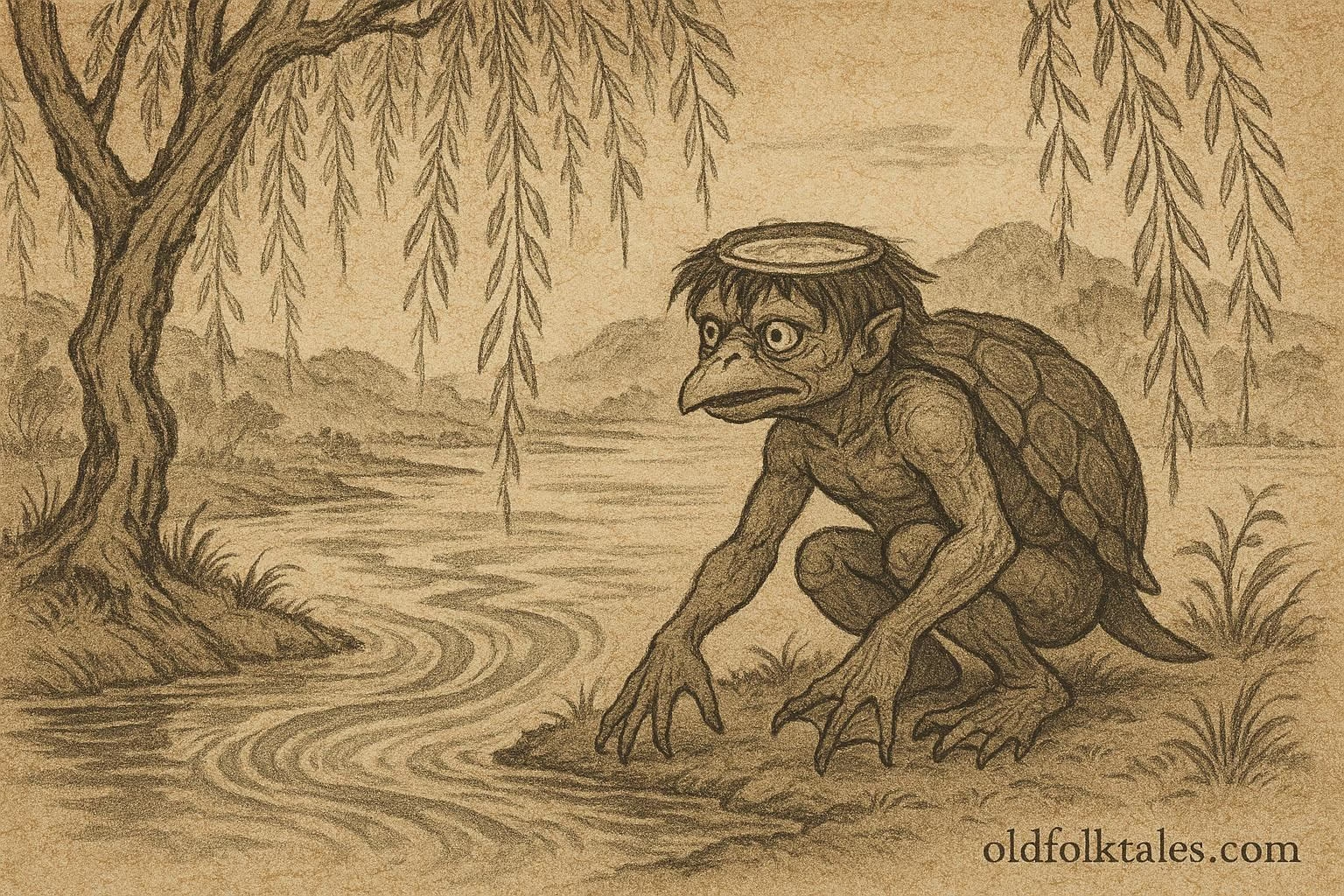
The Kappa (河童) is a unique aquatic spirit blending human, amphibian, and reptilian traits. Traditionally, it appears as a small humanoid creature, often child-sized, with scaly green skin, webbed hands and feet, and a turtle-like shell on its back. Its most distinctive feature is the dish or saucer (sara) atop its head, which holds water and serves as the source of its life force and magical power. Without water in the dish, the kappa becomes weak or powerless, a detail consistently emphasized in Edo-period medical and encyclopedic texts.
Accounts describe kappa as both mischievous and morally instructive. In some regions, kappa are dangerous: they drag people into rivers, drown unsuspecting victims, or steal the mythical shirikodama, a fabled ball said to contain a person’s soul or vitality, located near the anus. Yet in other stories, kappa are benevolent helpers, assisting farmers with irrigation, teaching medicine, or granting wisdom. They are renowned tricksters, fond of sumo wrestling with humans, engaging in riddles, or playfully stealing cucumbers (the creature’s favorite food).
Journey through the world’s most powerful legends, where gods, mortals, and destiny intertwine
Quoted excerpt:
“A dish (sara) upon its head must remain filled with water; if spilled the kappa is weakened.”, Edo texts compiled in yōkai encyclopedias.
Kappa dwell in rivers, ponds, and irrigation channels, often lurking near bends or overgrown banks. Their behavior is strongly tied to water: they cannot survive far from it and are governed by etiquette around politeness. A classic motif describes the human outwitting the kappa: bowing to the imp, which compels it to bow in return, spilling its head-dish and rendering it powerless.
The creature’s physiology is depicted consistently in Toriyama Sekien’s Gazu Hyakki Yagyō: amphibian-like facial features, beak-shaped mouth, clawed hands, turtle shell, and a dish on the head. Earlier accounts (medieval setsuwa) sometimes described ape-like or impish variants, but Sekien’s Edo illustrations standardized the “turtle-human-frog hybrid” iconography.
Cultural Role
Kappa function as both cautionary and instructive spirits in Japanese folklore. Many legends serve as warnings for children and villagers to respect rivers and avoid drowning. Tales of kappa capturing careless swimmers or attempting to pull victims under the water instilled practical river safety lessons in oral culture.
Simultaneously, kappa symbolize the complex moral universe of yōkai: cunning, honor-bound, capricious, yet bound by rules. Stories repeatedly highlight politeness, cleverness, and courage as the means to negotiate with a kappa. Ritualized gestures, like bowing, often neutralize danger, reflecting broader themes of etiquette and the consequences of hubris.
Beyond morality, kappa have agricultural and medicinal significance. Folklore credits them with knowledge of bone-setting and herbal remedies, making them archetypal trickster-teachers. Farmers might leave offerings of cucumbers in riverbanks to appease local kappa, blending superstition with social ritual. Some shrines still maintain kappa motifs in carvings, festivals, and regional folklore exhibitions, preserving this liminal figure as a cultural touchstone.
In Edo-period encyclopedias and illustrated yōkai compendiums, the kappa embodies the intersection of observation and imagination. Their anatomy may have arisen from sightings of turtles, otters, or other aquatic animals, transformed through narrative and didactic storytelling into supernatural form. They also reinforce human vulnerability and ingenuity, bridging practical environmental knowledge with mythic imagination.
Kappa legends persist in modern Japanese culture: in manga, anime, and children’s books, the creature oscillates between comic mischief and supernatural menace, preserving the traditional duality of playful trickster versus deadly river spirit.
Encounter dragons, spirits, and beasts that roamed the myths of every civilization
Author’s Note
The kappa exemplifies a folklore motif that is simultaneously educational, entertaining, and cautionary. By blending natural observation with supernatural creativity, Edo-period storytellers created a creature that teaches respect for water, reinforces etiquette, and embodies moral lessons in an imaginative narrative framework.
Knowledge Check (Q & A)
- What does “kappa” literally mean?
→ “River-child” or “river imp.” - Where does a kappa’s power reside?
→ In the water-filled dish (sara) atop its head. - What is the shirikodama?
→ A mythical ball said to contain a human’s soul or vitality, which kappa allegedly steal. - Name one clever method humans use to subdue a kappa.
→ Bowing to it so it bows back, spilling its head-dish. - How did Edo-period illustrations influence kappa imagery?
→ Standardized turtle/frog-like features and the head-dish motif, replacing earlier ape-like descriptions. - What cultural functions do kappa stories serve?
→ Water safety caution, moral instruction, trickster-teacher roles, and entertainment.
Source:
- Primary / archival:Toriyama Sekien, Gazu Hyakki Yagyō (late-Edo period yōkai illustrations, 18th century), digitized collections, Smithsonian Libraries.
- Secondary / academic:Michael Dylan Foster, The Book of Yōkai (University of California Press); regional folklore surveys, Hondō Kiyoshi, Japanese mythic encyclopedias.
Origin: Japan; textual, pictorial, and oral attestations from the medieval period through Edo and Meiji eras. Early yōkai narratives (setsuwa, local gazetteers, folklore) record river spirits and creatures resembling the kappa, predating formalized Edo-period imagery. Toriyama Sekien’s illustrations (c. late 18th century) codified the kappa’s now-familiar turtle-frog-human hybrid appearance.