In the city of Uruk, whose walls soared like the arms of the heavens, there reigned a king whose name would echo through eternity: Gilgamesh, two-thirds god, one-third man. His strength was unparalleled, his wisdom deep, yet his pride and tyranny pressed heavily upon his people. He raced through the city, claiming the first night of brides, demanding tribute, and bending laws to his will. The cries of Uruk’s citizens rose to the ears of Anu, the sky god, who decreed that a counterforce must balance the king’s power.
From the wilderness, carved by the hands of Enki and Aruru, came Enkidu, a wild man of hair and sinew, a friend of animals and rivers, untamed and free. For six days and seven nights, he roamed, feasting on nature’s bounty, until the trap of civilization beckoned him. Shamhat, the temple priestess, tamed him with words, bread, and the touch of human affection, and he became aware of Uruk and its mighty king. When Gilgamesh and Enkidu met, it was not with a greeting but with a wrestling match that shook the very ground. Yet in this clash, respect blossomed. They became companions, brothers in spirit, sharing laughter, counsel, and the courage to challenge the gods themselves.
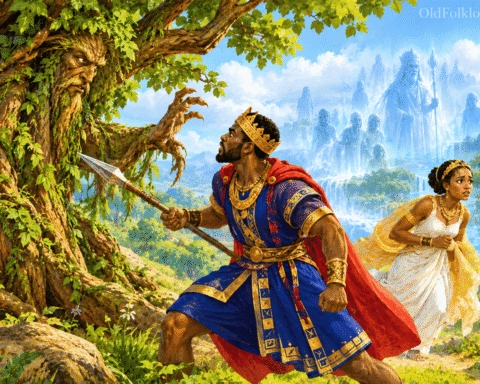
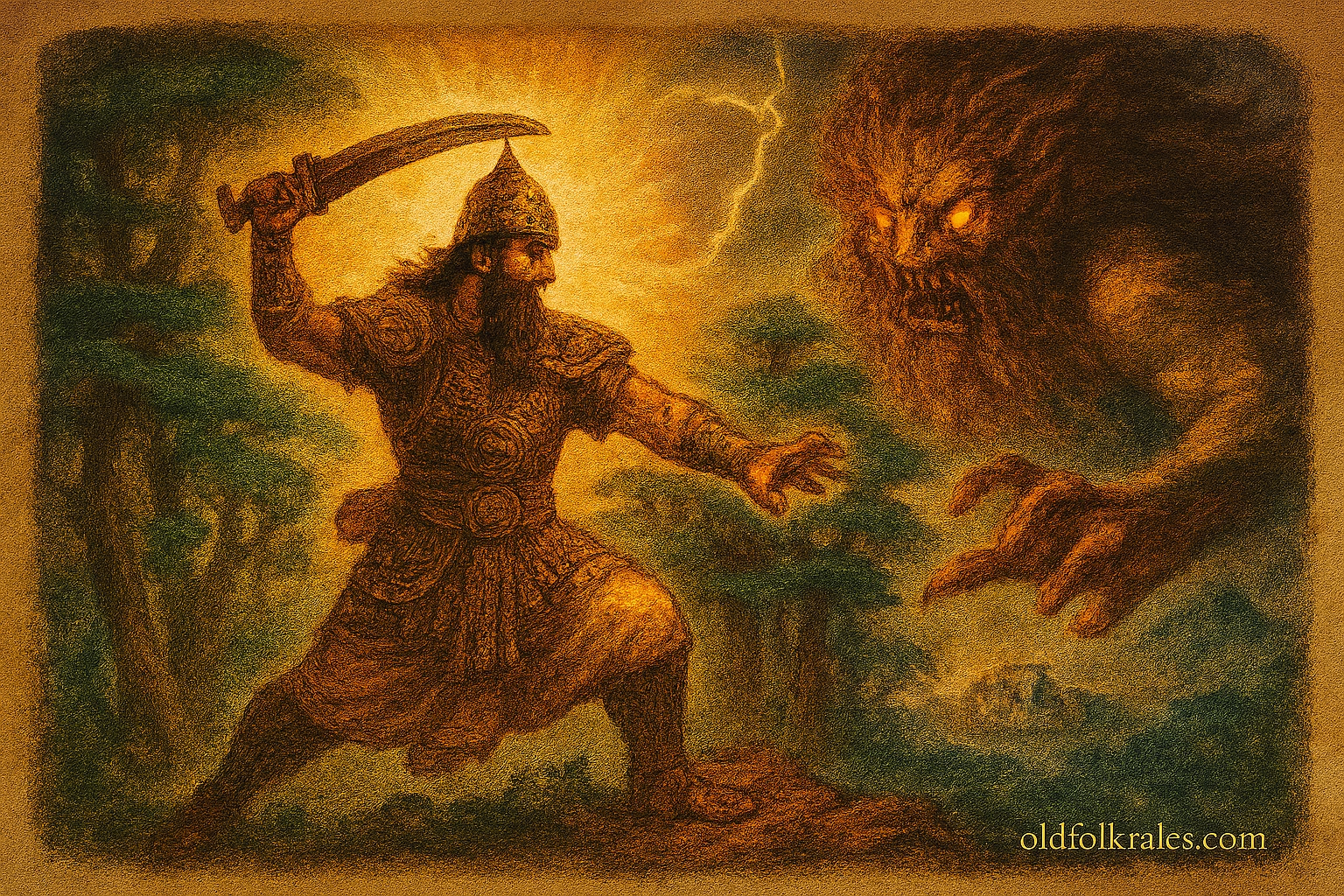
Their first great trial came in the cedar forest, guarded by Humbaba, a giant appointed by Enlil, lord of the winds. Many mortals feared Humbaba’s wrath, but Gilgamesh, burning with the desire for glory, pressed onward. Side by side, the king and his friend felled the guardian with strength, cunning, and the favor of Shamash, the sun god. The cedar fell in groaning timbers, the forest echoed with the defiance of men against divine authority. Yet, even in victory, doubt crept into Gilgamesh’s heart: Was greatness measured in strength alone, or in compassion, in restraint, in wisdom?
A celebration followed, but the gods watched with unease. Enkidu, the untamed companion who had embraced civilization, was struck down by the wrath of Ishtar, scorned and vengeful after Gilgamesh spurned her advances. In the silent nights of grief, Gilgamesh’s heart cracked with the realization that even kings, even demigods, must bow to the inescapable laws of mortality. Enkidu’s death was a hammer upon his soul; it unveiled the terror and fragility that had haunted him, masked behind armor and conquest.
Haunted by dreams and restless nights, Gilgamesh resolved to defy the limits of man. He would seek Utnapishtim, the immortal flood-survivor, to learn the secret of eternal life. Across mountains and deserts, through scorpion-infested tunnels that burned with the heat of the underworld, he journeyed. Each step tested his body and will; the rivers of death, the darkness of despair, and the whispers of ancient gods sought to turn him back. Yet his resolve, tempered by the memory of Enkidu, carried him forward.
At last, Gilgamesh reached Utnapishtim, who told him the tale of the great flood, a deluge sent by the gods to cleanse the world, and how he and his wife had been granted eternal life for their obedience and endurance. Gilgamesh begged for the same, but Utnapishtim warned him: immortality is the privilege of the gods, not men. He offered instead a test of staying awake for six days and seven nights, which Gilgamesh failed, succumbing to the deep, unyielding sleep of mortals.
Undeterred, the king discovered a final gift: a plant at the bottom of the sea that could restore youth. With trembling hands, he plucked it, envisioning a world where death could be conquered. Yet as he rested to bathe, a serpent slithered from the shadows, stealing the plant and shedding its skin, a reminder that life is ever-renewing, yet fleeting, and that mortals cannot clutch eternity in their grasp.
Returning to Uruk, weary, older in spirit, Gilgamesh beheld the city walls. Their stones, rising against the sky, whispered the truth: immortality lies not in evading death, but in deeds, in cities built, in justice, in the memory etched upon the hearts of generations. The king, once arrogant and reckless, now ruled with compassion, guiding his people with tempered strength and the wisdom of those who have glimpsed the limits of life. Though he could not escape death, he had touched eternity through friendship, courage, and the enduring legacy of civilization.
Author’s Note
Gilgamesh embodies the universal struggle against mortality, the tension between divine gifts and human limitations. His journey from tyranny to wisdom, through friendship and loss, reflects the earliest expressions of epic thought: that heroism is measured not solely in might, but in understanding one’s place within the cosmos. The walls of Uruk, which he once sought to glorify for personal fame, stand as monuments to human achievement and the enduring spirit of legacy.
Knowledge Check
-
Who is Enkidu, and what role does he play in Gilgamesh’s transformation?
-
What does the cedar forest and the battle with Humbaba symbolize?
-
How does the death of Enkidu affect Gilgamesh’s understanding of life and mortality?
-
Why does Utnapishtim refuse to grant Gilgamesh eternal life?
-
What lesson does Gilgamesh learn from the stolen plant of youth?
-
How does Gilgamesh achieve a form of immortality despite being mortal?
Origin: Epic of Gilgamesh (Mesopotamia, c. 2100 BCE)
Source: Andrew George (trans.), The Epic of Gilgamesh (Penguin Classics, 1999)