In the dusty villages of northern India, where mango trees shade courtyards and the evening wind hums through the fields, there lingers a tale whispered after dark. It is the story of the Churel, a restless spirit born of injustice and pain.
Long ago, in a small settlement by the foothills, there lived a young woman named Parveen. She was known for her beauty, her laughter, and her kindness to the poor. But her family married her to a man of great wealth and greater cruelty. Her husband, obsessed with his pride, often accused her of betrayal whenever his harvests failed or his cattle died. When Parveen gave birth to a stillborn child, the grief became too much for her fragile body. She died before the next dawn, abandoned by those who feared her misfortune.
They buried her in silence beneath a neem tree, far from the village. But the neem leaves withered, and soon strange things began to happen. Travelers passing near her grave said they saw a woman sitting by the roots, her hair long and tangled, her eyes gleaming with sadness. Others swore they saw footprints in the sand, turned backward as though walking toward the past.
Learn the ancient stories behind deities of light, storm, and shadow from cultures across the world
The elders called her a Churel, the spirit of a woman wronged in life. They said that such a soul returns at night to wander near crossroads and wells, her face shifting from that of a young beauty to a hideous crone. Her purpose is not mindless vengeance, but justice though her justice is fierce and without mercy.
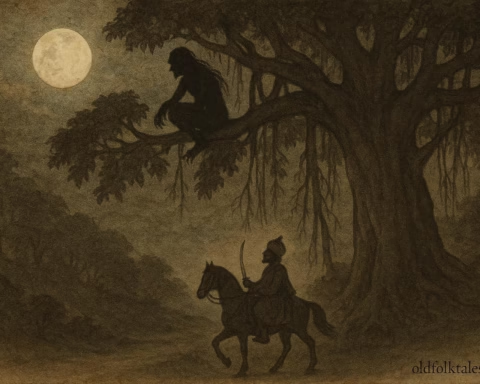
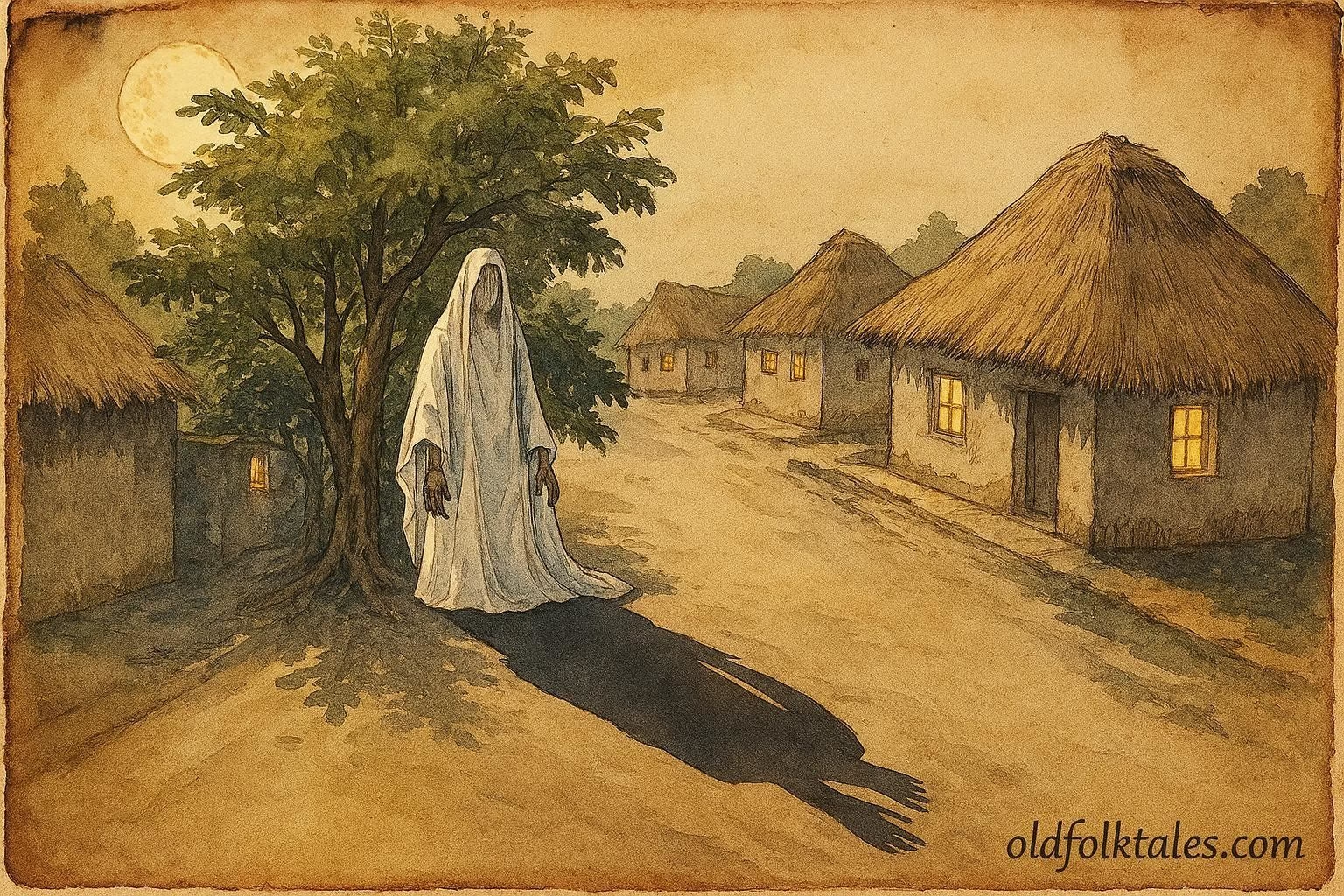
One night, Parveen’s husband stayed late at a tavern. As he staggered home, he saw a woman veiled in white, her anklets chiming softly. She turned to him and smiled with the same lips his wife once had. He followed her through the moonlit fields, unable to resist her call. When she finally stopped and lifted her veil, her eyes burned with pain and fury. Her feet were turned backward.
By morning, the villagers found him lifeless, his face frozen in terror. Near him, two footprints led away backward into the forest.
Fear spread quickly. The people built shrines of clay and placed offerings of milk, rice, and flowers near her grave, asking for forgiveness. The priest recited protective verses, but the winds still carried whispers. Mothers told their daughters never to walk alone at twilight, and men were warned that deceit and cruelty would draw the Churel’s gaze.
Over time, the story grew beyond one woman’s sorrow. In every village, she had a different name Churel in Hindi, Chudail in Urdu, Petni in Bengali yet her essence remained the same. She was the echo of every woman betrayed, a spirit who refused to fade into silence.
Some tales tell of the Churel finding peace when her wrongs are righted. A kind soul who prays for her, or a family that honors her memory, may free her from her wandering curse. In other stories, she becomes a guardian of women, haunting those who harm them. Farmers still leave a bowl of milk by their doorsteps on certain nights, not from fear, but from a respect quiet offering to the restless spirit who stands between the living and the forgotten.
In the rural heartlands of India and Pakistan, her story is not told to frighten alone. It is a tale of remembrance, an old truth wrapped in ghostly mystery. The Churel is both terrifying and tender a symbol of how the pain of injustice can echo beyond death, and how even in spirit form, the silenced can reclaim their voice.
When the wind rises through the neem trees at night, villagers still listen for the faint sound of anklets. And somewhere between the rustling leaves and the sighing earth, they whisper a prayer for her peace.
Explore the shadows of world mythology, where demons test the soul and spirits watch over mankind
Author’s Note
The story of the Churel reflects deep cultural memory and moral balance within South Asian folklore. She embodies the collective grief of women wronged by tradition and betrayal, yet she also symbolizes strength reclaimed through spirit and endurance. The Churel’s tale reminds listeners that injustice leaves echoes, and that the human soul seeks truth even beyond the veil of life and death.
Knowledge Check
1. What is the Churel believed to be in South Asian folklore?
She is the spirit of a woman who dies wronged, betrayed, or in childbirth, returning as a ghost to seek justice.
2. How did Parveen’s transformation into the Churel begin?
After her death in sorrow and betrayal, her grave became a place of unrest, where her spirit was reborn in grief.
3. Why are the Churel’s feet said to be turned backward?
They symbolize her unnatural return from death and her inability to walk the normal path of life again.
4. What moral lesson does the Churel legend teach?
That cruelty and injustice toward women bring spiritual consequences that echo beyond mortal life.
5. How do villagers protect themselves from the Churel?
They place offerings like milk or flowers near her resting place and avoid walking alone at night.
6. What does the Churel represent in modern interpretation?
She represents the spirit of resistance and remembrance for women silenced by society.