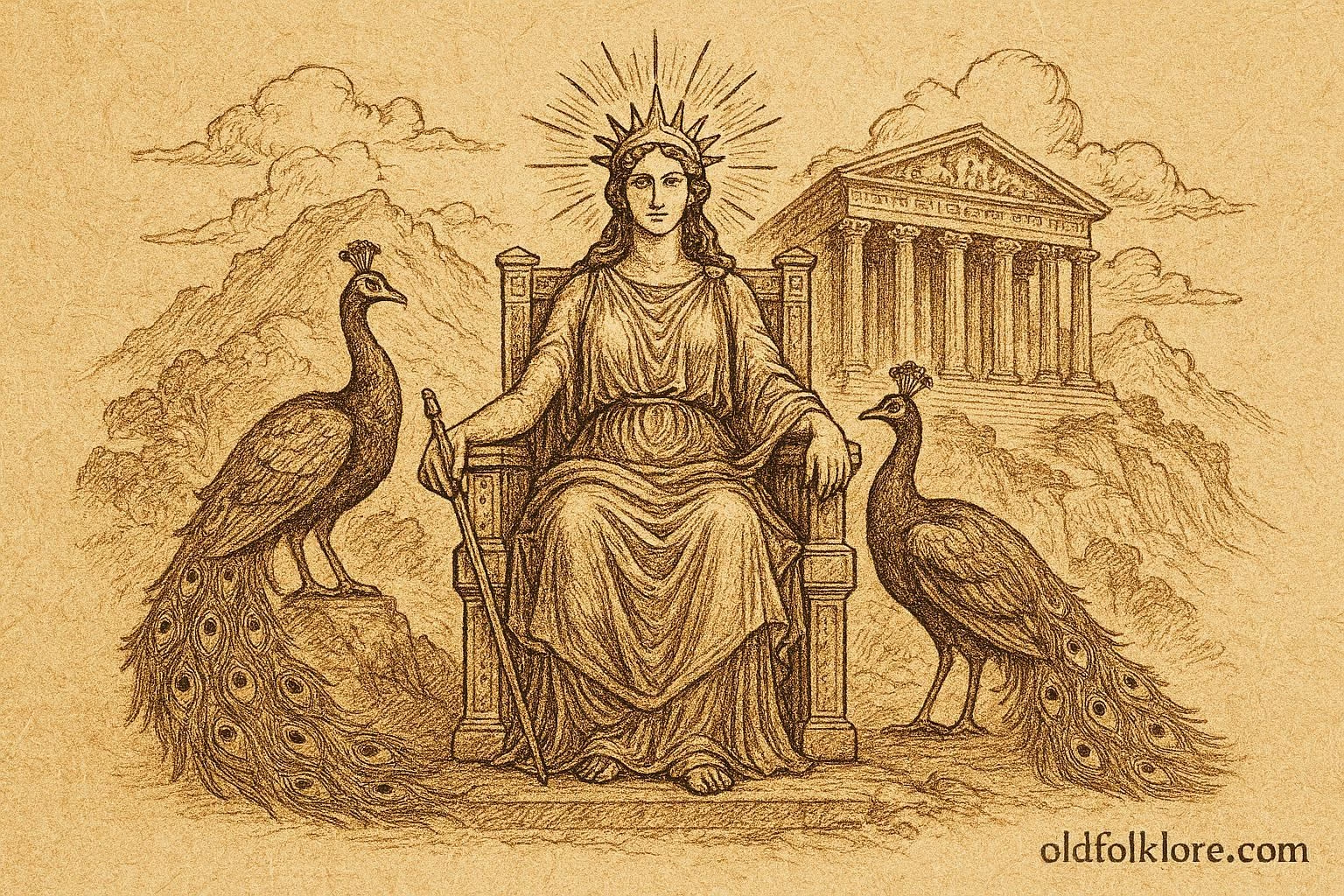
Hera (Ἥρα), daughter of the Titans Cronus and Rhea, is the Queen of the Olympian gods and the goddess of marriage, childbirth, and family order. She reigns beside her husband, Zeus, yet remains a formidable power in her own right, sovereign of Olympus’s domestic and divine harmony.
From her earliest worship in Argos, Samos, and Mycenae, Hera was honored as the great matron of the Greek world. Temples dedicated to her were among the oldest monumental sanctuaries in Greece, where women offered vows for fertility, childbirth, and the sanctity of marriage. Her sacred animals are the peacock, symbol of beauty and immortality, and the cow, emblem of maternal gentleness and abundance.
Hera’s symbols, the diadem, scepter, and lotus-tipped staff, reflect her role as divine queen. Yet behind her regal calm lies an immortal whose emotions mirror the human heart: she loves fiercely, punishes deeply, and guards the sanctity of vows with divine vigilance. Her mythic stories, drawn from Homer’s Iliad and Hesiod’s Theogony, reveal not merely jealousy but a goddess fighting to preserve sacred order against chaos and betrayal.
Mythic Story: Hera’s Vengeance and the Birth of Hephaestus
Among all tales of Hera, none reveals her divine complexity more than the story of Hephaestus’s birth, a myth of pride, pain, and paradoxical love.
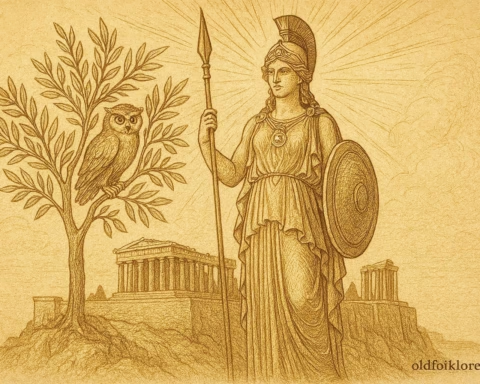
In the dawn of Olympus, after Zeus had overthrown the Titans and taken Hera as queen, harmony seemed destined to reign. Yet Zeus’s constant infidelities soon stirred the storm of Hera’s anger. He fathered Athena without her, a child born from his own head, fully armed, through divine will alone.
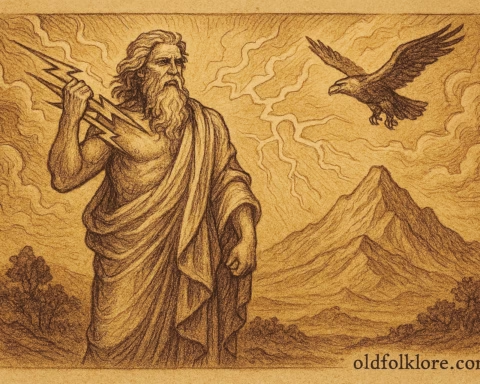
Hera watched the spectacle with silent humiliation. The thunder-god, her husband, had created life without her. In her wounded pride, she resolved to show Zeus that she too could bear a child without a consort. She struck the earth, invoking primal powers, and from her own body brought forth a son, Hephaestus, the god of fire and forge.
But when Hera saw her newborn, her triumph turned to bitterness. The child was lame, his leg twisted and frail. In her fury and shame, she cast him down from the heights of Olympus into the sea. There, the goddesses Thetis and Eurynome rescued the infant and nursed him in secret, deep within a grotto surrounded by coral and sea-foam.
Years passed. Hephaestus grew not in beauty but in brilliance. In his hidden workshop beneath the waves, he forged jewels of divine craftsmanship, cups that gleamed like sunlight through water, and automata, living metal creations that served the gods. When Hera later received one of his magnificent thrones as a gift, she sat upon it proudly, unaware that it was enchanted. The throne seized her with invisible bonds, holding her captive.
The Olympians tried in vain to free their queen. Only Dionysus, the wine god, managed to coax Hephaestus back to Olympus by intoxicating him and leading him on a mule, laughing and singing all the way. When Hephaestus finally released Hera, the queen beheld her son again, no longer a castaway but a divine craftsman, radiant with fire and art.
In this reconciliation, Hera’s pride softened into acknowledgment. Though her actions had sprung from wounded dignity, her son’s genius reflected her own indomitable spirit. Through him, she saw that even imperfection could bear beauty, and even wrath could yield creation.
Thus, from Hera’s fury was born the god who armed heroes, forged lightning, and adorned Olympus itself. Her myth stands as a paradox, divine jealousy transformed into divine art, the shaping of chaos into cosmic order.
Author’s Note
Hera’s story embodies the eternal struggle between love and pride, creation and control. To the Greeks, she represented the sacred bond of marriage, not as gentle devotion, but as a force of endurance, jealousy, and loyalty intertwined. Her myths mirror the complexity of partnership and the sanctity of vows. Hera teaches that divine order depends upon balance, for even gods must wrestle with emotion before achieving harmony.
Learn the ancient stories behind deities of light, storm, and shadow from cultures across the world
Knowledge Check
Q1. What domains does Hera rule over?
A: She is the goddess of marriage, childbirth, and family, as well as queen of Olympus.
Q2. Who are Hera’s parents?
A: The Titans Cronus and Rhea.
Q3. What are Hera’s sacred symbols and animals?
A: The peacock, cow, diadem, and lotus-tipped scepter.
Q4. Why did Hera create Hephaestus without Zeus?
A: Out of jealousy and pride after Zeus birthed Athena without her.
Q5. How was Hera punished or tested by her own actions?
A: Her son Hephaestus, whom she cast away, later trapped her in his enchanted throne.
Q6. What moral lesson does Hera’s myth convey?
A: That love, pride, and creation are intertwined, even divine flaws can yield beauty and order.
Source: Greek Mythology, Greece.
Source Origin: Greece