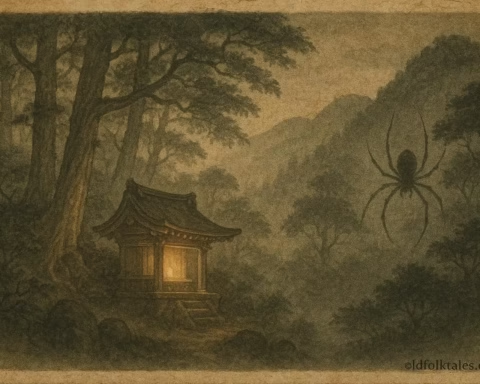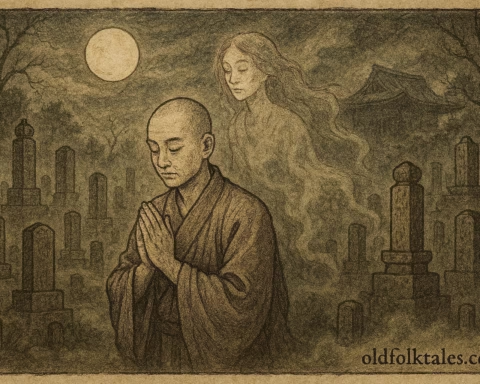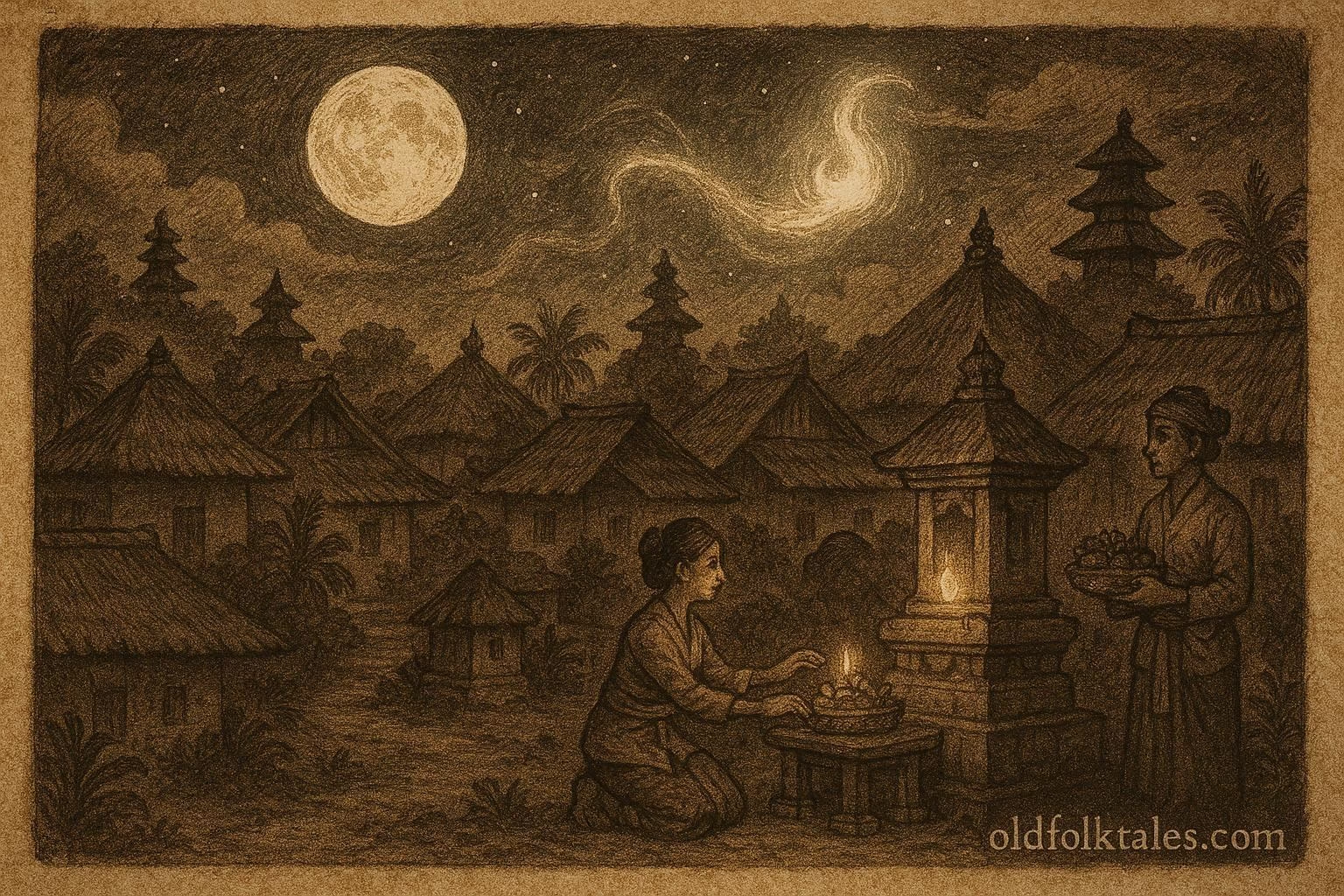
In the quiet villages of Bali, where temples rise beside emerald rice terraces, the people whisper of the Léyak spirits of witches who master forbidden magic. They are said to roam the night as disembodied heads, glowing with blue fire, their entrails trailing beneath them as they drift through the air. To the Balinese, the Léyak are not merely monsters but the embodiment of human envy and corrupted power.
Long ago, in a village near Ubud, there lived a widow named Dayu. She was known for her knowledge of herbs and her skill in healing. Yet some whispered that her knowledge came from the dark arts, passed down through secret initiations. When sickness struck the village and crops began to fail, suspicion turned to her.
One night, as the moon waned thin, a young woman named Sari fell ill. Her skin grew pale, her breath weak, and no remedy would cure her. Her mother claimed she had seen a light hovering outside her daughter’s window a floating head surrounded by sparks of blue flame. The elders gathered, fearful that the Léyak had come among them.
Encounter dragons, spirits, and beasts that roamed the myths of every civilization
The priest of the village, known as the Pemangku, performed divination before the temple. He cast grains of rice and murmured prayers to Barong, the spirit of protection. The signs confirmed their fear a Léyak was indeed preying upon the village. He ordered offerings to be made at every crossroad: coconut oil lamps, woven flowers, and small cakes of rice to appease the spirits of the air.
Meanwhile, Dayu grew thin and pale. At night, villagers claimed to hear strange cries near her hut, and dogs howled without rest. One man swore he saw a fireball rise from her roof and vanish into the night sky. Yet no one dared accuse her openly, for in Bali, to name a witch is to challenge the unseen world itself.
The Léyak’s origins were older than memory. According to the island’s lore, a woman could become one through secret initiation binding her spirit to dark spirits in exchange for supernatural strength. At night, she would chant forbidden mantras, causing her body to fall limp as her head detached and rose into the air. She could slip through any crack, seeking the life essence of the weak or newborn.
One night, as the wind rustled the banana leaves, Sari’s mother prayed before a small shrine. She placed flowers beside a bowl of water and whispered, “Spirits of protection, let no evil enter my home.” Inside the hut, her daughter slept uneasily. Suddenly, a faint light appeared near the ceiling. The air grew cold. From the shadows, a floating head emerged its hair streaming like smoke, its mouth open in hunger.
But before it could reach the sleeping girl, the mother threw holy water toward it, chanting the name of Barong. The head shrieked and vanished through the roof. The next morning, villagers found a trail of burned leaves leading toward the forest.
The priest gathered the villagers once more and told them that evil had been repelled, but it would return unless the people renewed their faith. Together, they prepared a great ceremony at the temple, known as the Pendet. Dancers moved in circles, bells rang, and offerings were laid out fruits, flowers, and incense rising in fragrant smoke. The people prayed to restore harmony between the human world and the spirit realm.
At dawn, a shadow was seen on the path leading away from the village. It was Dayu, pale and trembling, her eyes hollow. She confessed before the priest that she had studied the dark mantras to heal her loneliness and pain. “I wished for power to make them respect me,” she said, “but I brought only fear.” The priest told her that redemption was possible only through purification.
They led her to the river at sunrise. There, she washed in the flowing water as the priest recited mantras of cleansing. The villagers joined in, their voices echoing through the valley. When she emerged, the fire in her eyes had dimmed. She left the village afterward, seeking solitude and forgiveness. No one saw her again, though sometimes, on misty nights, villagers still notice a faint light drifting over the fields neither hostile nor kind, but a reminder.
The Léyak’s story remains a warning to those who covet power without compassion. In Bali, every ceremony, every offering, is not merely ritual. it is a promise that humans will live in balance with the unseen. Evil, they say, begins when that balance is broken.
And so, when the moon is thin and the wind grows strange, Balinese families place small offerings outside their homes, whispering the old words of protection: “Peace above, peace below, peace within.” For they know the night still remembers.
Author’s Note:
The tale of the Léyak speaks to Bali’s profound respect for balance between light and dark. The story reminds us that power, even when pursued with good intent, becomes dangerous when taken without humility. Through ritual and community faith, the people reaffirm their connection to the divine order a harmony that must never be forgotten.
Knowledge Check
1. Who are the Léyak in Balinese folklore?
They are witches who can detach their heads and fly by night to drain the life from the living.
2. What causes a person to become a Léyak?
A woman may become one by practicing forbidden magic and chanting dark mantras for power.
3. How did the villagers protect themselves from the Léyak?
They made offerings, prayed to Barong, and performed ceremonies of purification and protection.
4. What lesson does the story of Dayu teach?
It warns against the pursuit of power through envy or dark means, and emphasizes spiritual humility.
5. What symbolizes harmony and cleansing in the story?
The river purification ritual, representing renewal and forgiveness.
6. How is balance restored in the village?
Through collective prayer, offerings, and rituals that reconnect humans with the spirit world.