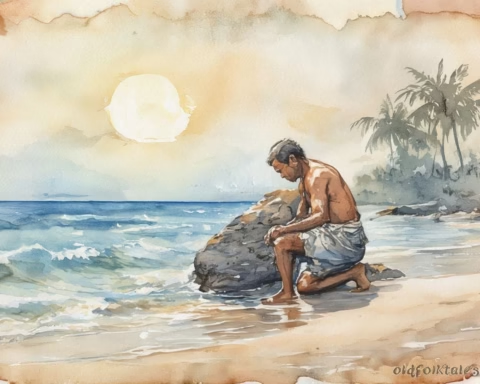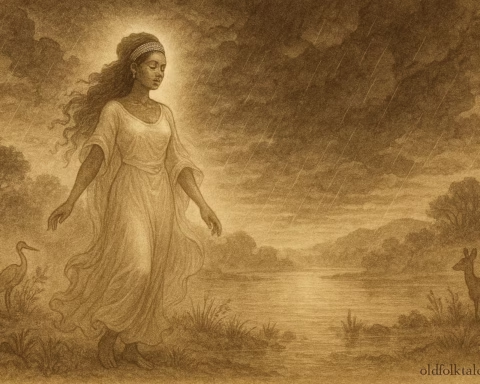
Māui, the daring culture hero of Polynesia, stands at the meeting point of divine power and human aspiration. Known by many names, Māui-tikitiki-a-Taranga in Māori lore, Māui-tikitiki in Samoa, and Māui-kisikisi in Tonga, he embodies ingenuity, rebellion, and the sacred art of transformation.
Neither wholly god nor mortal, Māui’s birth is itself a miracle. Abandoned at sea by his mother Taranga and rescued by the gods, he was nurtured by the ocean spirits and endowed with divine cunning. He grew to challenge the cosmic order, fishing up islands from the deep, capturing the blazing sun to slow its path, and stealing the secret of fire to gift humanity.
His symbols include the enchanted fishhook Manaiakalani, the snaring ropes of sunlight, and the spark of sacred flame. Across the wide Pacific, his name is invoked not in worship but in awe, a reminder that cleverness, when wielded with courage, can shift the balance of the world.
The Mythic Story: Māui and the Goddess of Fire
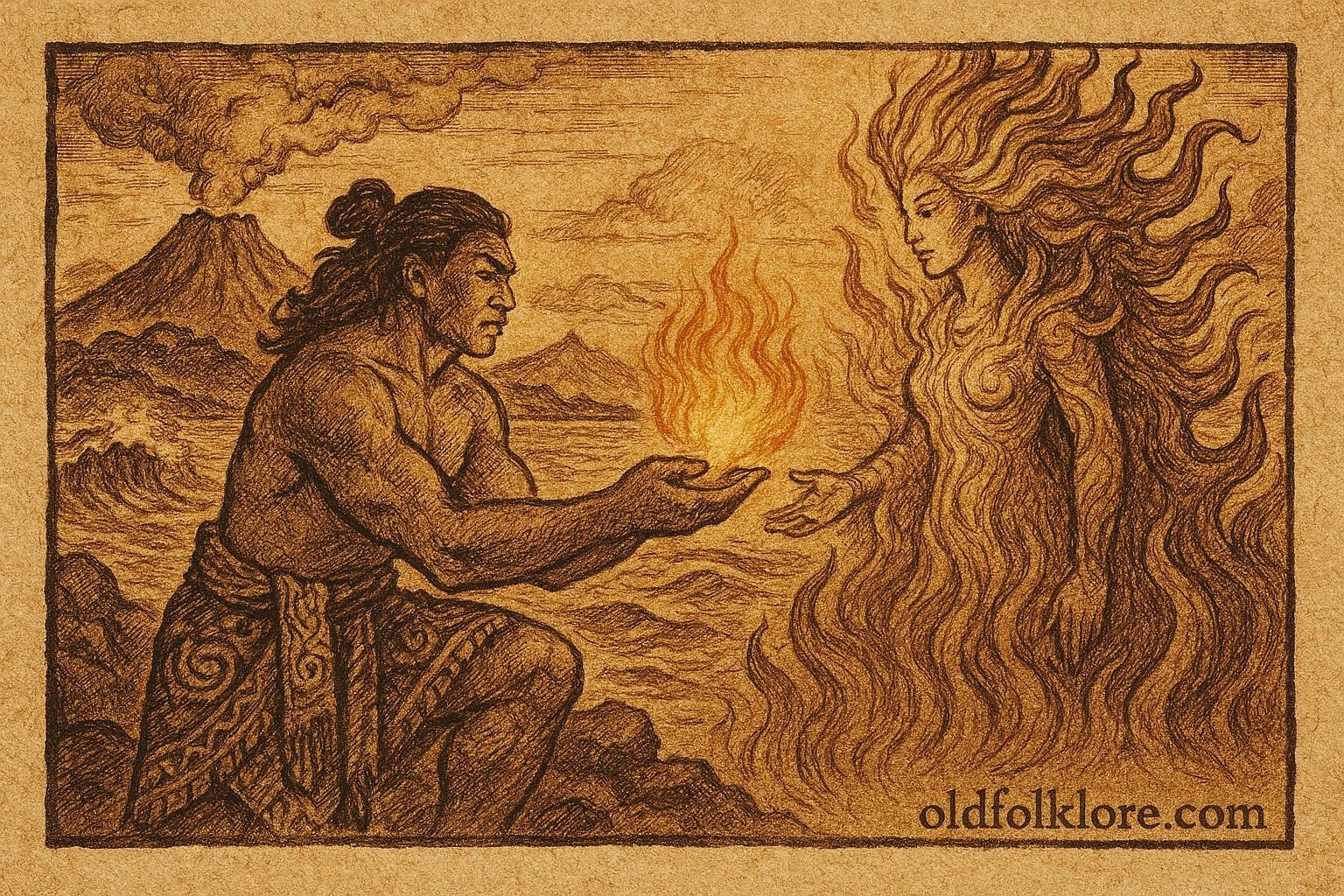
In the time when the world was still young, and men lived close to the gods, fire was not yet the servant of humankind. It belonged to the divine beings alone, secret, sacred, and feared. When the hearths of mortals went cold, they sat in darkness, for only the goddess Mahuika, keeper of fire, held its flame in her fingernails.
Māui, ever restless, watched his people struggle when rain or wind quenched their fires. He wondered why such a gift was denied to mortals. His heart burned with curiosity and a spark of mischief. “If fire belongs to the gods,” he thought, “then I shall go and ask for it myself.”
So Māui set out across the valleys until he reached the cave of Mahuika, deep in the folds of a smoking mountain. There he bowed respectfully and spoke with the charm that had swayed even the gods:
“Grandmother Mahuika, my people suffer in the cold. Grant us a little of your sacred flame, that life may continue.”
Mahuika, ancient and fierce, regarded the trickster with eyes like molten stone. “You are bold, child of men,” she said, “but you speak with truth. Here” And she pulled a flame from her fingernail, tossing it to Māui. It burned bright and red in his palm.
“Guard it well,” she warned. “From my body you have taken fire, and from my body it cannot be replaced.”
Māui thanked her and left. Yet, as he walked, a thought began to gnaw at his clever mind. “If this is true fire,” he mused, “then it should survive anything.” He dropped the flame into a stream, and it hissed and vanished. “So,” he murmured, “fire dies in water.” His curiosity deepened into mischief. He returned to Mahuika, feigning sorrow.
“Grandmother, alas! I stumbled, and the flame was lost. May I have another?”
Pitying him, Mahuika plucked another fingernail and gave him fire again. But Māui’s heart was not yet content. He repeated the trick again and again, losing fire to the wind, to the earth, to the river, until Mahuika had given away nearly all her nails. Her fingers bled light, and her patience grew thin.
At last, when Māui returned once more, Mahuika’s voice rose like thunder:
“Enough, deceitful child! You mock the sacred gift!”
In fury, she tore the last spark from her body and hurled it at him. Fire leapt through the forest, chasing Māui as he fled. Trees blazed, rivers steamed, and mountains roared. He called to his ancestors, to the spirits of wind and rain, and they came. The heavens opened, pouring torrents that quenched the goddess’s wrath.
When the storm ended, Mahuika wept for the loss of her power. Her flames were nearly gone. Moved by remorse, Māui knelt beside her. “Forgive my mischief, grandmother,” he said softly. “If the sacred flame must perish, let it live in another form.”
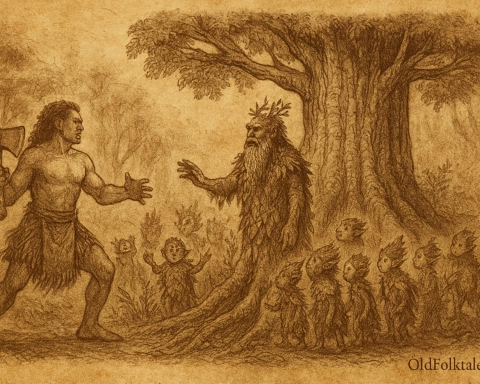
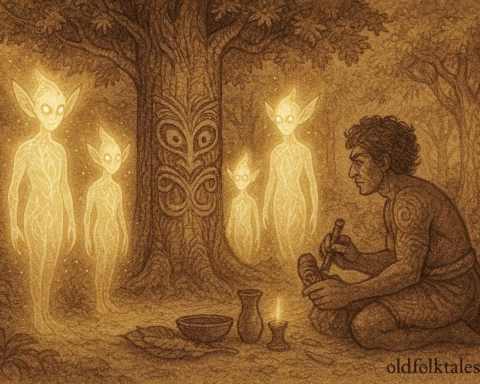
Hearing his plea, Mahuika cast her final sparks into the trees. “From now on,” she declared, “fire shall dwell within the wood of these trees. Let humankind learn to summon it by rubbing branch against branch, as you have rubbed truth and deceit.”
And so Māui taught his people how to draw fire from wood. The forest became a living storehouse of divine warmth, and humankind no longer trembled in the cold.
Yet the elders say that when lightning strikes, it is Mahuika remembering her power, and when flames flicker on the hearth, it is Māui’s laughter dancing in the smoke.
Author’s Note
Māui’s tale of fire reveals the paradox of divine curiosity: knowledge must be tested, even when it risks angering the sacred. His cunning, often reckless, symbolizes the restless human spirit that questions boundaries and transforms the world through discovery. In Polynesian cosmology, Māui’s deeds are not rebellion alone but acts of balance, each mischief bringing new harmony between gods and mortals. He teaches that creation often requires daring, and that even mistakes can kindle enlightenment.
Knowledge Check
Q1. Who is Māui in Polynesian mythology?
A: Māui is a divine trickster and culture hero known for shaping the natural world through his clever deeds.
Q2. What sacred object is Māui associated with?
A: His magical fishhook, Manaiakalani, which he used to fish islands from the sea.
Q3. Who was the goddess of fire Māui visited?
A: Mahuika, the keeper of the sacred flame hidden in her fingernails.
Q4. What did Māui’s theft of fire symbolize?
A: The gift of knowledge and technology to humankind, gained through curiosity and risk.
Q5. In what regions is Māui’s myth found?
A: Across Polynesia, including Māori (New Zealand), Hawaiian, Samoan, and Tongan traditions.
Q6. What moral lesson does the story convey?
A: That curiosity and cleverness can bring great progress, but must be balanced with respect for sacred power.
Source: Polynesian Mythology (Māori, Samoan, Hawaiian, and Tongan oral traditions), recorded by Sir George Grey, 19th century.
Source Origin: Polynesia (Māori, Hawaiian, Samoan, and Tongan Traditions)