Long ago, in the time when heaven and earth walked closer together, the Jade Emperor sat upon his celestial throne and gazed down at the mortal realm. He decided it was time to create a system to mark the passage of years, something that would help humans understand the cycles of time and destiny. The emperor decreed that twelve animals would be chosen to represent the zodiac, each one granted immortal status and eternal honor. These creatures would become symbols of fortune, personality, and fate for all generations to come.
Word spread throughout the land like wildfire. Every creature, from the mightiest to the smallest, learned that they could journey to the Heavenly Temple to be selected. The rules were simple but absolute: animals would be chosen in the order they arrived, and only the first twelve would receive the honor. The rest, no matter how noble or swift, would be turned away.
Click to read all Myths & Legends – timeless stories of creation, fate, and the divine across every culture and continent
In those days, Mouse and Cat were the best of friends. They spent their days together, sharing food and stories, sleeping curled up in warm corners. When they heard about the Jade Emperor’s decree, they made a solemn promise to travel to the Heavenly Temple together, to help each other along the way.
But when the appointed morning arrived, something changed in Mouse’s heart. Perhaps it was ambition, or fear of being left behind, or simply the cunning nature that defined his kind. Whatever the reason, Mouse crept away before dawn without waking Cat, leaving his friend sleeping peacefully while he hurried alone toward the temple gates.
The road stretched long before Mouse’s tiny feet. He scurried with all his might, his little heart pounding, his breath coming in short gasps. Then, in the distance, he spotted Cow massive, steady Cow taking enormous strides that covered the ground with ease. Mouse ran faster, his legs burning with effort, until he finally caught up.
Mouse looked at the road ahead and felt despair wash over him. His legs were already trembling with exhaustion, and the temple still lay far in the distance. Then his clever mind began to work. He sidled up to Cow and said in his friendliest voice, “Brother Cow, what a long and boring journey this is! How about I come along and sing for you? It will make the time pass more pleasantly.”
Cow, who was good-natured and enjoyed company, agreed immediately. “Alright, little friend. I would enjoy some music.”
They walked together for some time, Cow’s hooves striking the earth in steady rhythm. But after a while, Cow realized something was wrong. “Hey,” he called back, “how come you aren’t singing?”
Mouse, who had been saving his breath, replied quickly, “I am singing! Can’t you hear me? Oh, I see the problem my voice is too soft. Here’s an idea: let me climb up and sit on your neck. Then you’ll be able to hear me much better.”
Cow, trusting and simple-hearted, thought this made perfect sense. “Alright,” he agreed.
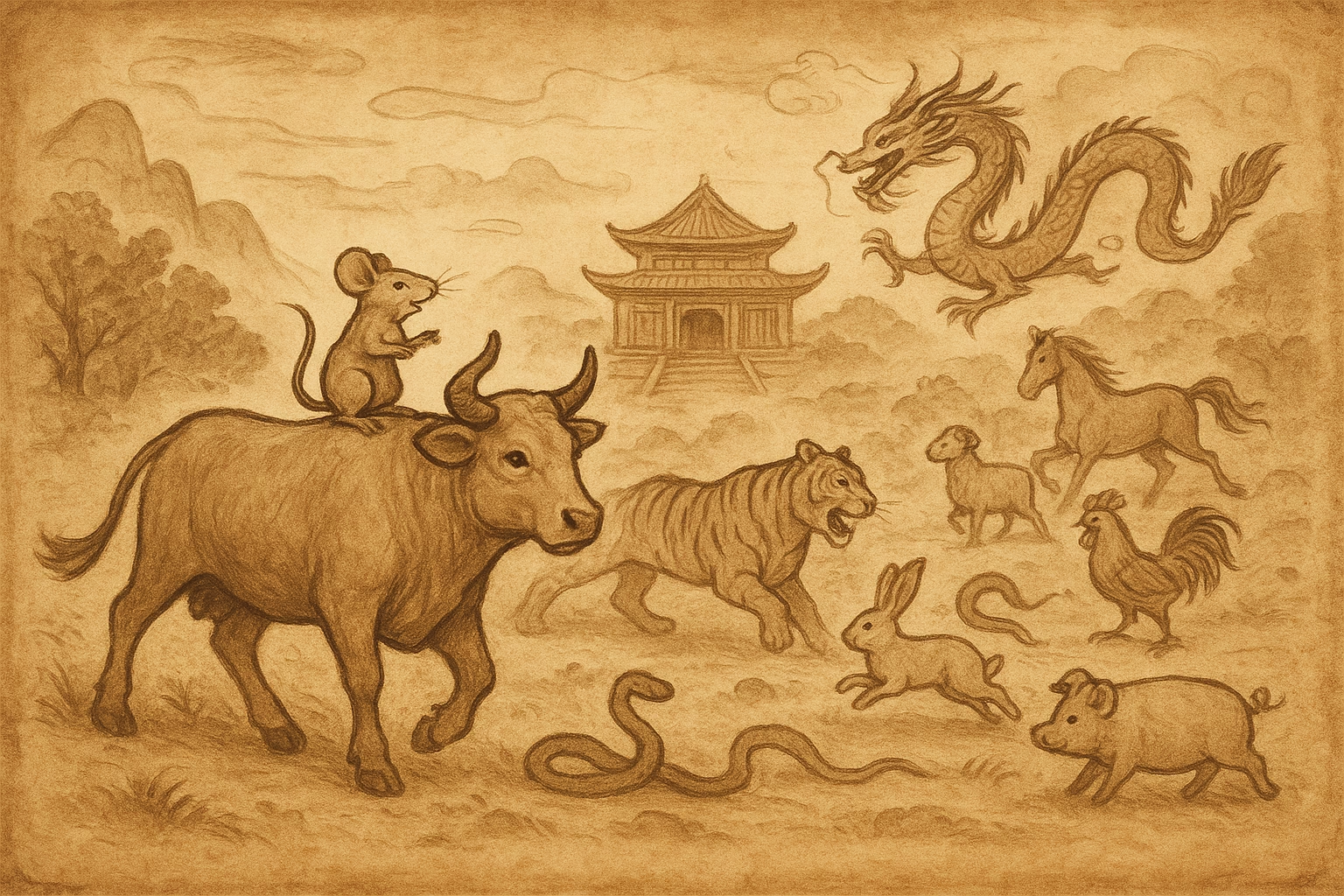
Mouse scrambled up Cow’s broad back and settled himself comfortably on Cow’s neck, right between the horns. Now he didn’t have to run at all! He bobbed his head cheerfully and began to sing in earnest sweet melodies and clever verses that made Cow smile.
Inspired by the music, Cow let loose his legs and ran with all his considerable strength. His powerful muscles propelled him forward, eating up the miles, while Mouse rode along effortlessly, congratulating himself on his brilliance. The landscape blurred past them fields and forests, rivers and hills until finally, the Heavenly Temple appeared in the distance, its golden roof gleaming in the morning light.
As they approached the enrollment gate, Cow looked around and saw that no other animals had arrived yet. Joy filled his great heart. “Moo!” he cried out happily. “I am number”
But before Cow could finish his sentence, Mouse leaped down from his perch and landed right in front of Cow’s nose, crossing the threshold first. The celestial officials recorded it: Mouse arrived first, Cow second.
Cow stood there, stunned and confused, but he was too gentle to protest. And truth be told, Mouse had been clever, and cleverness counted for something.
Soon after, other animals began arriving. Tiger bounded in, powerful and fierce, claiming third place. Rabbit hopped across the finish line right after, taking fourth. Then came Dragon, soaring majestically through the clouds; Snake, slithering swiftly; Horse, galloping with flowing mane; Sheep, gentle and persistent; Monkey, swinging and leaping; Rooster, crowing proudly; Dog, loyal and steady; and finally, Pig, huffing and puffing but determined.
Twelve animals filled the line. The Jade Emperor smiled upon them, and they were granted their immortal positions in the zodiac.
Meanwhile, back home, Cat waited and waited for Mouse to come call on him as promised. When Mouse never appeared, Cat finally realized he’d been abandoned. He raced toward the Heavenly Temple as fast as his paws could carry him, his heart pounding with hope and growing dread. But when he arrived, breathless and desperate, he discovered the terrible truth: all twelve positions had been filled. He was too late.
Cat’s eyes found Mouse among the chosen twelve, and rage exploded in his chest a fury born of broken friendship and stolen opportunity. With a yowl of betrayal, Cat pounced, trying to catch Mouse in his claws. Mouse squeaked and fled, barely escaping.
From that day to this very moment, cats chase mice wherever they find them, and mice flee from cats in terror. The ancient betrayal lives on in their descendants, an eternal reminder that broken trust leaves wounds that never fully heal.
The Moral Lesson
The legend of the Chinese zodiac teaches important lessons about both cunning and character. Mouse’s cleverness allowed him to claim first place, showing that intelligence and resourcefulness can overcome physical limitations. However, his betrayal of Cat reveals the cost of deceit he gained immortal status but lost trust and friendship forever, earning an eternal enemy. The story reminds us that how we achieve success matters as much as success itself, and that broken promises create consequences that echo through generations.
Knowledge Check
Q1: Why did the Jade Emperor create the Chinese zodiac animals?
A: The Jade Emperor wanted to create a system to mark the passage of years and help humans understand cycles of time and destiny. He decided to grant immortal status to twelve animals who would become symbols representing different years, personalities, and fortunes for all generations.
Q2: How did Mouse win first place in the zodiac race?
A: Mouse used cleverness to overcome his small size and limited stamina. He convinced Cow to let him ride on Cow’s neck by offering to sing during the journey. Cow carried Mouse all the way to the Heavenly Temple, and just as they arrived, Mouse leaped down and crossed the threshold first, claiming the top position.
Q3: What promise did Mouse break and what were the consequences?
A: Mouse and Cat were best friends who promised to travel to the Heavenly Temple together. But Mouse broke his promise by leaving without waking Cat, abandoning his friend to travel alone. As a result, Cat arrived too late and missed his chance at the zodiac. This betrayal created eternal enmity cats have chased mice ever since, and this conflict continues to this day.
Q4: What are the twelve Chinese zodiac animals in order?
A: The twelve animals in order of their arrival at the Heavenly Temple are: Mouse (Rat), Cow (Ox), Tiger, Rabbit, Dragon, Snake, Horse, Sheep (Goat), Monkey, Rooster, Dog, and Pig. This order determines their position in the twelve-year cycle of the Chinese zodiac calendar.
Q5: What does Cow’s character represent in the zodiac legend?
A: Cow represents strength, diligence, and good nature. Despite being powerful enough to win first place, Cow was trusting and gentle-hearted, which allowed Mouse to take advantage of him. Cow’s willingness to help Mouse and his lack of protest when tricked demonstrates the values of hard work, kindness, and humble acceptance traits traditionally associated with those born in the Year of the Ox.
Q6: What is the cultural significance of the Chinese zodiac in traditional Chinese culture?
A: The Chinese zodiac plays a central role in Chinese culture, used to mark years in a twelve-year cycle where each year is represented by one of the zodiac animals. People believe the zodiac animal of their birth year influences their personality, fortune, and compatibility with others. The zodiac is integral to Chinese astrology, festivals, fortune-telling, and understanding one’s destiny and character traits.
Source: Adapted from traditional Chinese folklore and mythology
Cultural Origin: Han Chinese traditional folklore, ancient China