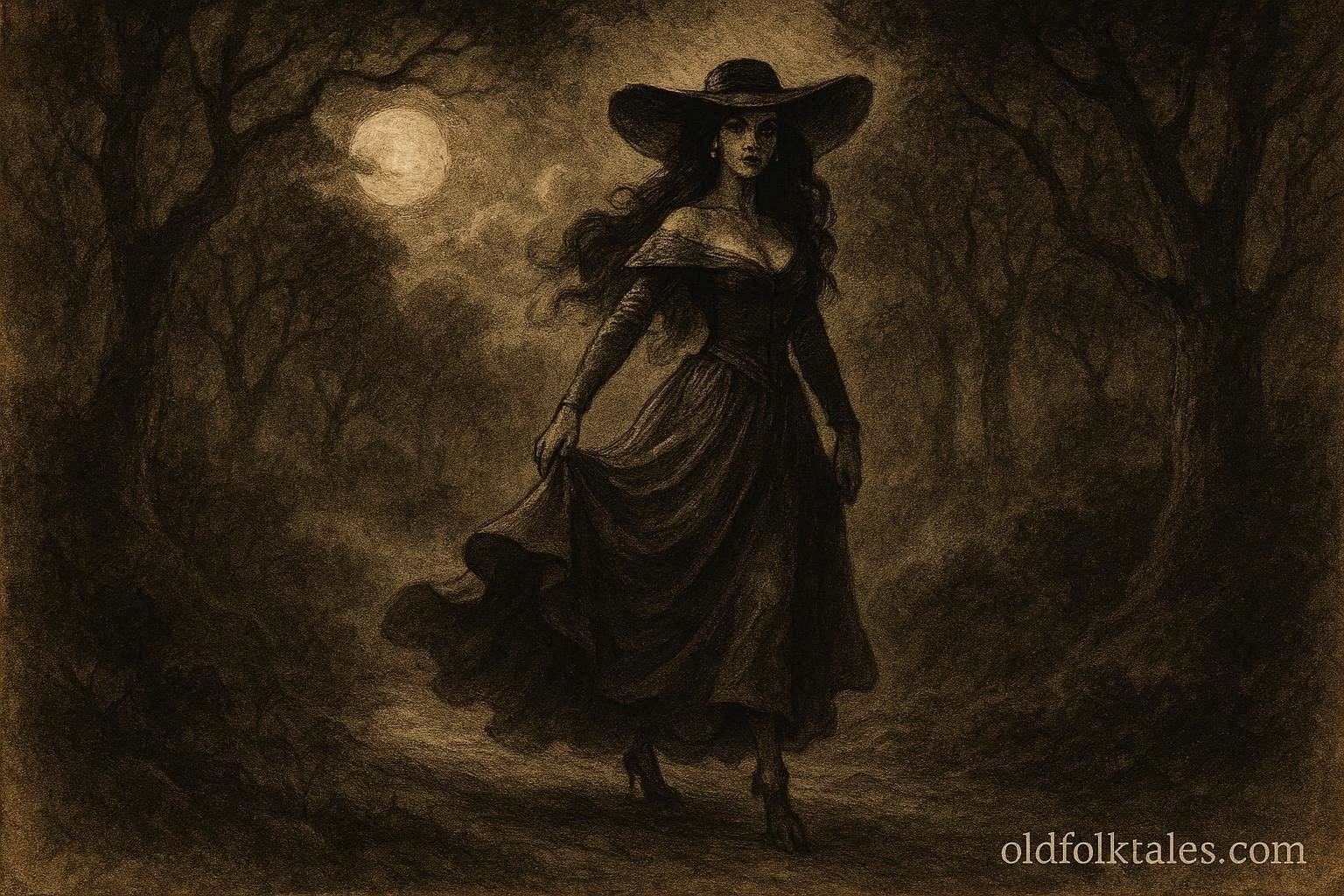
La Diablesse, also referred to in French Creole as Lajabless, is a prominent figure in Caribbean folklore, often depicted as a seductive female demon or revenant. She is typically described as strikingly beautiful, with flowing hair, elegant dress, and a wide hat that conceals her supernatural identity. Her true nature is betrayed by one hidden feature: a cloven hoof, often concealed beneath a long skirt, signaling her devilish origin.
Behaviorally, La Diablesse is known for luring men into danger, either metaphorically through temptation or literally into forested paths, rivers, or plantations, where they may become lost, suffer misfortune, or die. She is intelligent, patient, and manipulative, blending human charm with supernatural power. Unlike indiscriminate spirits, La Diablesse selectively targets those who display vanity, desire, or moral weakness, reflecting her role as both a cautionary figure and a supernatural predator.
Physically, folkloric accounts emphasize her duality: alluring beauty paired with subtle markers of evil (hoof, glowing eyes, flickering shadows). Some variants depict her with smoke or shadowy aura, reinforcing her liminal existence between human and spirit realms. She may appear at night or during liminal hours, enhancing her mysterious and dangerous presence.
Behavior and Mythic Role
La Diablesse operates within Caribbean folklore as both entertaining story figure and moral agent:
- Seduction and punishment: She preys upon men who are arrogant, lustful, or careless, demonstrating how personal vice can attract spiritual consequences.
- Moral cautionary function: Stories are used to guide social behavior, especially cautioning young men against temptation and women against vanity or dealings with malevolent forces.
- Syncretic supernatural agent: In some interpretations, she is viewed as a human transformed by the devil or by curses, blending European devil imagery with African spiritual motifs, such as cunning and liminal power.
Tales describe La Diablesse as walking through forests, along roads, or across plantations, often accompanied by unusual sounds: rustling skirts, whispering voices, or the faint clatter of hooves. Her behavior is both mesmerizing and threatening, making her a symbol of the precarious line between desire and danger.
In some local variants, she interacts with other spirits or witches, linking her to broader Caribbean supernatural ecology, where human, ancestral, and diabolic powers coexist and intersect.
Cultural Role and Symbolism
La Diablesse embodies multiple layers of cultural meaning in Caribbean societies:
- Social Caution: Her narratives serve as warning tales, particularly for men about the dangers of lust, drunkenness, or imprudent behavior, and for women about vanity and moral vigilance.
- Syncretism of Belief Systems: La Diablesse reflects European colonial influence (devil imagery, moralistic punishment) and African supernatural frameworks (trickster intelligence, liminal power), demonstrating the interweaving of cultural cosmologies during colonial and post-colonial periods.
- Metaphor for Danger and the Unknown: The forests, plantations, and rivers she haunts are liminal spaces, representing the unknown, social anxieties, or ecological peril.
- Feminine Power and Subversion: Her seductive and predatory qualities underscore themes of female agency, hidden power, and liminal authority, challenging male-dominated social structures in folklore.
Unlike European fairy-tale witches, La Diablesse is not merely evil for evil’s sake; she enforces social codes, highlights moral failings, and embodies the consequences of personal desire, making her a potent figure for communal ethics.
Historical and Ethnographic Context
Unlike some legends with extant colonial manuscripts, La Diablesse survives primarily in oral tradition, collected and summarized in 19th–20th-century folkloristic studies. Modern references, such as Wikipedia and Caribbean cultural blogs like Brown Gyal Diary, provide secondary overviews and cite regional festival performances, oral storytelling, and folk compilations.
Her historical roots likely combine:
- African spiritual motifs: Trickster figures, liminal power, and ancestral or diabolical agency.
- European colonial devil imagery: Cloven hoof, moralistic seduction, and punishment for transgression.
- Indigenous and local Caribbean beliefs: Spirit interactions with natural landscapes, sacred or liminal spaces.
The lack of widely accessible early printed primary sources online highlights the predominance of oral transmission. Folklorists note that La Diablesse stories continue to adapt to local context, appearing in Trinidad Carnival storytelling, Haitian Creole folklore, and modern Caribbean cultural media.
Narrative Motifs and Examples
- Forest Seduction: La Diablesse appears on a secluded path, luring a man with her beauty; the man becomes disoriented and is never seen again, demonstrating caution against temptation.
- Hidden Hoof: Men or women may notice her cloven hoof beneath the skirt, revealing her true nature just before disaster strikes, a symbol of hidden danger.
- Deal with the Devil Variant: In some accounts, she is an enslaved or oppressed woman who bargained with supernatural powers, reflecting the intersection of historical trauma, colonialism, and folklore.
- Festival and Oral Performance: Contemporary storytellers dramatize her appearance, emphasizing mystery, suspense, and moral instruction, preserving her legend for new generations.
These motifs reinforce La Diablesse’s dual role as both entertaining myth and cautionary moral figure.
Author’s Note
La Diablesse illustrates the fluidity and syncretism of Caribbean folklore, blending African, European, and local spiritual elements. She survives primarily through oral transmission, festival performance, and folkloric compilations rather than colonial manuscripts. Her power lies not in physical harm alone but in symbolizing social, moral, and ecological danger, making her a uniquely instructive and culturally resonant figure.
Researchers should note that primary printed sources are limited, and much of the archival material may require direct inquiry at Caribbean or colonial manuscript collections for 19th-century records. Modern retellings should be contextualized within oral tradition and community ethics.
Knowledge Check (Q&A)
- Q: What hidden feature reveals La Diablesse’s supernatural nature?
A: A cloven hoof, usually concealed under her long skirt. - Q: What is the primary behavior of La Diablesse in folklore?
A: She lures men (or sometimes women) into danger through seduction or deception. - Q: Which cultural elements combine to form La Diablesse?
A: African spiritual motifs, European devil imagery, and Caribbean local beliefs. - Q: In which Caribbean islands is La Diablesse most prominent?
A: Trinidad & Tobago, Martinique, Grenada, Haiti. - Q: What moral lesson is associated with La Diablesse?
A: Warning against vanity, lust, imprudence, and social transgression. - Q: Why are early printed primary sources limited for La Diablesse?
A: The legend survives primarily through oral tradition, with few colonial manuscripts publicly available online.
Sources:
Primary Source: Oral tradition; 19th–20th-century folkloristic collections
Secondary Source: Wikipedia, Brown Gyal Diary, Caribbean folklore essays
Origin: Caribbean (Trinidad & Tobago, Martinique, Grenada, Haiti); syncretic folklore blending African, European, and Indigenous elements