Long before the cities of Ur and Babylon were carved in clay and stone, the people of Mesopotamia watched the sky with awe and fear. The winds that swept from the desert could bring rain to nourish crops or sand to bury entire villages. Out of this balance of creation and destruction arose the name Pazuzu, the spirit who ruled the winds.
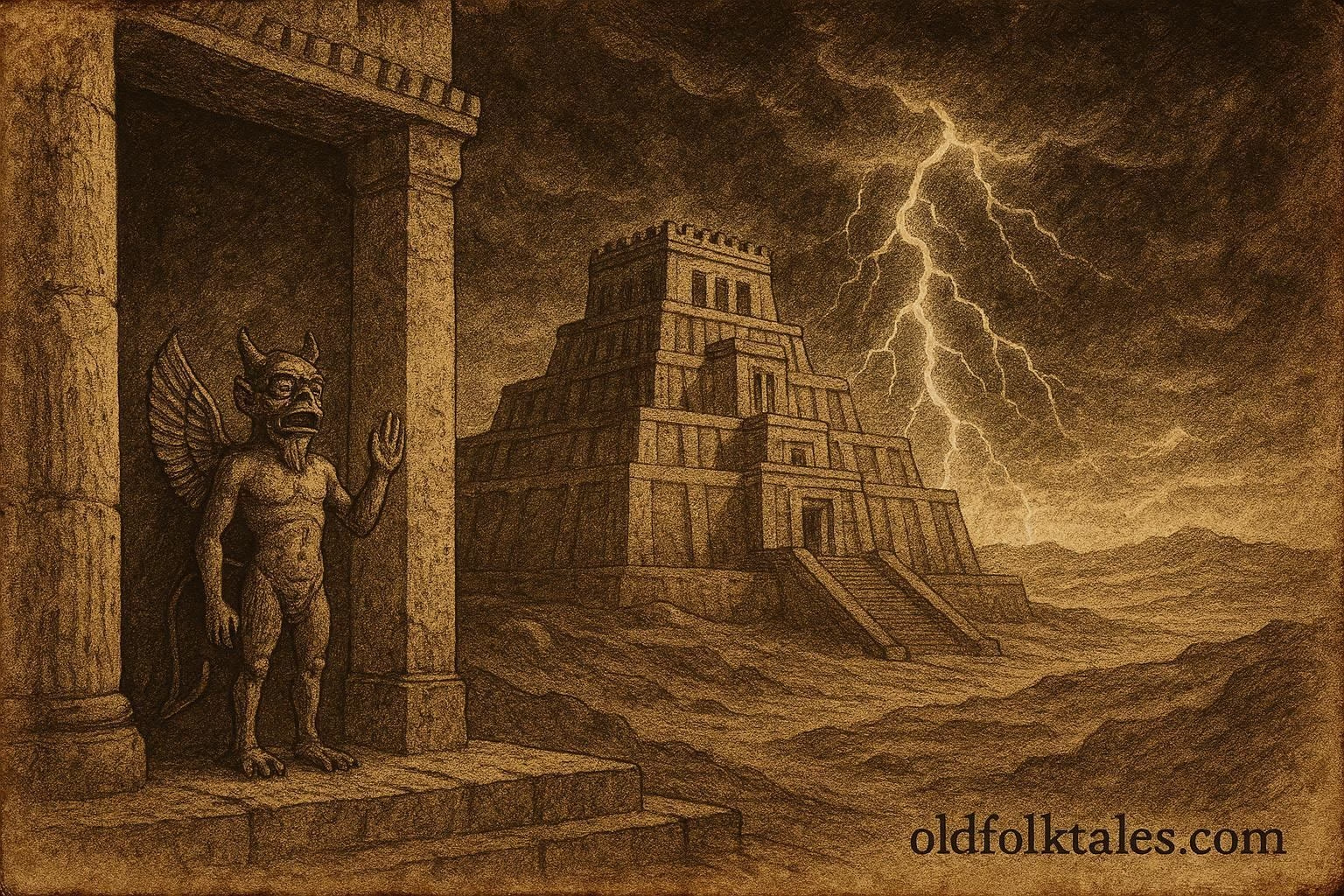
Pazuzu was not born of evil alone. His face, carved upon amulets and temple doors, showed a fierce visage with bulging eyes, a lion’s mouth, and wings spread wide. Yet those who wore his image did so not to curse but to protect. For though Pazuzu brought storms and fever, he also defended humankind from darker spirits that lurked in the night, especially Lamashtu, the demoness who preyed upon mothers and infants.
In the old stories, a farmer named Ennatum lived near the banks of the Euphrates. One summer, the sky had burned without mercy. His fields had cracked, his goats bleated in hunger, and his wife lay ill from a fever that spread through the village. The priests said it was the season of wandering spirits, when the west wind carried both pestilence and divine messages. In desperation, Ennatum went to the temple of the winds, built high upon a mound where storms often gathered.
Discover the gods, goddesses, and divine spirits who ruled the heavens and shaped human fate
There he met a priest who held a small bronze statue. Its figure was strange, both beast and man, its wings outstretched like a hawk poised to strike.
“This is Pazuzu,” the priest said. “He rules the winds and commands both plague and protection. Offer him your fear, and he may turn it into strength.”
That night, as thunder rolled across the horizon, Ennatum set the statue at the doorway of his home. He burned incense and recited the old prayer, asking Pazuzu to turn back the fever and let the wind cleanse, not destroy.
The storm came with violent force. Lightning struck the palm trees and winds tore through the huts, but when the sun rose again, the fever had broken. The air was fresh and the sick began to heal.
From that day forward, Ennatum offered grain and oil to Pazuzu each new moon, believing that the spirit could keep the darker demons at bay. Yet he also knew that the same wind that healed could one day return to punish arrogance.
Mesopotamian myths told that Pazuzu was the son of Hanbi, lord of the evil spirits, and that he ruled over the southwest wind, which carried dust storms and famine. But unlike his father, Pazuzu’s loyalty was complex. He fought the chaos that threatened to overwhelm humankind, yet his power could never be tamed.
During great droughts, the people would hang bronze amulets engraved with his image at city gates. They believed his fierce presence frightened lesser demons, even as they prayed he would not unleash his own wrath upon them. In this way, Pazuzu became both guardian and threat, the embodiment of nature’s double edge.
Ancient priests often invoked Pazuzu during childbirth, the most perilous moment in a family’s life. They placed his amulet near the mother to ward off Lamashtu, who was said to steal the breath of newborns. Mothers whispered to Pazuzu to drive her away, knowing that only a power equal to her cruelty could stand against her.
Over centuries, the image of Pazuzu spread across Mesopotamia, appearing on terracotta plaques, carved gems, and small metal charms. His figure was feared yet revered, for he represented the fragile balance between blessing and curse. The people of Babylon saw in him a truth that has endured across ages — that power, even when dark, can serve good when called upon with humility.
The winds of Mesopotamia still whisper his name in legend. Farmers, traders, and priests all knew that no one truly commanded the weather. They could only honor the spirits who dwelled within it. Pazuzu’s story is one of reverence born from necessity, a recognition that in nature’s fury there lies also protection.
When the modern world looks upon his image, often mistaking him for a demon of evil alone, the ancients would have smiled. They knew him differently as the storm that could destroy a roof or cleanse a river, the wind that could bring plague or deliver relief. Pazuzu was the wind itself, and the wind, like the heart of humankind, could never be entirely one thing or another.
Explore the shadows of world mythology, where demons test the soul and spirits watch over mankind
Author’s Note
Pazuzu’s legend captures the complexity of ancient Mesopotamian spirituality. Rather than seeing good and evil as opposites, the ancients understood them as forces intertwined within creation itself. Pazuzu’s dual nature teaches humility before powers beyond human control. His image reminds us that the same energy that destroys can also protect, depending on how it is invoked.
Knowledge Check
1. Who is Pazuzu in Mesopotamian belief?
Pazuzu is the spirit of the winds and storms, both a protector and bringer of destruction.
2. What other demon was Pazuzu said to fight against?
He opposed Lamashtu, the demoness who harmed mothers and infants.
3. Why did people wear amulets bearing Pazuzu’s image?
They believed his image could protect them from evil spirits and misfortune.
4. What did the story of Ennatum illustrate?
It showed that invoking Pazuzu required both respect and humility, as power could protect or punish.
5. What element of nature is most closely tied to Pazuzu?
The wind, especially the southwest wind that brings storms and drought.
6. What lesson does Pazuzu’s story teach about spiritual power?
That power itself is neutral and must be guided by wisdom and respect.