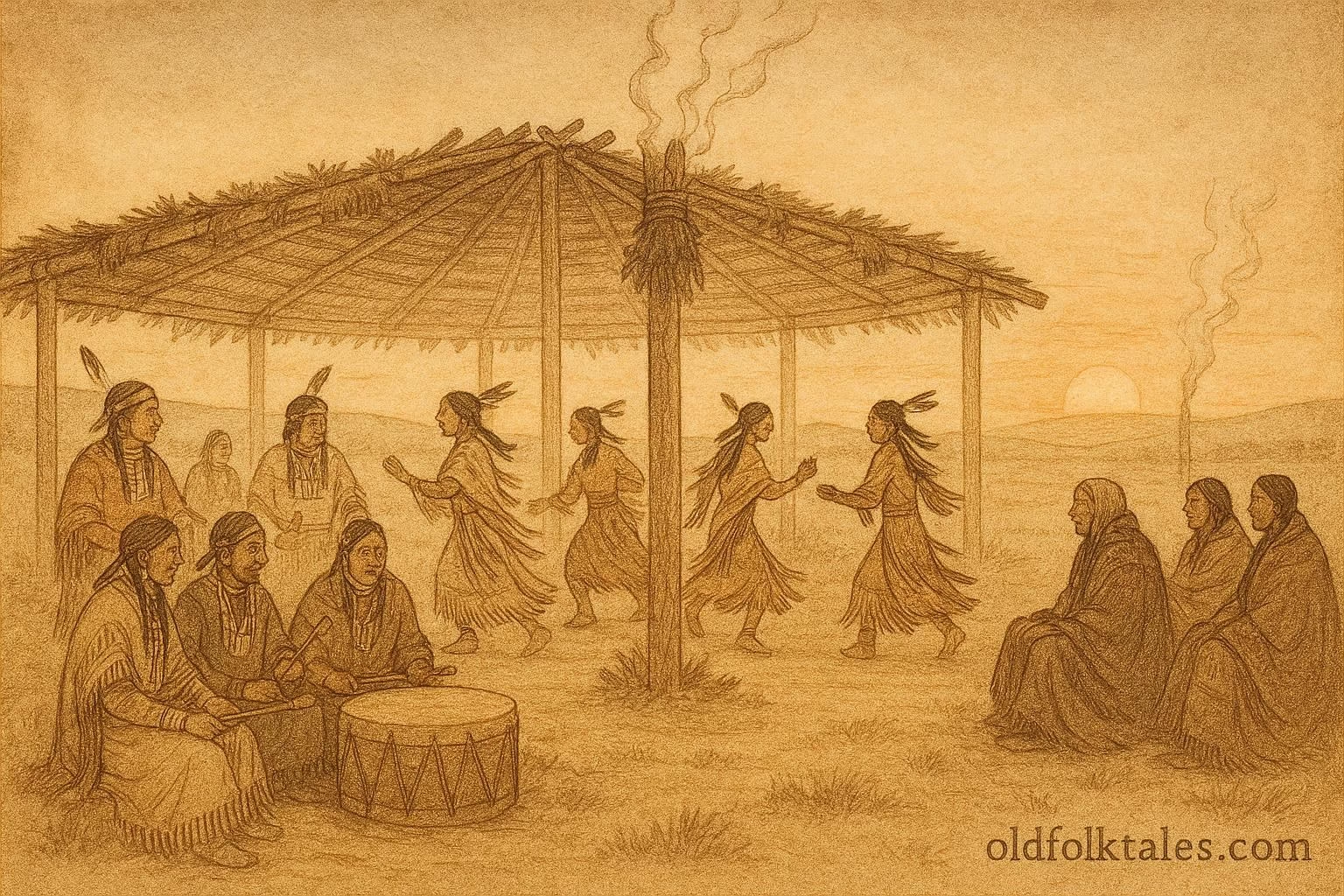
The Sun Dance is one of the Plains peoples’ most profound public ceremonies: a season-long rite of communal renewal, intense prayer, and reciprocal offering. Performed by entire camps or nations, the Sun Dance gathers dancers, families, elders, and visiting guests around a central sacred space. Over several days the community sings, fasts, dances, and offers gifts with the explicit purpose of renewing the social and spiritual bonds that hold people, land, and the unseen world together.
A Sun Dance usually takes place in late spring or early summer, often timed with renewal in the natural world, first medicines, returning game, and the coming growing season. Communities construct a ceremonial enclosure, prepare ritual songs and pipes, and call participants to specific roles. Elders and chosen leaders set the moral and liturgical frame: prayers for the nation, petitions for healing or abundance, and solemn recounting of ancestral responsibilities. The many activities, drumming, rattling, feast preparation, and daytime and nocturnal prayers, are woven into a careful schedule that culminates in public displays of devotion and the redistribution of gifts.
Practically, the Sun Dance organizes local obligations. Families that host the dance receive visitors; donors and pledge-makers sponsor meals and ceremonial materials. The ceremony produces a ledger of spiritual debts and mutual commitments. Gifts presented in the Sun Dance circulate through kin networks afterward, confirming social ties and making the prayers visible in material form. In this sense, the Sun Dance is not simply a performance but a living polity: it marks who is responsible for whom and transforms prayer into concrete social practice.
Because the Sun Dance carries weighty religious meaning, many communities maintain privacy about particulars. Over the late nineteenth and early twentieth centuries the Sun Dance was suppressed under U.S. federal policies designed to eradicate Indigenous ceremonial life. That repression caused loss, concealment, and adaptation, but also, in the twentieth century, a powerful movement of ceremonial revival as nations reclaimed legal and spiritual life.
Mythic connection and cosmology
The Sun Dance links human action to a broader cosmology in which the sun, the buffalo, the tipi, and the sacred pipe hold relational meaning. Creation stories and origin songs recited or evoked during the ceremony name the forces that gave people their laws and relationships. Dances and songs recall culture heroes, figures whose acts taught humans how to fellowship with the spirits and how to shape reciprocal obligations toward the land.
A central cosmological idea is reciprocity: humans receive gifts from the natural world and respond by offering their own bodies, time, and resources in communal prayer. This moral economy rests on the conviction that sacrifice and self-giving restore balance. The Sun Dance dramatizes that ethic: persons make vows and carry out offerings not for personal glory but to secure the welfare of the whole people. In many lineages, elders interpret the success or difficulty of a dance as a sign: renewed measure of solidarity, or a call for further healing.
Practice, variation, and cultural sensitivity
Sun Dance forms vary by nation, locality, and family lineage. Some communities emphasize specific songs, others particular lodge construction, and many have unique liturgical orders passed down by elders. Because certain ritual actions are sacred and are intentionally preserved for initiated community members, publicly available descriptions must avoid detailed disclosure. Respect for those boundaries is a part of ethical study: outsiders may learn the broad meanings, but the ceremonial specifics are governed by the communities themselves.
Revival after decades of prohibition has been steady yet careful. Many nations now hold public portions of dances to welcome visitors and to assert sovereign cultural presence, while keeping core liturgies and teachings within community protocols. Museums, scholars, and governments increasingly work under Indigenous guidance to support repatriation of ceremonial items and to protect ceremonial knowledge.
Social and ecological meaning
The Sun Dance is simultaneously civic, spiritual, and ecological. It binds individuals into age-sets, kin groups, and nationhood; it re-establishes a shared calendar keyed to seasonal cycles; and it reaffirms reciprocal duties to animals, plants, and the landscape. The ceremony’s emphasis on giving, time, food, and song, counterbalances extractive habits and enacts patterns of stewardship. In this way, the Sun Dance remains a living technology for social resilience.
Author’s Note
This account aims to honor the Sun Dance as a living, varied, and sacred practice of Plains nations. The descriptions remain deliberately general where ceremonial particulars are private. If you wish to learn more, seek community-sanctioned resources, and approach elders and cultural centers with humility and respect. Ceremonial knowledge is not merely information; it is relationship.
Knowledge Check
Q1: What is the primary purpose of the Sun Dance?
A: Communal renewal, prayer and reciprocal offering for the health of people, land, and the nation.
Q2: When is the Sun Dance usually held?
A: Typically in late spring or early summer, aligned with seasonal renewal.
Q3: Name two core social functions of the Sun Dance.
A: It reinforces kin obligations (who supports whom) and publicly records spiritual debts via gift exchange.
Q4: Why were Sun Dances suppressed historically?
A: Colonial and U.S. federal policies sought to eradicate Indigenous religious practices; Sun Dances were banned or discouraged in the late 19th and early 20th centuries.
Q5: How does the Sun Dance express cosmology?
A: Through songs, prayers, and ritual acts that recall origin stories and enact reciprocity with the natural and spirit worlds.
Q6: How should outsiders approach learning about the Sun Dance?
A: With respect, use community-sanctioned sources, follow protocols, and recognize that many ceremonial details are restricted.