In the mist-covered glens of the Scottish Highlands, where lochs mirror the gray sky and reeds whisper ancient songs, tales are told of the Kelpie, the spirit of the water that takes the shape of a magnificent horse. Its mane glimmers like wet silk, its eyes shine with moonlight, and its call can be heard on nights when the wind carries both beauty and danger.
Long ago, near the dark waters of Loch Dorran, there lived a young farmer named Ewan. He was known for his bravery and his love of wild places. Often he would wander alone into the hills, seeking solitude beside the lakes and rivers that curved through the valleys. His mother often warned him, “Do not go too near the loch when the fog rises, for the spirits there do not forgive the reckless.”
Ewan would smile and nod, but youth makes light of warnings. He believed that courage was enough to keep danger at bay.
Encounter dragons, spirits, and beasts that roamed the myths of every civilization
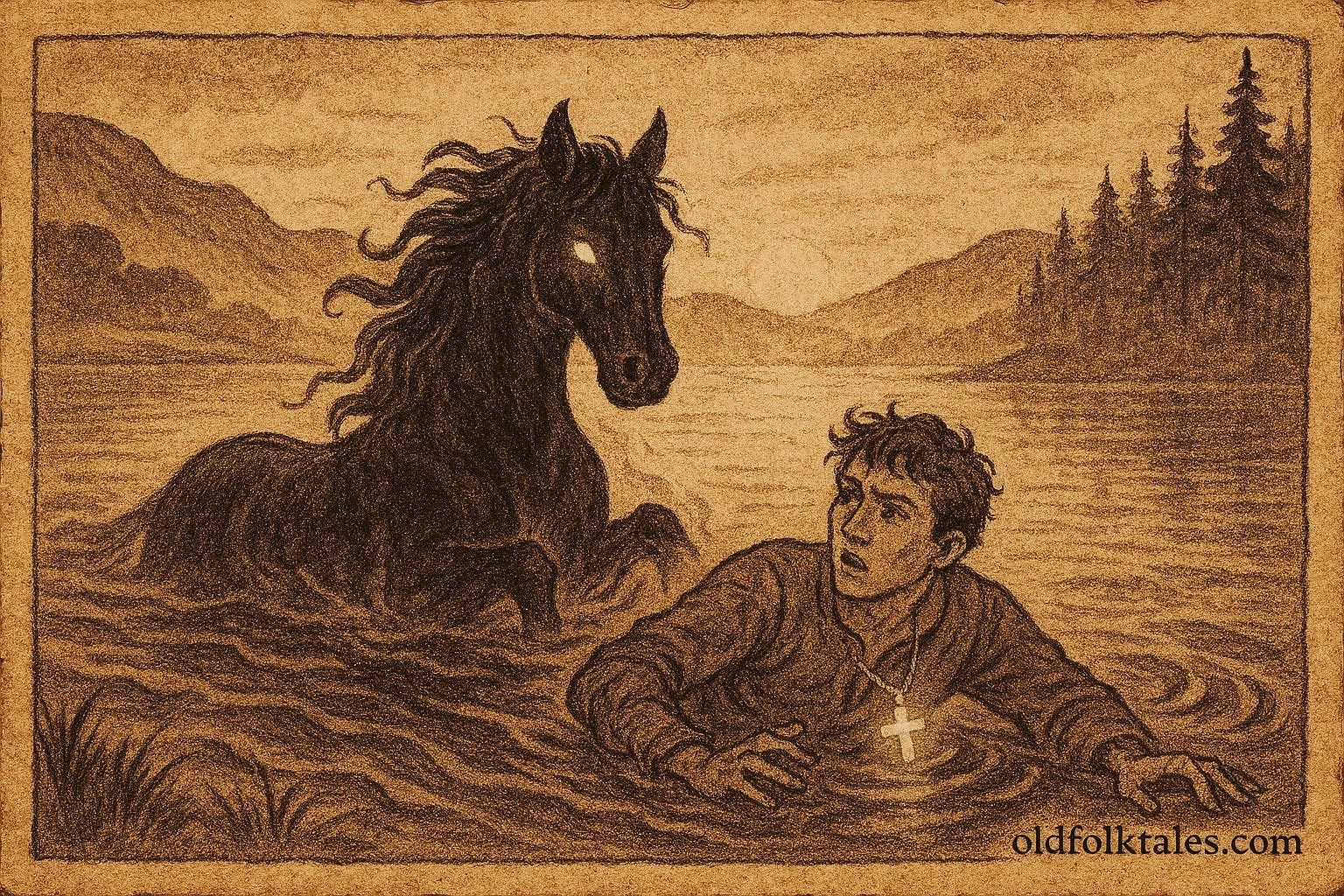
One summer evening, the air was heavy with mist, and the sound of running water echoed like distant music. Ewan stood by the loch, his reflection blurring upon the dark surface. Suddenly, through the veil of fog, he saw a great black horse standing at the water’s edge. Its coat shimmered as though made of moonlit glass, and its eyes gleamed with an unnatural brightness.
The creature snorted softly and lowered its head as if inviting him to approach. Ewan, enchanted by its beauty, stepped closer. He ran his hand along its mane, and it felt as smooth and cold as water itself. The horse knelt as if offering him a ride. Without a thought, Ewan mounted the creature’s back.
No sooner had he done so than the horse’s body grew slick and heavy beneath him. Its mane twisted around his wrists like ropes. The creature reared and galloped toward the loch. Ewan cried out, but his hands were trapped fast to its glistening hide. The beast plunged into the dark water, pulling him beneath the surface.
For a moment, all was silence. Then, in the depths of the loch, Ewan saw countless faces staring upward faces of those who had been taken before him. The water shimmered with ghostly light, and the Kelpie’s laughter echoed like thunder.
But Ewan was not ready to die. Remembering his mother’s old tales, he reached for the small silver cross that hung at his neck. He pressed it to the creature’s mane, and the Kelpie shrieked in fury. Its body dissolved into black mist, and Ewan was cast upon the shore, gasping for breath as dawn began to rise.
When he opened his eyes, the loch was calm once more. The water rippled only with the morning breeze, and the reflection of the hills lay still upon its surface. But the mark of the Kelpie remained upon him, for his hair had turned white as frost from terror.
He returned to his village and told what had happened. The elders listened and nodded gravely. They said that the Kelpie was a spirit of ancient waters, one that had lived since the world was young. It could appear as a horse, a beautiful man, or even a gentle woman calling from the shallows. It lured mortals not only through beauty but through the restless desire that lived in the human heart.
From that day onward, the people of the valley made offerings by the lakeside during the full moon, milk, bread, and a whisper of prayer. They did not curse the Kelpie but honored it as a guardian of the waters. For they knew that nature’s beauty holds danger within it, and that what draws the heart can also destroy it.
As the years passed, Ewan grew older and wiser. He became a storyteller, warning travelers not to mistake the shimmer of the loch for peace. He told them, “The Kelpie waits in the mist, fair as a dream, but its gift is only death for those who cannot see the truth behind beauty.”
Yet, in his last days, when he walked once more to the edge of the loch, he thought he saw a figure far across the water. It looked like a horse, still and calm, its mane glistening with dew. And though fear no longer gripped him, he bowed his head and whispered a prayer not of hatred, but of respect.
The loch kept its secret, as all deep waters do, reflecting both the light of the heavens and the darkness that lies beneath.
Explore the shadows of world mythology, where demons test the soul and spirits watch over mankind
Author’s Note
The Kelpie embodies the mystery of untamed nature. It is neither wholly evil nor entirely good but a reflection of the human heart. The story reminds us that nature’s beauty can conceal its peril, and that temptation often wears the face of wonder. In the end, harmony with the natural world comes only through respect, not domination.
Knowledge Check
1. What is a Kelpie in Celtic folklore?
A shape-shifting water spirit that lures travelers to their doom.
2. How did the Kelpie appear to Ewan?
As a beautiful black horse with shining eyes.
3. What did Ewan use to escape the Kelpie?
A silver cross that burned the spirit’s enchantment.
4. What lesson does the story teach?
To respect the forces of nature and resist dangerous temptation.
5. How did villagers honor the Kelpie afterward?
With small offerings of food and prayer by the lakeside.
6. What transformation occurred in Ewan after the encounter?
His hair turned white, and he became a storyteller warning others.