In the dense forests of ancient India, where banyan roots hang like curtains and the air hums with unseen life, dwell the Yakshinis, the female spirits of nature. They are the keepers of hidden treasure, the guardians of sacred trees, and the protectors of rivers and mountains. Their beauty is said to be beyond compare, but behind their enchanting eyes lies the power to bless or destroy.
The villagers of Madhupura knew well not to take lightly the presence of these spirits. The old priest, Hari, often warned the children not to pluck flowers from certain groves or carve their names into the bark of ancient trees. “The forest watches,” he said, “and the Yakshinis remember.”
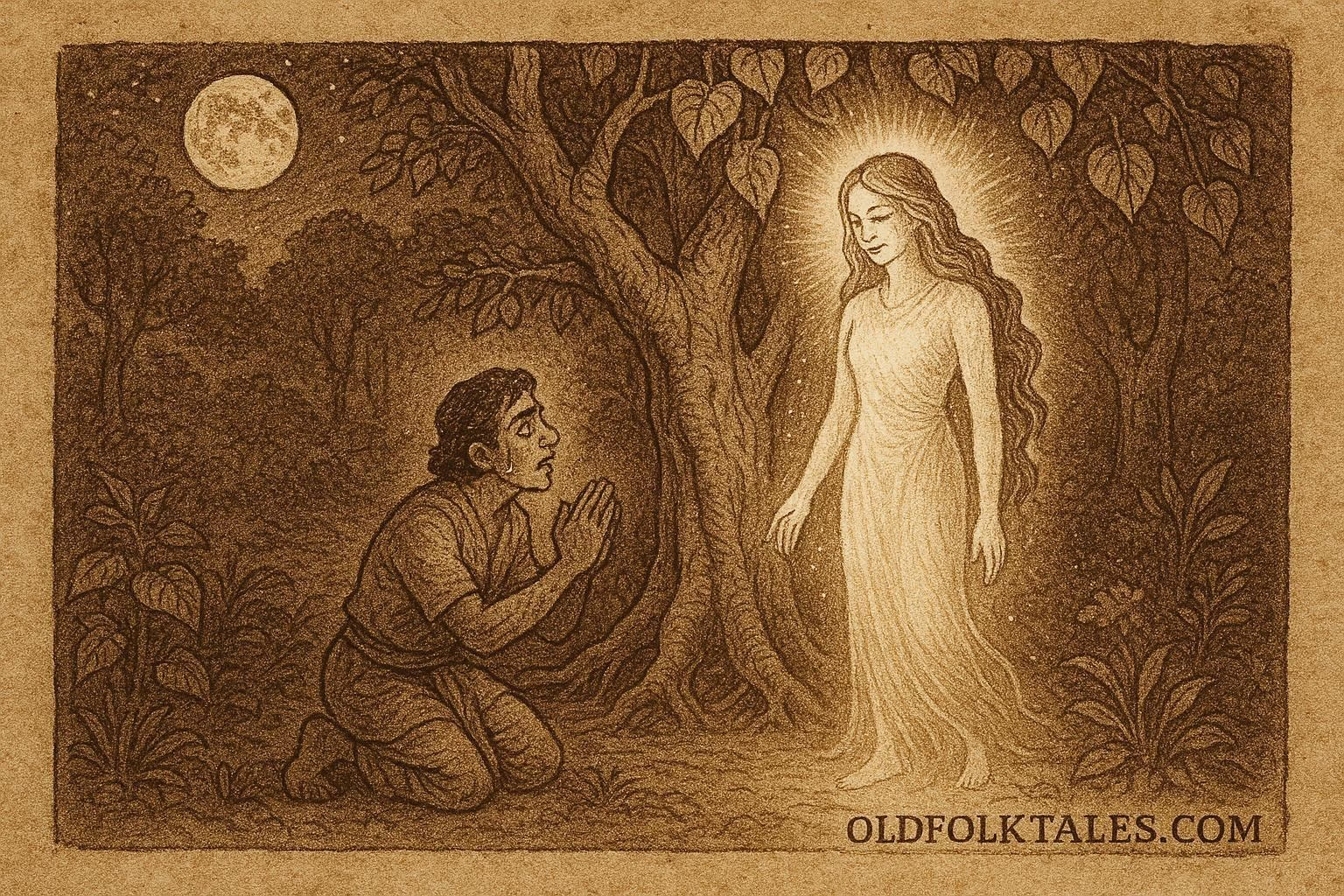
One summer evening, when the jasmine scented the air and the crickets sang, a young woodcutter named Devraj entered the forbidden grove at the edge of the village. He was poor and restless, burdened by debt and driven by hunger. The trees glowed faintly in the moonlight, and he noticed a strange shimmer at the foot of an enormous fig tree. There, half-buried among roots, lay what looked like a chest of gold coins.
His heart leapt. He reached forward to grasp the treasure, but as his fingers brushed the edge, a soft voice broke the silence.
Encounter dragons, spirits, and beasts that roamed the myths of every civilization
“Do you know what you touch, mortal?”
Devraj turned and saw her. She was radiant, her body clothed in light and her hair falling like a stream of darkness over her shoulders. Her eyes were the color of deep forest pools. Though her presence filled him with awe, her beauty drew him close, like the pull of a flame.
“Who are you?” he asked.
“I am a Yakshini,” she replied, “guardian of this grove and the wealth it holds. What you see does not belong to man but to the earth itself. Why do you seek what is not yours?”
Devraj, trembling, spoke of his poverty and his wish to feed his family. The Yakshini listened, her expression unreadable. Then she said, “The forest provides, but not to those who take without asking. If you honor it, you will find all that you need. But if you return with greed in your heart, you will meet your end beneath these trees.”
Ashamed, Devraj bowed deeply and left the grove. The next morning, he found a heap of fine wood outside his hut, enough to sell at the market for more than he had ever earned. Grateful and humbled, he offered milk and flowers at the edge of the grove in thanks.
For many moons, Devraj prospered. He worked honestly and always gave a portion of his earnings to the temple. But over time, his gratitude turned to desire. The thought of the golden chest beneath the fig tree haunted him. He convinced himself that one small handful would do no harm.
One night, he crept back into the grove. The air was still and thick with the scent of earth. He saw the same faint glow near the tree roots and the golden shimmer beneath. Without hesitation, he knelt and reached into the hollow.
At once, the ground trembled. The forest seemed to awaken with a sigh. The Yakshini appeared again, but this time her face was no longer gentle. Her eyes burned with green fire, and the air around her shimmered with energy.
“You were warned,” she said. “The forest gives freely to those who honor it, but takes back from those who steal.”
Devraj tried to speak, but his voice was lost in the roar of the wind. The roots of the fig tree twisted around his arms and legs, drawing him into the soil. His cries faded until only silence remained. When the dawn came, all that was left of him was a single flower growing where he had knelt.
From that day on, the villagers never entered the grove again. They left offerings of milk, honey, and rice at the border, whispering prayers to the Yakshini who lived there. The crops flourished, and the river near the village never ran dry.
The old priest would tell the story to every child who came of age. “The Yakshinis are not cruel,” he would say. “They are the soul of nature. If you give respect, they give abundance. If you take without reverence, they remind you that even beauty can become wrath.”
As centuries passed, the grove became a shrine. Women seeking fertility and protection came to pray beneath the fig tree, tying red threads around its trunk. Some claimed to see a woman’s shadow among the leaves or to feel a soft breeze caress their faces like a mother’s hand. The Yakshini, they said, still walked among them, unseen but ever watchful, guarding the sacred balance between humankind and the earth.
Explore the shadows of world mythology, where demons test the soul and spirits watch over mankind
Author’s Note
The Yakshini reflects the timeless Indian reverence for nature as both nurturing and formidable. Her dual aspect mirrors the law of reciprocity that governs all existence those who respect the sacred cycles of the earth receive abundance, while those who act with greed invite ruin. The tale reminds readers that nature is not to be conquered, but to be honored.
Knowledge Check
1. Who are the Yakshinis in Indian mythology?
They are female nature spirits who guard sacred places and hidden treasures.
2. What warning did the Yakshini give to Devraj?
She warned him not to return with greed or take what was not his.
3. How did the Yakshini reward Devraj for his humility?
She blessed him with prosperity by leaving valuable wood outside his home.
4. What happened when Devraj returned to the grove with greed?
The Yakshini punished him by transforming him into part of the forest.
5. How did the villagers honor the Yakshini after Devraj’s fate?
They offered milk, honey, and prayers at the grove’s border.
6. What is the main moral of the story?
Respect for nature brings prosperity, while greed leads to destruction.