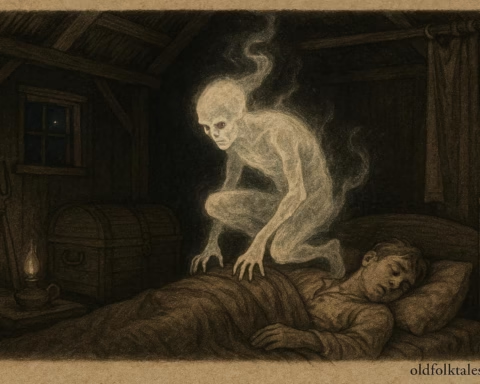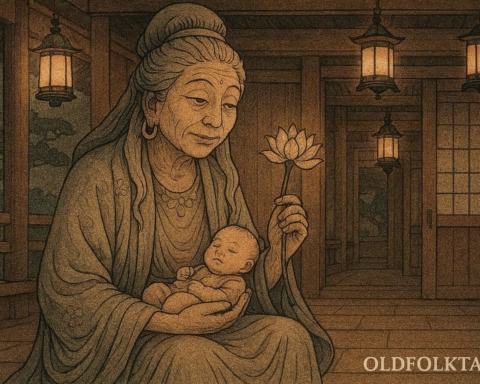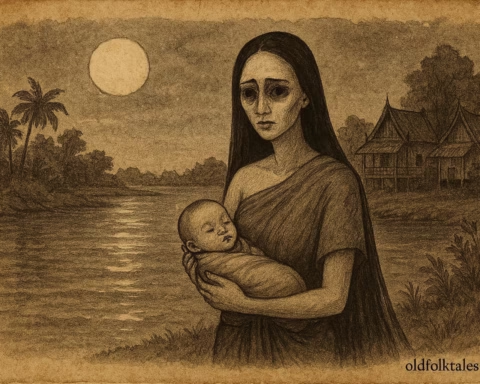
In the remote rice fields and coconut groves of the Philippine islands, villagers often whispered of a night creature known as the Manananggal. By day she appeared as a pale, quiet woman, blending seamlessly with neighbors, but at night she transformed into a fearsome winged monster. Her upper body would separate from her lower half, sprouting batlike wings that carried her silently across the moonlit skies.
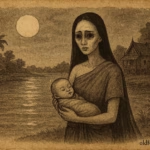
Long ago, in a small village along the coast of Luzon, there lived a young mother named Althea. She was preparing for her first childbirth, tending to her home and the small hearth where her husband and she shared evening meals. The villagers were wary, for there had been rumors of a Manananggal in the area, a creature that preyed on expectant mothers.
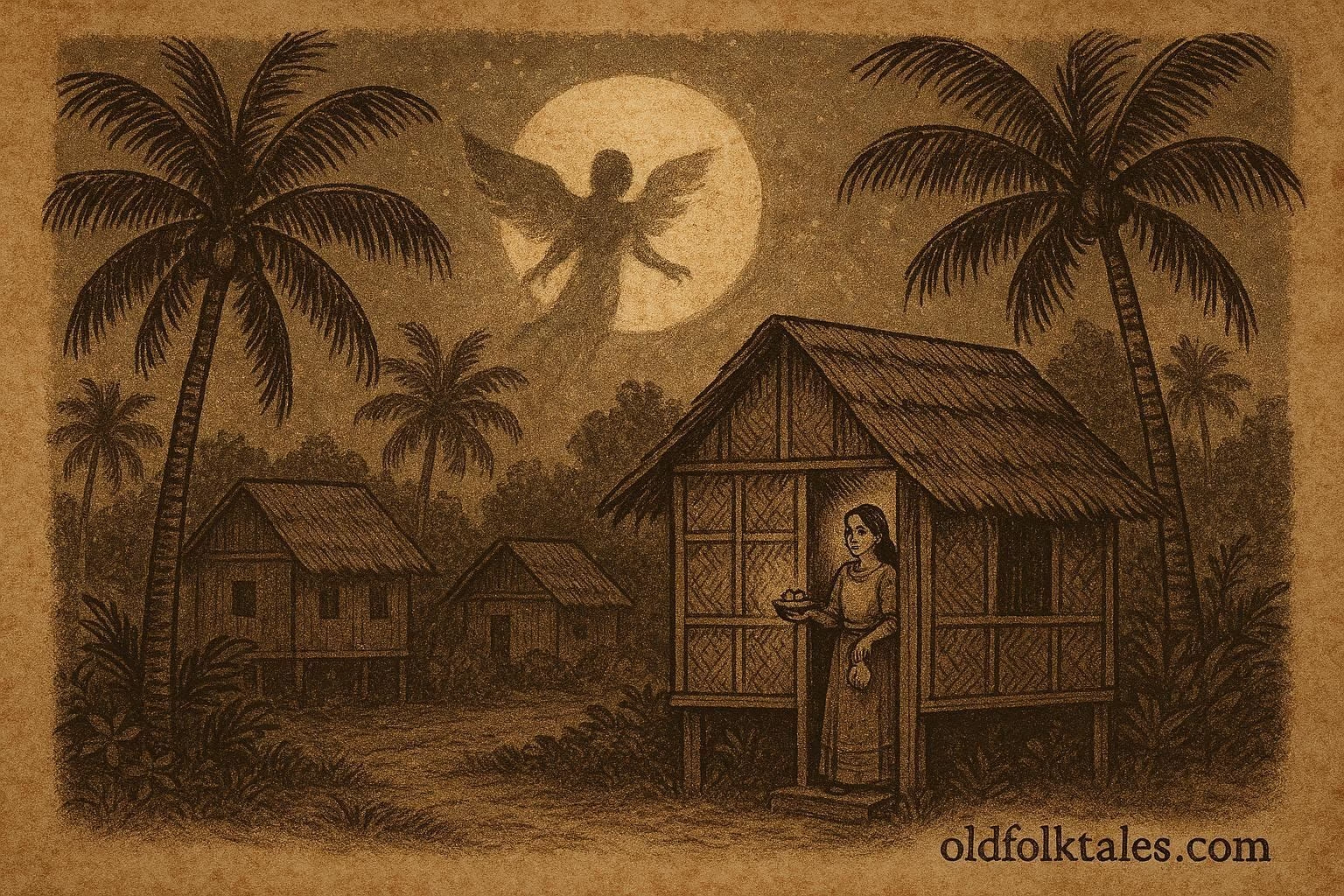
One evening, as darkness settled and the wind rustled the palms, Althea prepared to sleep. Her husband, Tomas, was away at the market. A distant fluttering sound came from the roof, soft and rhythmic like wings brushing against the night air. Althea felt a chill, but tried to dismiss it, focusing on the lamp’s warm glow beside her bed.
Suddenly, the window creaked open. From it emerged a shadowy figure, her upper body separate and rising into the moonlight. Her eyes glowed red, and a long, thin tongue flicked from her mouth. This was the Manananggal, hunting for her nightly victims.
Explore the mysterious creatures of legend, from guardians of the sacred to bringers of chaos
Althea’s heart raced, but she remembered the advice of the elders. “Salt, garlic, and ash will keep her from harm,” they had said. She sprinkled coarse salt along the windowsill and rubbed garlic at the corners of the door. The creature hissed in fury and flapped her wings, unable to enter.
“Why do you resist me?” the Manananggal cried, her voice a mixture of shrill laughter and hunger. “I only seek the unborn to strengthen myself.”
Althea knelt and whispered prayers she had learned from her mother and grandmother. She called upon the spirits of the home, the ancestors who protected the village. The Manananggal shrieked again and retreated, flying toward the shadows of the coconut groves.
At dawn, the villagers gathered around Althea’s home. They brought vinegar, salted rice, and firewood to create barriers, ensuring that the creature could not return. They spoke in low voices about the vigilance needed to survive against beings that preyed upon fear and weakness.
The legend of the Manananggal spread. It became a tale of caution for expectant mothers and travelers alike. She was not a spirit that could be reasoned with; she thrived on the hidden vulnerabilities of humans. Garlic, salt, prayers, and lighted lamps became essential tools for protection. Families built their homes with high windows and thick doors, keeping watch throughout the night, especially when the wind carried the distant flutter of wings.
Generations later, children still whispered the story as they drifted to sleep, eyes wide and hearts pounding. The Manananggal was a test of courage, ingenuity, and faith. Though terrifying, she reminded the villagers that preparedness and spiritual resilience were as important as physical strength. Those who heeded the warnings lived in harmony with the unseen, while those who disregarded them risked losing more than sleep.
The Manananggal was also a reflection of the duality of human nature. By day she appeared harmless, blending in with society, but under the cover of night, her hunger and power were revealed. Similarly, people carried unseen strengths and weaknesses. The story taught that vigilance and moral fortitude were essential for survival.
Althea went on to bear her child safely, her story retold by midwives and elders as a lesson of hope and protection. The villagers built shrines of garlic and salt at the edges of fields, and the children placed small candles at their windows. Every household knew that the night held dangers, but it also held the promise of protection for those who were wise and careful.
Through these tales, the Manananggal became not only a creature of fear but a symbol of vigilance, courage, and the enduring power of spiritual guidance. Her presence ensured that humans respected the cycles of nature and the unseen forces that surrounded them.
Explore the shadows of world mythology, where demons test the soul and spirits watch over mankind
Author’s Note
The Manananggal represents both human fear and resilience. She embodies hidden dangers and the consequences of neglect, while also highlighting the strength of prayer, vigilance, and communal protection. Her legend encourages attentiveness to one’s surroundings and the moral courage to confront unseen threats with wisdom and faith.
Knowledge Check
1. Who is the Manananggal in Filipino folklore?
A winged night creature that detaches its upper body to prey on sleeping victims.
2. How does she primarily attack her victims?
By seeking expectant mothers or the vulnerable during the night.
3. What protective measures did Althea use?
Salt, garlic, and prayers to ward off the spirit.
4. What lesson does the story teach about human behavior?
Vigilance, spiritual resilience, and moral courage protect against hidden dangers.
5. How did the villagers safeguard their homes?
By building barriers, placing garlic and salt, and keeping watch with lamps.
6. What does the Manananggal symbolize beyond physical danger?
The duality of appearance and hidden intent, and the necessity of preparedness.