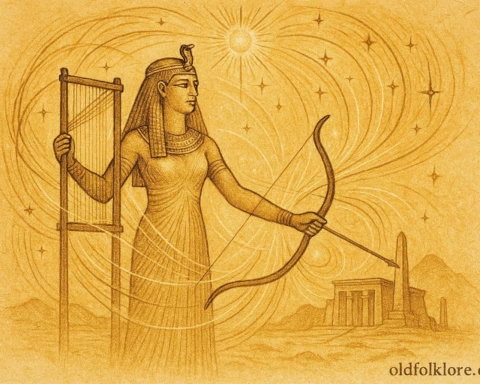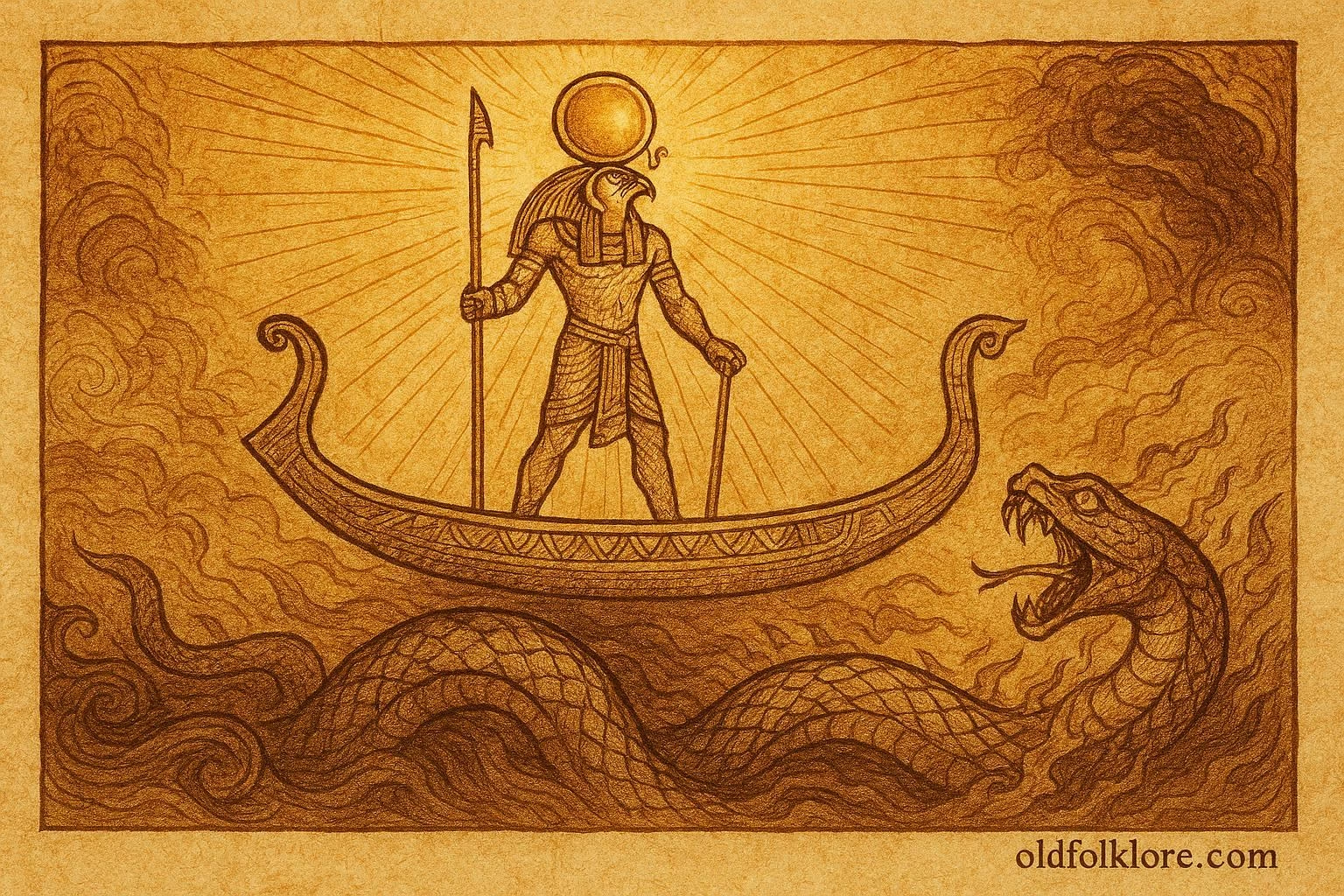
Rā, the radiant sun deity of ancient Egypt, stands at the pinnacle of the Egyptian pantheon as both creator and sustainer. Born from the primordial waters of Nun, he emerged to illuminate the cosmos, shaping life and governing the cycle of day and night. Often depicted as a falcon-headed man crowned with the sun disk, or occasionally as a full man embodying the solar light itself, Rā symbolizes vitality, authority, and divine kingship.
He traverses the sky in his solar barque, a celestial boat carrying him from horizon to horizon each day. By night, he journeys through the Duat, the Egyptian underworld, battling the serpent Apophis (Apep), a force of chaos threatening the world’s balance. His companions, the gods of protection and order, aid him in ensuring that light returns, heralding a new day.
Temples dedicated to Rā flourished throughout Egypt, especially in Heliopolis, the “City of the Sun.” Daily rituals, hymns, and offerings, bread, incense, and water, reinforced his presence. As the creator god, he is also linked to kingship; pharaohs were considered his earthly representatives, bridging mortal and divine order. In later periods, Rā merged with Amun to form the powerful deity Amun-Ra, combining aspects of hidden divinity and visible solar power.
Mythic Story: “Rā’s Daily Journey and the Defeat of Apophis”
In the earliest days, before the Nile carved its fertile path, the world lay in darkness upon the waters of Nun, a boundless, silent void. From this primeval chaos, Rā emerged, his golden light piercing the endless black. He opened his eyes, and the first day began, revealing mountains, rivers, and the forms of living beings, all bathed in his radiance.
Each morning, Rā climbed into his solar barque, which gleamed like molten gold, and sailed across the sky. His passage was gentle at first, warming the land, awakening creatures, and calling the fields to life. Farmers lifted their heads toward the east, praying for his blessing. Rā’s light nurtured the crops of Egypt, sustaining the people and ensuring the harmony of the Two Lands.
Yet, as the sun descended toward the western horizon, the sky darkened, and the world awaited his nightly voyage. Beneath the horizon lay the Duat, a labyrinthine underworld filled with spirits, serpents, and hidden perils. Chief among these dangers was Apophis, the colossal serpent of chaos, coiled in the shadows, eyes burning with hatred for light and order. Each night, Apophis sought to devour the solar barque, plunging the world into eternal darkness.
Rā did not travel alone. Gods of protection and magic, including Seth, Bastet, and the scarab Khepri, accompanied him. Seth wielded his strength to confront the serpent, while Khepri pushed the sun disk forward, ensuring progress through the darkened waters.
The battle was fierce. Apophis struck with fangs of flame, twisting and thrashing, attempting to overturn the barque. Rā’s eyes blazed like molten fire, and his companions’ spells and talismans shimmered in the darkness. At the height of the struggle, Rā raised his mighty staff, chanting the sacred names of creation, invoking the forces of order that had arisen with him from Nun. The serpent recoiled, hissing, its power dissipating like smoke before the dawn.
As the first rays of morning approached, the barque emerged victorious at the horizon, and Rā ascended once more, scattering the shadows. The people rejoiced, offering prayers and songs to the golden god. Rā’s triumph was more than survival; it was the eternal renewal of life, a testament to the balance of order over chaos.
Through this daily cycle, Rā governed creation. His light ensured crops would grow, kings would rule, and the universe would remain in harmony. Even after merging with Amun in the New Kingdom, Rā’s identity as the sun and cosmic order endured. Each day, Egyptians greeted the sun with reverence, knowing that without Rā, the Nile would cease to flood, the fields would wither, and Apophis’s darkness would reign.
Thus, Rā is not merely a sun; he is the heartbeat of existence, a living, watching force whose eyes illuminate the world and whose will preserves the cosmic balance.
Author’s Note
Rā’s myth teaches that light and order are not passive gifts but achievements continuously upheld against chaos. His daily struggle with Apophis symbolizes the human and divine effort to maintain balance, resilience, and renewal. Through Rā, we understand that creation is both fragile and sacred, demanding vigilance, courage, and reverence for the forces that sustain life.
Knowledge Check
Q1. Who is Rā in Egyptian mythology?
A: Rā is the sun god, creator of life, and ruler of the cosmos.
Q2. What is the solar barque?
A: A divine boat in which Rā sails across the sky each day and through the underworld each night.
Q3. Who is Apophis, and what does he represent?
A: Apophis is the serpent of chaos that Rā battles nightly to ensure the sun rises.
Q4. How did Rā ensure the balance of the cosmos?
A: By defeating Apophis nightly, bringing light, and sustaining order in creation.
Q5. How is Rā depicted in Egyptian art?
A: As a falcon-headed man with a sun disk on his head, sometimes as a fully radiant man.
Q6. What later deity did Rā merge with, and why?
A: Rā merged with Amun to form Amun-Ra, combining hidden divinity with solar power.
Source: Pyramid Texts, Ancient Egypt
Source Origin: Ancient Egypt