Haitian Vodou arose from the convergence of West African religious traditions, Catholicism, and Indigenous Caribbean spirituality during the colonial period of Saint-Domingue (modern-day Haiti). Enslaved Africans from the Fon, Yoruba, and Kongo peoples brought with them their gods, rituals, and cosmologies. In the oppressive environment of the French plantation system, these spiritual systems blended into a creolized form of worship that provided both resistance and renewal. Under the guise of Catholic saints, the Vodou spirits, known as lwa, preserved the ancestral pantheon, offering a sacred connection to power and identity amidst suffering.
By the time of the Haitian Revolution (1791–1804), Vodou had become not merely a religion but a unifying cultural force. The legendary Bwa Kayiman ceremony, often cited as a catalyst for the revolution, symbolizes how Vodou fused spirituality with the struggle for freedom, a reminder that ritual and resistance were inseparable in Haitian cosmology.
Description
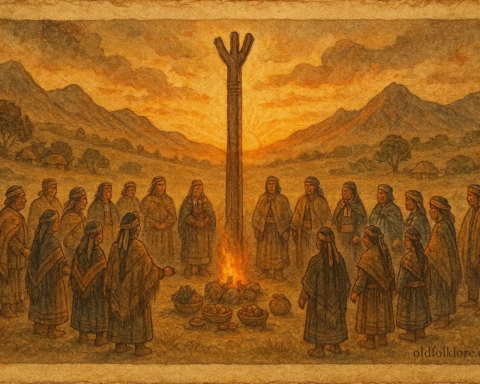
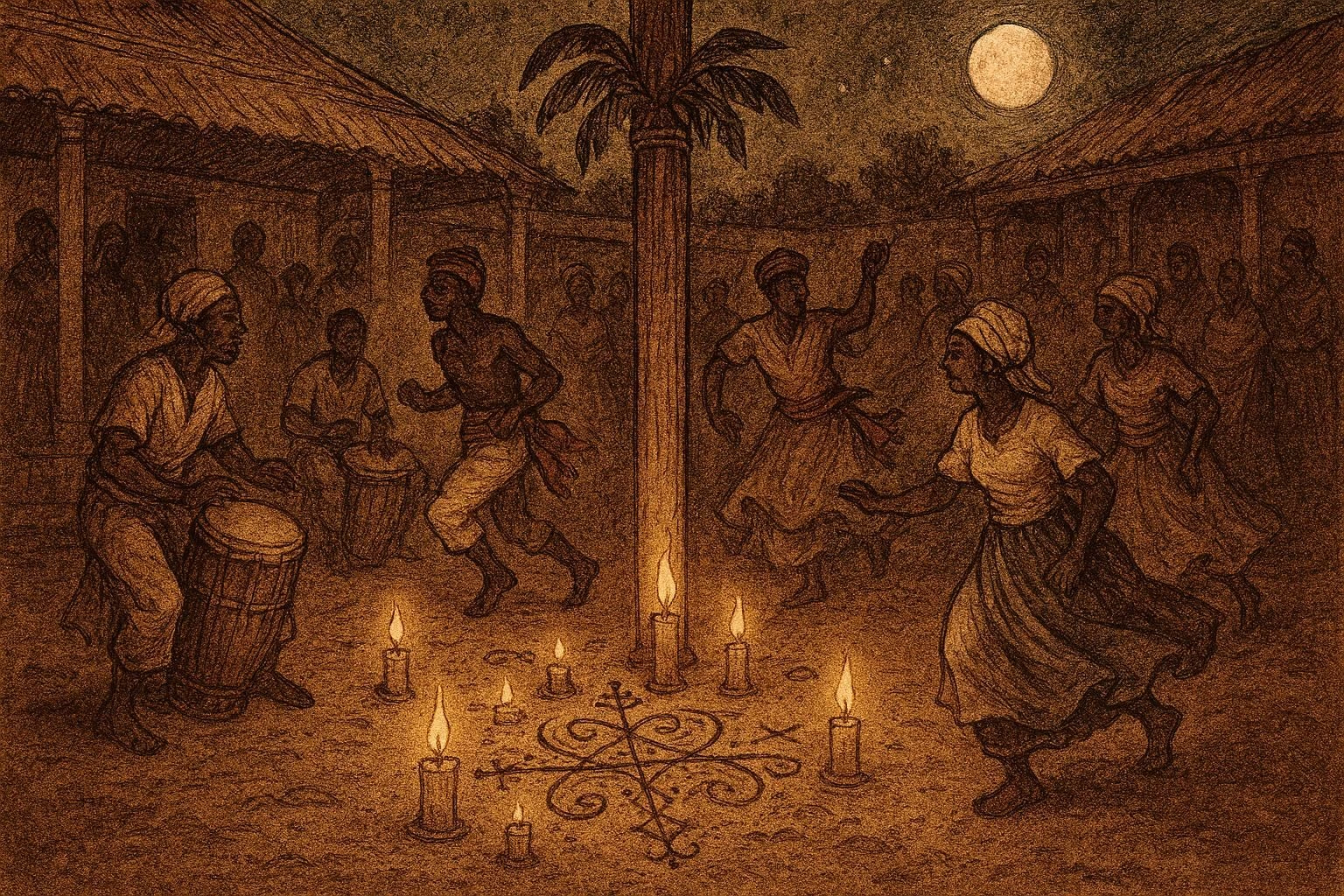
A Vodou ceremony is a living tapestry of rhythm, dance, symbols, and prayer. It typically takes place in a hounfor (temple), an enclosure decorated with sacred veve, intricate designs drawn on the ground with cornmeal or flour that act as spiritual gateways. At the heart of the ritual is the poto mitan, the central pillar symbolizing the axis between the human and divine worlds.
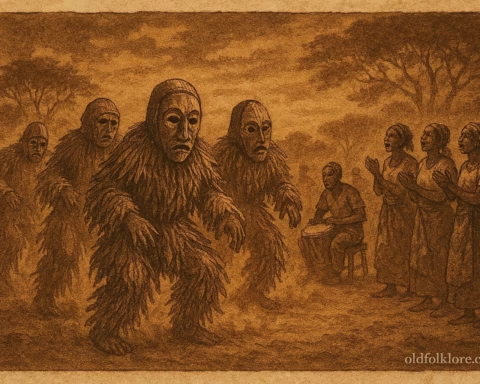
Participants gather under the guidance of a houngan (male priest) or mambo (female priestess), who lead prayers and songs in Haitian Creole, invoking the lwa through rhythmic drumming and call-and-response chanting. Each drumbeat corresponds to a specific spirit’s rhythm, for example, the fiery Ogou prefers martial rhythms, while Erzulie is called through soft, sensual melodies.
Offerings of food, rum, flowers, and candles are placed before the spirits, aligning material generosity with spiritual reciprocity. As the ritual intensifies, spirit possession may occur, a sacred moment when a lwa “mounts” a devotee, speaking and acting through their body. Far from being seen as loss of control, possession in Vodou is a form of divine communion, a temporary embodiment of cosmic energy that brings messages, healing, and balance.
Vodou rituals also serve community functions, healing illnesses, settling disputes, blessing marriages, or celebrating ancestral festivals. They blend music, art, performance, and theology into a single act of sacred participation, reminding the community that the divine is present in all aspects of life.
Mythic Connection
At the heart of Vodou is the belief in a supreme, distant creator, Bondye, who delegates worldly matters to the lwa, divine intermediaries that reflect aspects of nature, morality, and human experience. The lwa inhabit families or “nations,” such as the Rada (benevolent, ancestral spirits from Dahomey), Petro (fiery, revolutionary spirits born in the New World), and Ghede (spirits of death and rebirth).
Each lwa holds mythic significance. Legba is the gatekeeper who opens the crossroads between worlds; Erzulie Freda embodies love and feminine beauty; Ogou represents war and strength; and Baron Samedi presides over the cemetery, laughing at death’s illusion. These deities are not distant, they are kin, invoked with intimacy and respect.
Vodou mirrors the cyclical balance of life, death, and rebirth found throughout nature. The drums echo the heartbeat of the earth, while the veve mirror the constellations. Rituals follow lunar cycles and agricultural seasons, sustaining harmony between people, land, and spirits.
The mythic worldview of Vodou transforms everyday life into sacred theatre, a dance of human and divine that celebrates survival, continuity, and joy. It is not merely a faith but a philosophy of resilience: that even in oppression, the spirit endures, sings, and renews itself.
Author’s Note
The Haitian Vodou tradition embodies an enduring dialogue between history, identity, and the sacred. Rooted in ancestral memory and collective strength, it remains a living faith that resists simplification. Far from the stereotypes of sorcery or superstition, Vodou represents harmony with the unseen, a cosmology of balance, reciprocity, and respect for all beings. Each ritual, song, and possession serves as testimony to humanity’s power to reclaim the divine within the ordinary, to create light from the shadows of history.
Knowledge Check
1. Who are the lwa in Vodou belief?
The lwa are divine spirits or intermediaries between humans and Bondye, each governing specific aspects of life and nature.
2. What role does the poto mitan play in a Vodou ceremony?
It serves as the spiritual axis connecting the physical and divine realms, a passageway for the lwa during ritual invocation.
3. Why is drumming essential in Vodou rituals?
Each rhythm calls a specific lwa, creating a vibrational bridge that invites the spirits into the ceremony and synchronizes the community’s energy.
4. How does possession function in Vodou spirituality?
Spirit possession allows a lwa to temporarily inhabit a devotee’s body, delivering messages, healing, or blessings from the divine realm.
5. What is the significance of the Bwa Kayiman ceremony?
It symbolizes the unity of spiritual and political freedom, the sacred invocation that sparked the Haitian Revolution and reaffirmed Vodou’s power as resistance.
6. How does Vodou reflect the Haitian worldview?
Vodou mirrors the belief that all life is interconnected, human, natural, and spiritual, and that harmony must be maintained through ritual respect and reciprocity.