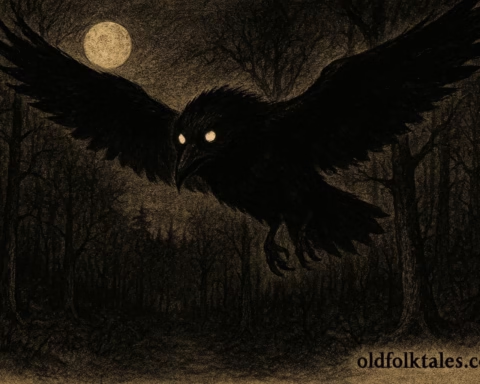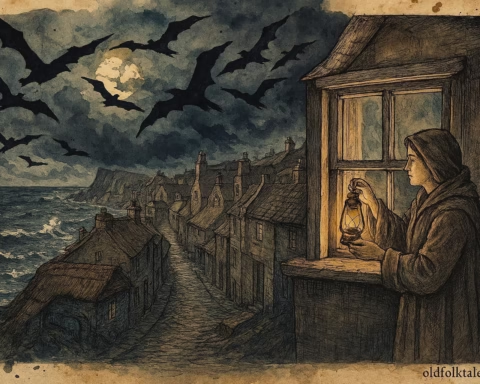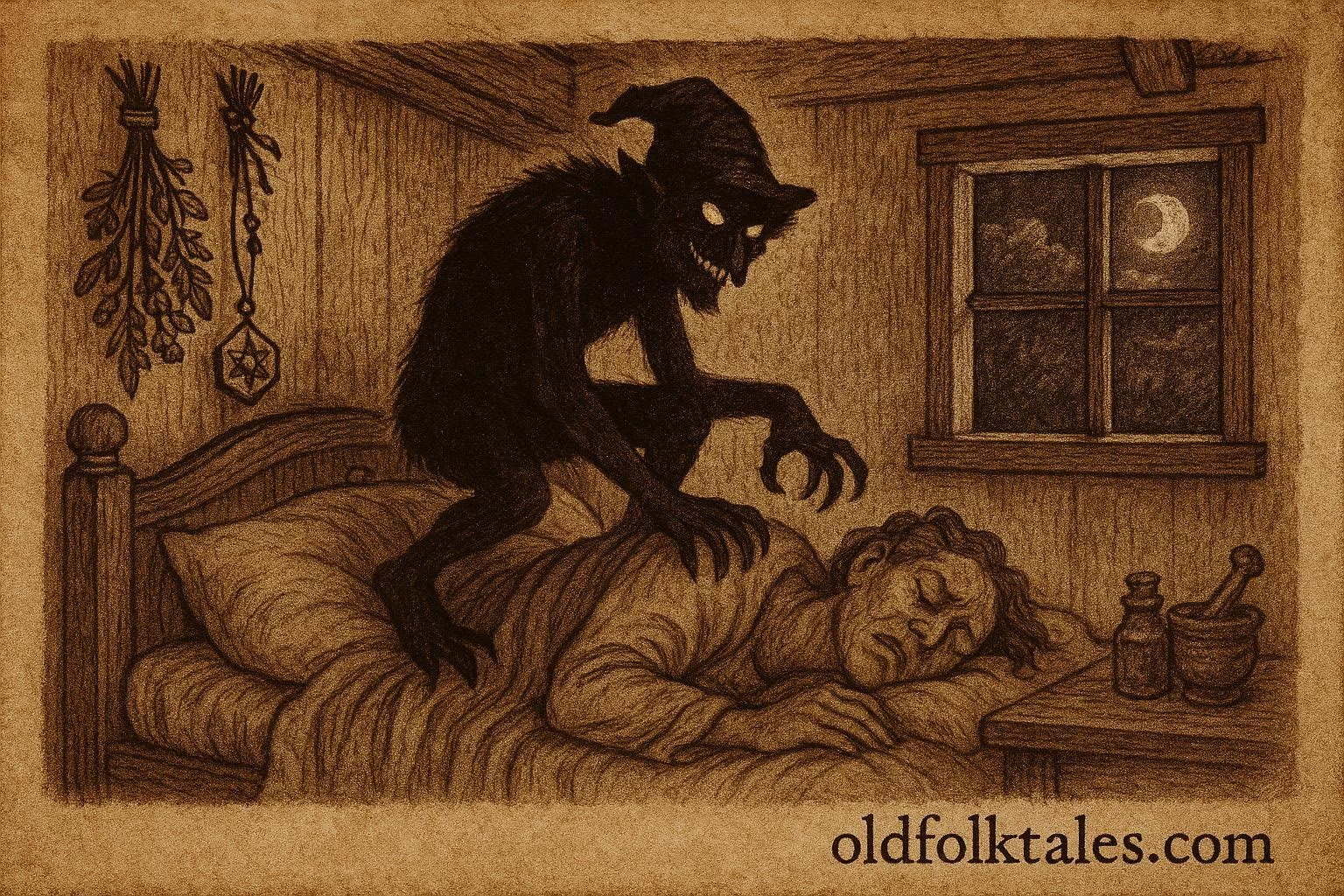
In the quiet villages of Germany, where the forests stretch thick and the nights are long, the villagers speak in hushed tones about the Alp, a spirit of the night that visits sleepers to torment them with terrifying dreams. Its presence is felt as a heavy weight upon the chest, a pressure that makes the heart race and the body tremble. Some say it is born of unresolved guilt, others claim it chooses the morally wayward.
Long ago, in the town of Rothenburg, a young man named Friedrich was renowned for his craft as a blacksmith. He was skilled and respected, but pride had grown in his heart. He often mocked the old ways, the charms and prayers of his grandmother, and dismissed tales of spirits that haunted the night. “Dreams are illusions,” he said. “No Alp will trouble me.”
But one night, after a long day at the forge, Friedrich slept fitfully. A shadow pressed down upon him, heavy as iron. He could not breathe freely, and a cold presence clung to him. In his mind, visions twisted: he saw his neighbors in peril, the forge ablaze, and mistakes he had made in pride and anger. The Alp had arrived.
Encounter dragons, spirits, and beasts that roamed the myths of every civilization
The village healer, Hildegard, was summoned. She examined Friedrich and explained that the Alp visits those whose conscience is unsettled. “This spirit is not mere malice,” she said. “It reflects what lies within. Only by acknowledging your guilt and offering protection can you be free.”
Hildegard provided Friedrich with protective herbs: lavender, mugwort, and rosemary to place under his pillow, and amulets of iron and silver to hang near his bed. She taught him a ritual of reflection and confession, speaking aloud his faults to the sleeping air. Each night, Friedrich followed the instructions, and each night the Alp pressed less heavily, the dreams less frightening.
Over time, he learned humility and honesty. He reconciled with neighbors he had wronged, and he repaired damages caused by carelessness in the forge. As he faced his inner misdeeds, the Alp’s presence became gentle, like a shadow of understanding rather than terror. Eventually, Friedrich could sleep undisturbed, his dreams calm, the weight lifted from his chest.
The Alp, however, did not vanish entirely. Villagers knew it still watched from the edges of the forest, the unseen force that encouraged reflection, moral responsibility, and respect for the unseen world. Children were taught to keep their rooms tidy, to speak truthfully, and to place protective herbs under their pillows. Adults remembered the Alp as a guide, a nocturnal teacher that mirrored conscience in the realm of dreams.
Even today, in the winter nights when frost creaks against the windows and the wind rustles through the trees, people whisper prayers to ward off the Alp. Some say that the pressure on the chest is a warning of imbalance, a call to reflect on one’s actions and attitudes. The spirit embodies both fear and guidance, reminding humans that morality is not only public but also intimately personal.
The Alp of German folklore teaches a timeless lesson: nightmares are not always meaningless. They can be warnings, mirrors of the soul, and invitations to align actions with conscience. To treat the unseen with respect, to confront guilt, and to act with integrity is to invite peaceful rest, while neglect invites the pressing shadow of the Alp to visit.
Author’s Note:
The Alp is a fascinating reflection of the human mind and moral consciousness in folklore. Its story reminds us that nightmares often carry lessons about our choices and conscience. Beyond fear, the Alp teaches the value of humility, reflection, and spiritual safeguarding, showing how cultural stories convey guidance across generations.
Knowledge Check:
1. What is the Alp in German folklore?
It is a spirit that sits upon sleepers, causing nightmares and chest pressure.
2. Why does the Alp visit humans?
It targets those with unresolved guilt or moral imbalance, reflecting their inner fears.
3. How can one protect against the Alp?
By using protective herbs, amulets, and rituals of reflection and confession.
4. What lessons did Friedrich learn from the Alp?
Humility, moral responsibility, reconciliation, and respect for conscience.
5. How do villagers today honor or ward off the Alp?
They place herbs under pillows, hang protective charms, and speak prayers for guidance.
6. What broader theme does the Alp illustrate in folklore?
That dreams can mirror conscience, teaching self-awareness and moral integrity.
Source:
Adapted from German Folktales collected by the Brothers Grimm (1816–1857)
Cultural Origin:
Germanic Peoples, Germany