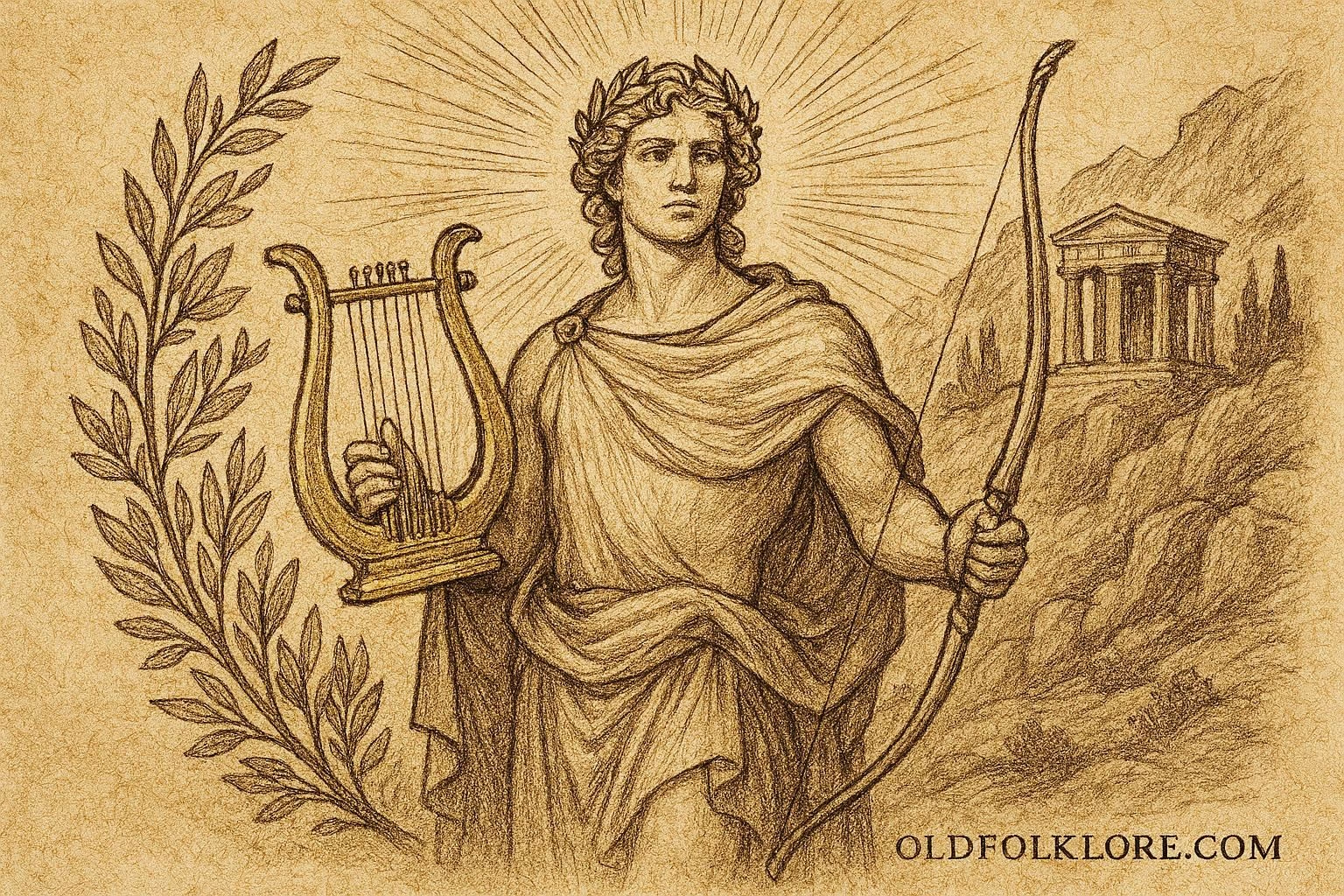
Apollo, son of Zeus and the Titaness Leto, is one of the most revered Olympian gods, presiding over prophecy, music, healing, and divine justice. Known for his golden lyre, far-reaching bow, and luminous presence, Apollo embodies both creative inspiration and righteous retribution. His sacred symbols include the laurel tree, the lyre, the raven, and the tripod of prophecy. Worship centers dedicated to him stretched across the ancient Greek world, but none rivaled the holiness of Delphi, where the Pythian priestess, the Oracle, spoke his revelations.
Apollo’s domains span a wide spectrum: the arts, especially poetry and song; the purification from miasma; the dispelling of plagues; and the bestowal of truthful visions. Called Phoebus (“the Bright One”), he is associated with clarity, clarity of sight, sound, and spirit. His festivals, such as the Pythian Games, celebrated his victory over the ancient Python and honored his role as Greece’s divine guide and healer.
Mythic Story
In the earliest days, before the great temples stood and before mortals learned to read the patterns of the heavens, Leto wandered the earth seeking a place to give birth. Hera, jealous and merciless, forbade every land to shelter her. Yet the floating island of Delos, unanchored and unclaimed, offered refuge. There, with the waves lapping softly against the new-formed shores, Leto brought forth her radiant twins: Artemis first, then Apollo, whose arrival filled the sea-winds with golden warmth.
From the moment he opened his eyes, Apollo shone with a brightness unmatched among the gods. As the Homeric Hymn to Apollo declares, “All of Delos burst into song, for the lord of the silver bow had entered the world.” The island was anchored thereafter, blessed by the god whose presence sanctified it forever.
Yet Apollo’s divine destiny stretched far beyond Delos. He sought a place where mortals could approach him, a site where truth could rise like a clear flame. Guided by the will of Zeus, he traveled across Greece, searching for ground worthy of prophecy. Finally, he reached the rugged slopes of Mount Parnassus, where a deep chasm exhaled vapors from the earth. But the place was guarded by a monstrous serpent, the ancient Python, child of primordial forces that predated the Olympians.
The Python was vast, its coils draped across stone like living shadows, its breath heavy with old and cryptic power. It struck fear into the hearts of villagers and clouded the land with dread. Apollo confronted it with the calm certainty of one born to reshape the world. Lifting his silver bow, gifted by Hephaestus himself, he fired arrows whose light pierced the gloom. The Python lunged, but Apollo’s shots were swift, each humming with divine clarity. The monster fell at last, its body shaking the ground, and its defeat sealed Apollo’s claim to the sacred site.
But the earth, which had birthed the beast, cried out in protest. To maintain harmony, Apollo purified himself, acknowledging the ancient laws that governed the natural order. Only then did he establish his holy sanctuary. Stone by stone, altar by altar, the temple of Delphi rose. The prophetic tripod was placed at its center, and through its fumes the priestess, now called the Pythia in memory of the slain Python, gave voice to Apollo’s will.
As years turned to centuries, kings, generals, and wanderers traveled to Delphi to seek his counsel. The Homeric Hymn speaks of him as “shining lord of the lyre” for Apollo’s music, like his prophecies, brought harmony to disorder. His songs could calm storms, guide sailors home, and ease the pain of the suffering. But the god was also capable of stern judgment. When mortals acted in hubris or violated sacred bonds, Apollo’s arrows carried plague just as easily as healing.
Yet, above all, Apollo remained the champion of truth. His prophecies were rarely gentle, but they were always exact, illuminating destiny much like the sun whose light later poets associated with him. For the Greeks, to follow Apollo was to pursue clarity, of vision, of action, of soul.
Thus, the god of Delos and Delphi stood at the center of Greek spiritual life: radiant, musical, prophetic, and enduring. His presence shaped kingdoms and poems alike, leaving a legacy that echoed across temples, hymns, and the hearts of his devotees.
Learn the ancient stories behind deities of light, storm, and shadow from cultures across the world
Author’s Note
Apollo’s myth reveals the ancient belief that clarity is sacred. His story teaches that truth may be difficult, purification necessary, and harmony a deliberate pursuit. By slaying the Python and raising the Oracle at Delphi, Apollo symbolizes the triumph of light over chaos, and the enduring human desire to seek guidance when the path ahead is uncertain.
Knowledge Check
Q1. What domains does Apollo govern?
A: Prophecy, music, healing, purification, and sacred justice.
Q2. Where was Apollo’s most important sanctuary located?
A: Delphi, where the Pythian Oracle spoke his prophecies.
Q3. What monster did Apollo slay to claim the Delphic site?
A: The Python, an ancient serpent guardian.
Q4. What island is associated with Apollo’s birth?
A: Delos.
Q5. Why is Apollo linked to the laurel tree?
A: It symbolizes his purity and is associated with his prophetic authority.
Q6. What role did the Pythia serve?
A: She delivered Apollo’s divine revelations from the Delphic tripod.
Source: Homeric Hymns, Greece
Source Origin: Greece