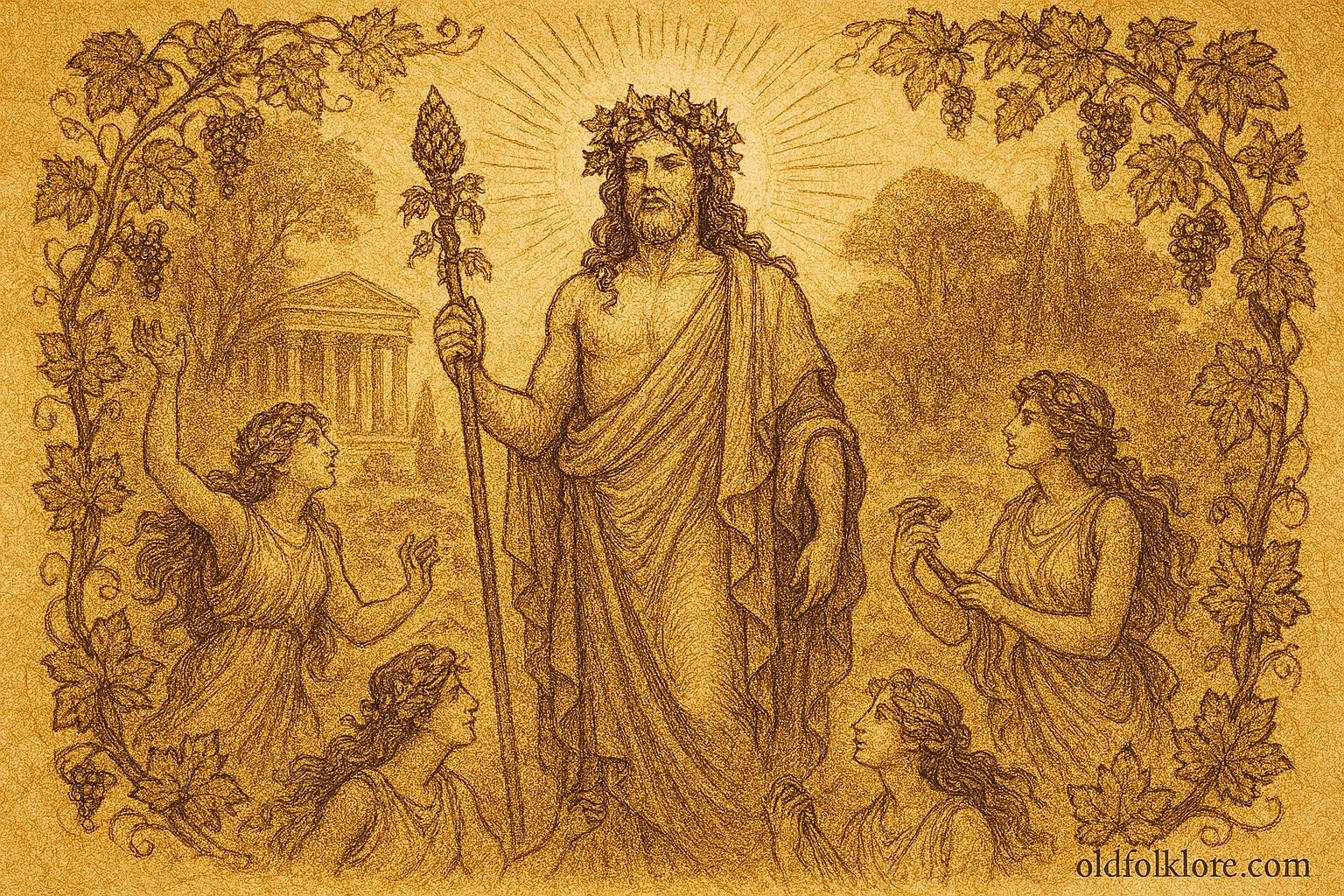
Dionysus, son of Zeus and the mortal princess Semele, is the Olympian god of wine, ecstatic ritual, fertility, theater, and divine liberation. He is a deity of paradox, gentle yet wrathful, joyful yet terrible, bringing both the balm of release and the frenzy of madness. His symbols include the thyrsus (a fennel staff tipped with ivy), the grapevine, leopard skins, masks of drama, and the ever-present cup of wine.
He travels accompanied by satyrs, maenads, and spirits of the wild, teaching mortals the mysteries of fermentation, ecstatic dance, and the sacred truth that life and death flow into one another. His worship ranged from rural mountain rites to the highly formalized City Dionysia of Athens. No other Greek god crosses boundaries, between mortal and divine, male and female, order and chaos, with such fluid, unstoppable power.
Mythic Story
The tale begins in the royal house of Thebes, where Semele, beloved by Zeus, bore within her womb a divine child. Hera’s jealousy, sharp as winter wind, took the form of deception. Disguised as an old woman, she whispered doubts into Semele’s heart, “If Zeus truly loves you, ask him to come in the glory he shows to Hera.” Semele, overcome by doubt and longing, made her request, and Zeus, bound by oath, appeared in his thunderous radiance. The mortal body cannot behold the unshielded lightning of Olympus; Semele perished, consumed by the brilliance.
Yet the unborn child endured. Zeus snatched him from the fire and sewed him into his own thigh, bearing him until the time was right. Thus, Dionysus became “twice born,” a god shaped by flame, death, and resurrection long before he took his first mortal breath.
As he grew, Dionysus wandered the world. He moved through mountain forests and distant islands, teaching mortals how to tend the vine, how to press grapes, and how the wine carried both joy and revelation. But his wandering was not merely a journey, it was exile. Hera, relentless, drove him into madness more than once, and Dionysus learned early the fragile line between ecstasy and terror. Because he knew that boundary intimately, he became its master.
Eventually, he returned to Thebes, his mother’s homeland, yet Thebes did not welcome him. King Pentheus, stern keeper of civic order, feared the wild rites that the women of the city were performing on the mountain slopes. They danced in ivy crowns, calling on Dionysus in ecstatic cries, their feet thundering upon the earth. Pentheus saw only chaos and sought to restore control by force.
Dionysus, disguised as a stranger with long curls and a soft, mystic smile, entered the city. He spoke gently, offering Pentheus understanding, inviting him to acknowledge the god’s divinity. But the king, rigid with denial, mocked him. He had the stranger bound, yet no chains could hold Dionysus. The palace shook: the bonds fell away like reeds; flames licked the halls without burning. Still Pentheus refused to see.
The disguised god then planted a more perilous seed, curiosity.
“If you truly wish to understand these rites,” he murmured, “go to the mountain. See with your own eyes what your people experience.”
Pentheus hesitated. Dionysus’ voice, soft as wine poured in a silent room, coaxed him:
“Wear a woman’s robe. Walk unseen among them. Learn the truth you fear.”
And so, the king, entranced, allowed the stranger to dress him, to fix ivy in his hair and drape a fawn-skin across his shoulders. In this transformation lay the destruction of his rigid certainties. Led by the god himself, he crept toward Mount Cithaeron.
On the slopes, the maenads, women filled with divine breath, moved in wild harmony. They sang Dionysus’ name, pressed grapes between their fingers, and danced in spirals that echoed the turning heavens. Pentheus, hiding behind pine branches, tried to watch unnoticed. But Dionysus had already withdrawn the veil that shielded him.
“Behold, my sisters!” one maenad cried. “A spy sent to mock our sacred rites!”
The women surged upon him in a frenzy not born of cruelty but of divine possession. At their center was Agave, Pentheus’ mother, eyes bright with the madness the god had breathed into her. She did not see her son, only a beast threatening the sanctity of their worship. With the strength of one seized by the divine, she tore him apart, the maenads joining in until no trace of the king remained whole.
When the madness lifted and Agave returned to herself, she carried his head in her hands, believing it a trophy of the hunt. Only when Dionysus lifted the enchantment did she see the truth and cry out in unimaginable grief.
Thus, Dionysus punished impiety, not out of cruelty but to reveal a truth older than cities: the divine cannot be denied without consequence. Mortals who refused to honor him suffered the chaos they repressed, while those who welcomed him found joy, release, and communion with life’s deeper rhythms.
So, Dionysus roamed onward, liberator, destroyer, healer, initiator, forever reminding mortals that the boundary between order and wildness is sacred.
Author’s Note
The myth of Dionysus and Pentheus shows that rejecting the sacred forces of nature invites disaster. Dionysus teaches that balance, between reason and ecstasy, structure and intuition, is essential. His story reveals how denying one’s inner truth can destroy, while accepting divine mystery can heal and transform.
Knowledge Check
Q1. What are Dionysus’ main domains?
A: Wine, ecstasy, theater, fertility, and divine liberation.
Q2. What is Dionysus’ symbolic staff?
A: The thyrsus, a fennel staff crowned with ivy.
Q3. Who denied Dionysus’ divinity in Thebes?
A: King Pentheus, whose refusal led to tragedy.
Q4. What group of ecstatic women followed Dionysus?
A: The maenads, inspired by divine frenzy.
Q5. How is Dionysus “twice born”?
A: Born first from Semele, then from Zeus’ thigh after her death.
Q6. What lesson does the myth of Pentheus convey?
A: Suppressing the sacred wildness within leads to destruction; honoring it brings harmony.
Origin: Greece
Source: Euripides’ Bacchae, Greece.