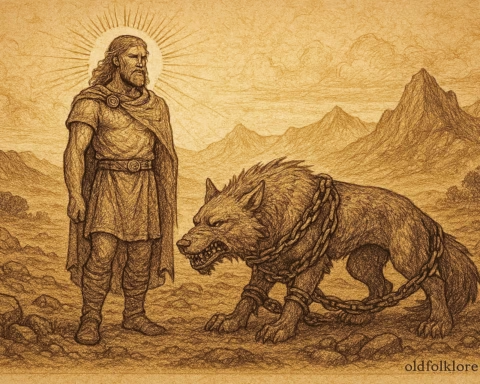
Heimdallr, born of the nine mothers, is the ever-watchful guardian of the gods in Norse mythology. He stands at the edge of Asgard, vigilant over the Bifrost, the rainbow bridge connecting the realms of gods and mortals. Possessing extraordinary senses, Heimdallr can hear grass grow and see to the farthest horizon, perceiving the approach of giants or intruders long before they arrive.
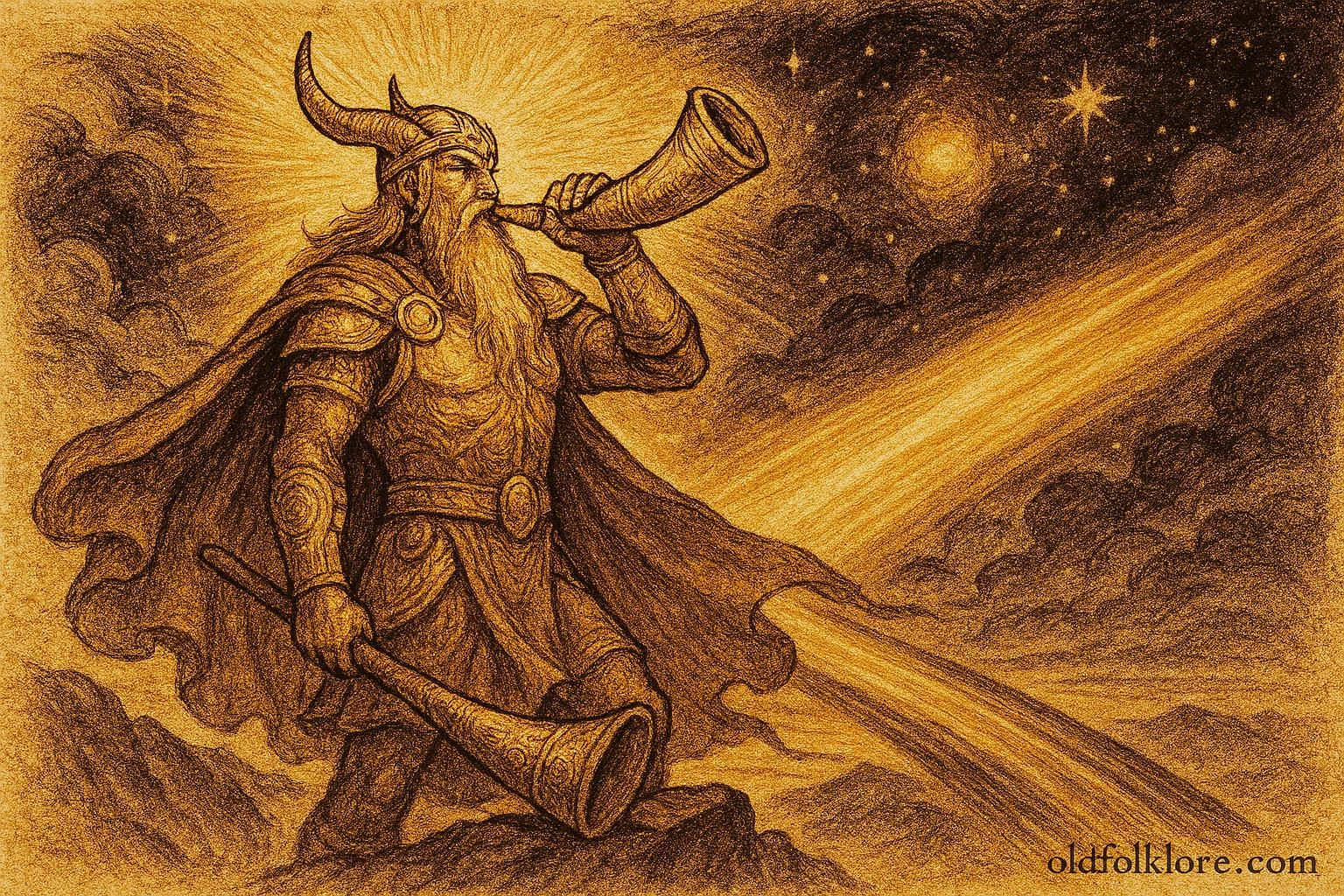
His attributes include the Gjallarhorn, whose blast will signal the onset of Ragnarök, and his keen eyesight, surpassing that of day itself. He wears resplendent armor and wields a sword, symbols of his unyielding duty. Heimdallr’s powers extend to clairvoyance, superhuman strength, and the ability to remain awake for eternity, requiring less rest than any mortal or bird. Within the pantheon, he serves as the sentinel, the liminal guardian between order and chaos, standing as the first and last line of defense for the divine order.
Mythic Story
From the earliest mists of the Nine Worlds, Heimdallr’s vigilance shaped the fate of gods and men alike. Born from the union of Nine Mothers, he emerged as a being destined for watchfulness, gifted with senses that surpassed even the keenest of the Æsir. It was said that no ear could hear as finely, no eye could pierce the distance as surely, and no mind could remain as alert as Heimdallr’s. He walked along the Bifrost, the rainbow bridge shimmering with the hues of dawn and dusk, a bridge both delicate and divine, spanning the realms of gods, humans, and giants.
Day and night, Heimdallr scanned the horizons, his gaze like sunlight cutting through cloud and mist. The giants, the jötnar, lurched against the walls of Asgard, plotting and prowling, but Heimdallr detected them before they could strike. He listened to the whispers of the wind and the rustle of the earth, noting every sound and movement. Even the grass beneath his feet betrayed secrets of approaching danger. His presence was both reassuring and awe-inspiring, a silent declaration that the realms of order were under divine protection.
Yet Heimdallr’s role was not merely passive. During times of turmoil, his Gjallarhorn lay ready, a golden horn of resounding power, capable of waking gods, men, and spirits alike. When the hour of Ragnarök approaches, it is he who shall sound the horn, a clarion of doom and destiny, calling the Æsir to the final battle. And on that day, the earth trembling beneath clashing armies, Heimdallr himself shall face Loki, the trickster and harbinger of chaos. The battle is fated; both will fall, and the cosmos itself will quiver under the weight of divine combat.
Beyond the battlefield, Heimdallr’s story carries lessons of vigilance, loyalty, and sacrifice. He remains ever-alert, without rest, embodying the principle that guardianship requires unwavering dedication. Though mighty, Heimdallr is not a god of conquest or personal glory. His existence is defined by service, the maintenance of order, and the preservation of the sacred realms. Mortals revered his image as the ultimate sentinel, a divine force watching over the threshold between safety and ruin.
In the quiet moments between the watch, Heimdallr’s senses pierce the veil of time, perceiving events far beyond mortal comprehension. He can discern intentions, foresee peril, and guide the gods with warnings subtle yet vital. The Nine Worlds depend upon him, for without his watchful gaze, the delicate balance between gods and giants, light and shadow, would collapse. Every sound, every movement, every shift in the wind carries meaning to Heimdallr. His story reminds all that vigilance is a sacred duty, and that the smallest observation may alter the fate of worlds.
Even as Ragnarök looms, Heimdallr does not falter. His gaze remains unwavering, his senses alert, and his horn silent until the appointed hour. He is the sentinel, the liminal guardian, the unwavering watchman who stands between chaos and order, between mortality and divinity, between the now and the approaching end of all things.
Author’s Note
Heimdallr represents the essence of watchfulness and duty. His myth teaches that vigilance, foresight, and service are sacred responsibilities, and that true strength lies not in conquest but in the steadfast protection of order and life. Through Heimdallr, Norse culture honored the value of guardianship and the delicate balance between worlds.
Knowledge Check
Q1. What is Heimdallr’s primary role in Norse mythology?
A: Guardian of the Bifrost and sentinel of the gods.
Q2. What is the significance of the Gjallarhorn?
A: It signals the onset of Ragnarök and summons the gods and warriors to battle.
Q3. Who are Heimdallr’s parents?
A: He was born of the Nine Mothers, a unique birth in the Norse pantheon.
Q4. How does Heimdallr’s vigilance manifest?
A: He possesses extraordinary senses—hearing grass grow, seeing across realms, and remaining awake without rest.
Q5. Who is Heimdallr fated to confront during Ragnarök?
A: Loki, the trickster god, in a duel that will claim both their lives.
Q6. What lesson does Heimdallr’s myth convey?
A: The sacred duty of vigilance and protection, and the balance between order and chaos.
Origin: Scandinavia
Source: Poetic Edda, Völuspá, Norse Mythology