Harae, or purification rites, are among the most ancient practices of Shintō, Japan’s indigenous belief system. Their earliest forms trace back to the Kofun period, when communities believed spiritual pollution, or kegare, disrupted harmony between people and the kami, the divine spirits shaping all natural and social life. By the 7th century, during the Heian era, Harae rituals became formalised through court rites, imperial ceremonies, and shrine liturgies. Texts such as the Engishiki (927 CE) recorded detailed purification procedures used across the country. Over time, Harae became the foundation of nearly every Shintō ceremony, practiced at both imperial shrines and small village altars.
Description: How Harae Is Practiced
Harae rituals cleanse physical, moral, and spiritual impurity. The process is not solely about physical washing; it is a symbolic restoration of balance with the natural world and the kami who inhabit it.
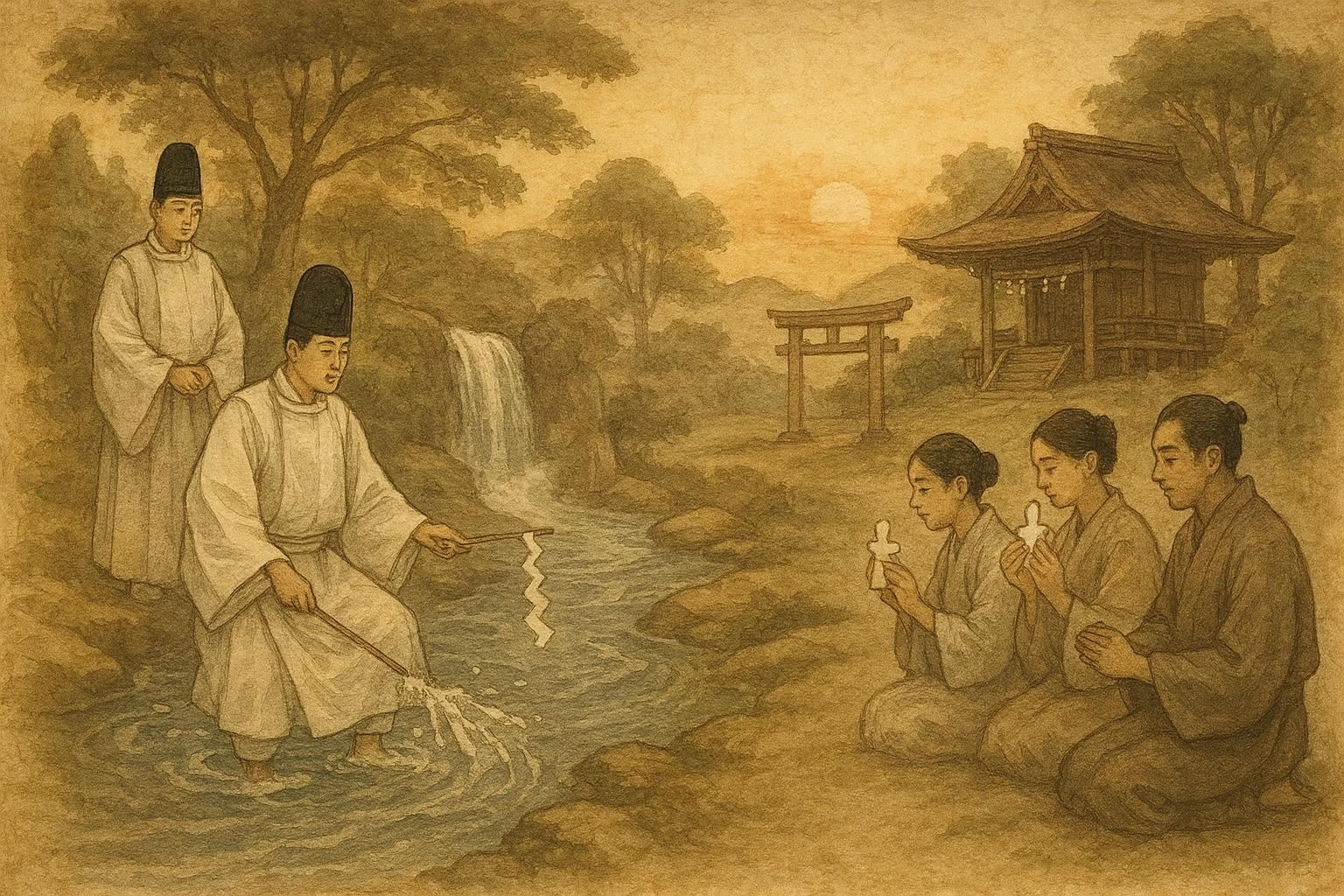
One common form is Misogi, a ritual ablution involving standing beneath a waterfall or immersing the body in running water. Participants breathe deeply, chant sacred words, and allow the water to carry impurity away. The flowing water represents renewal, echoing the Shintō belief that purity is the natural state of existence.
Another form is Ōharae, the Great Purification performed at the end of June and December. In this rite, priests chant norito (sacred prayers) while participants wave hito-gata, small human-shaped paper dolls, over their bodies. These dolls symbolically absorb misfortune, illness, or wrongdoing. When thrown into water or burned, the impurity is released back to nature in purified form.
Shrines also perform purification before festivals, marriages, and agricultural ceremonies. Salt is often sprinkled to cleanse spaces, echoing ancient beliefs in its purifying power. Even everyday acts reflect Harae: bowing before entering a shrine, rinsing hands and mouth at the temizuya, and walking mindfully into sacred spaces.
The Imperial Daijōsai, performed once per emperor, includes an elaborate Harae purification. In this ceremony, the emperor offers newly harvested rice to the kami, symbolising his pure connection to the nation’s spiritual life. Purification ensures that he stands before the kami in a state of harmony, representing the people he leads.
Mythic Connection
Harae is rooted deeply in Shintō mythology, particularly the story of the sun goddess Amaterasu and her brother Susanoo. After Susanoo’s destructive rampage through the heavens, which caused death and pollution, the gods performed purification rituals to restore order. They washed Susanoo, cleansed heaven, and calmed the spiritual chaos he created. This divine act became the mythic foundation for all future Harae.
Another myth describes Izanagi’s purification after returning from the underworld. When he washed himself in a river to rid himself of death’s pollution, new kami, such as Amaterasu, were born from the cleansing act. This myth teaches that purification brings renewal, creation, and spiritual power.
Through these stories, Harae reflects a key Shintō principle: purity is not moral perfection but spiritual clarity. Impurity is not sin, it is a condition that disrupts harmony. Purification restores the natural order of life, aligning humans once again with the rhythms of nature and the will of the kami.
Cultural Meaning
Harae expresses Japan’s cultural view that humans exist within a delicate spiritual ecosystem. Impurity arises not only from physical dirt but also from emotional turmoil, contact with death, misfortune, or social conflict. The ritual acknowledges that people continually accumulate imbalance simply by living.
Through purification, individuals reconnect with nature, which is seen as the ultimate purifier. Flowing water, fire, wind, rice, salt, and sacred words all carry cleansing power because they come from the kami. In rural communities, Harae was once performed before planting or harvesting to ensure the land remained spiritually balanced. Farmers believed crops grew best when the earth was free of impurity, showing that spiritual harmony influenced agriculture and survival.
Socially, Harae strengthens community bonds. Seasonal rites gather neighbours, families, and priests in shared acts of renewal. The Ōharae, performed nationwide twice a year, offers collective purification, reminding everyone that harmony is a communal responsibility. In modern Japan, many people still attend shrine-based purification ceremonies before major life transitions, marriage, childbirth, or the New Year.
Author’s Note
This article explores how Harae evolved from ancient water rites into one of the central expressions of Shintō spirituality. The ritual’s enduring power lies in its simple message: harmony with nature and the kami begins with purity of intention and the willingness to renew oneself. Across centuries, Harae has helped communities restore balance and reconnect with the sacred rhythms of the natural world.
Knowledge Check
1. What is the purpose of Harae?
To cleanse physical and spiritual impurity and restore harmony with the kami.
2. What myth forms the foundation of Harae?
The purification of heaven after Susanoo’s chaos and Izanagi’s cleansing after returning from the underworld.
3. What is Misogi?
A purification ritual involving immersion in natural running water or standing beneath a waterfall.
4. What is Ōharae?
The Great Purification performed twice yearly using prayers and symbolic paper dolls.
5. Why is purification important in Shintō?
Because purity allows humans to maintain a harmonious relationship with nature and the kami.
6. What natural elements represent purification?
Water, fire, rice, salt, and wind, all believed to hold cleansing power.