
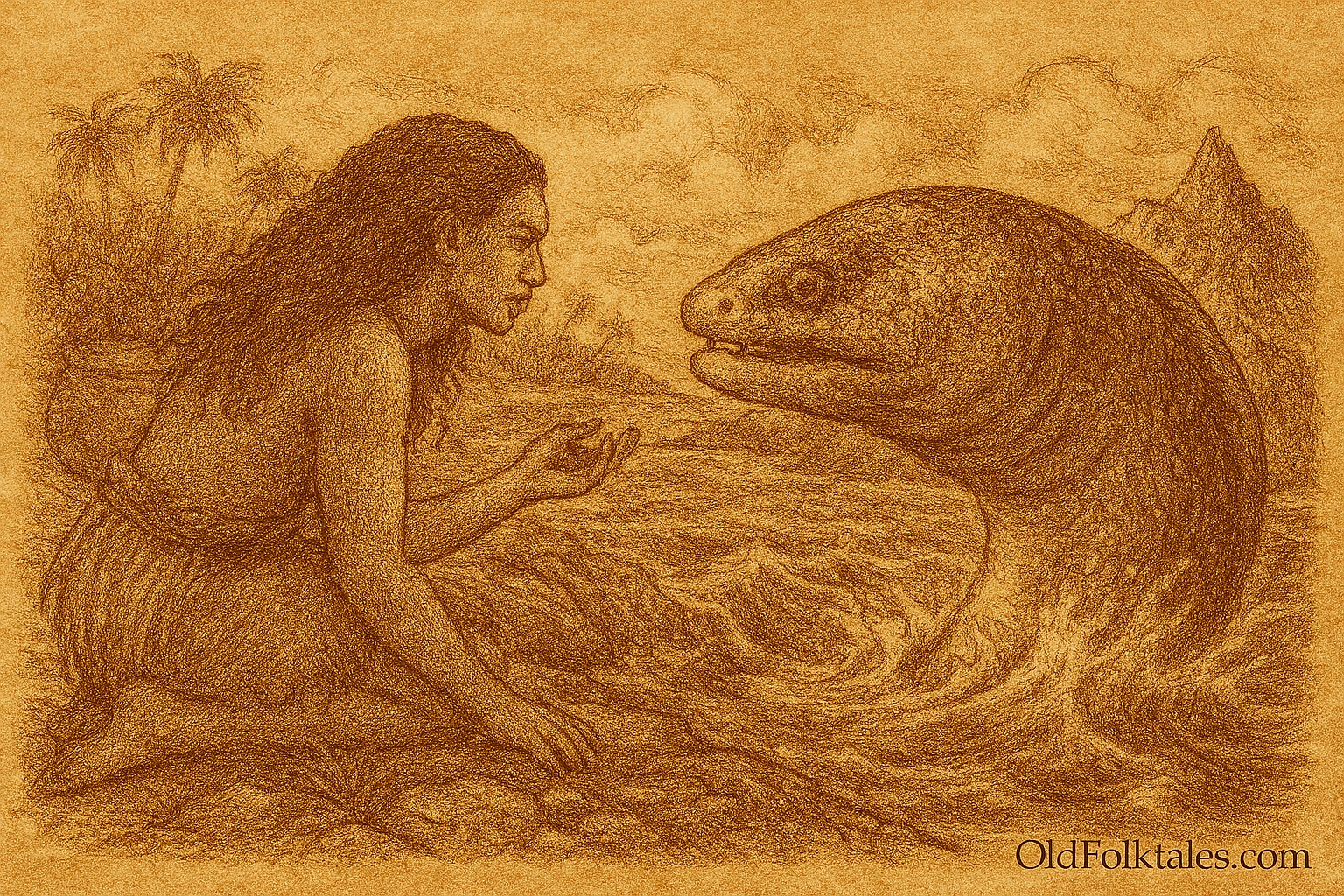
In the time when spirits still walked freely between worlds and the boundary between human and divine was as thin as morning mist, there lived a maiden named Sina whose beauty was spoken of in villages throughout Samoa. Her skin glowed like polished mother-of-pearl, her hair cascaded down her back like a waterfall of midnight, and her laughter was said to sound like the gentle lapping of waves upon the shore. But Sina was not merely beautiful; she possessed a kind heart and a gentle spirit that drew all living things to her.
One day, while bathing in a clear freshwater pool fed by mountain streams, Sina discovered a tiny eel no longer than her smallest finger. The creature seemed weak and struggling, caught in the shallow water near the rocks. Her heart filled with compassion, and she carefully scooped the small eel into her hands, marveling at its sleek body and delicate movements.
Click to read all Myths & Legends – timeless stories of creation, fate, and the divine across every culture and continent
“Poor little one,” she whispered, stroking its smooth skin with her fingertip. “You need someone to care for you.”
Sina carried the eel home in a calabash filled with fresh water and placed it in a large wooden bowl in her family’s fale, the traditional open-sided house. She named the eel Tuna, and each day she fed it small pieces of taro, coconut meat, and whatever scraps she could spare from her meals. She would sit beside the bowl and talk to Tuna as if he were a friend, telling him about her day, singing him the old songs her grandmother had taught her.
The eel thrived under Sina’s devoted care. Day by day, week by week, Tuna grew. Soon he was too large for the wooden bowl, and Sina moved him to a larger clay vessel. But Tuna continued to grow, his body becoming thick and powerful, his skin developing the distinctive markings of a mature eel.
As months passed and turned into years, something began to trouble Sina. Tuna had grown enormous longer than a man is tall, his body as thick as her waist. The vessel that held him had to be replaced again and again, each one larger than the last. But it wasn’t merely his size that disturbed her. When she approached his pool, Tuna would rise to the surface and watch her with eyes that seemed far too knowing, far too human. There was an intelligence in that gaze, an intensity that made her skin prickle with unease.
Sometimes, late at night, Sina would wake to the sound of movement outside her sleeping mat. In the moonlight filtering through the palm fronds of the fale’s roof, she would see Tuna’s massive form somehow moving across the ground, inching closer to where she slept. His eyes would gleam in the darkness, fixed upon her with an devotion that had transformed into something she could no longer bear.
Fear took root in Sina’s heart, growing like a vine around her chest until she could barely breathe. The creature she had once pitied and nurtured now filled her with dread. She realized with growing horror that Tuna was no ordinary eel he was a spirit being, perhaps even a god, who had taken eel form. And his love for her had become an obsession that would not release her.
One night, when the fear became too great to endure, Sina made a desperate decision. She gathered her few possessions into a woven basket and fled under cover of darkness, leaving her village behind. She ran through the forest, stumbling over roots and pushing through hanging vines, until she reached a distant village where she hoped she might find safety and peace.
But when she settled in the new village and began to rebuild her life, helping the women weave pandanus mats and pound tapa cloth, a familiar sensation crept over her. The feeling of being watched. The sense of a presence drawing near.
One morning, she went to fetch water from the village stream and there, in the clear water, she saw him. Tuna had followed her. His massive body undulated through the current, and when he surfaced, his eyes found hers immediately, filled with longing and determination.
Sina’s heart hammered in her chest. She dropped her water vessel and ran, fleeing once again to another village, then another, and another. Each time she thought she had escaped, Tuna would find her. He seemed able to travel through any waterway streams, rivers, even appearing in the ocean waves that lapped at the shore. His love was relentless, following her like a shadow she could not outrun.
Finally, exhausted and desperate, Sina sought help from the village king, a wise and powerful chief whose authority commanded respect from both humans and spirits. She fell at his feet and told him everything the tiny eel she had rescued, how he had grown, how his love had become a terror she could not escape.
The king’s face grew grave as he listened. He recognized immediately what Tuna truly was a spirit being whose devotion had crossed the boundary between worlds. “You will stay here under my protection,” the king declared, his voice resonating with authority. “I will not allow any harm to come to you, whether from human or spirit.”
True to his word, the king stationed warriors around Sina’s dwelling and placed sacred tapu markers that would ward off spiritual intrusions. For a time, Sina felt safe. But deep in her heart, she knew the story was not finished.
One night, as the moon hung full and bright above the village, casting silver light across the land, a great disturbance arose from the ocean. Waves crashed against the shore with unusual force, and a voice deep and resonant, barely human called out Sina’s name.
“Sina… Sina…”
The king and his warriors gathered, weapons ready, as Tuna emerged from the waves. But the eel spirit who appeared was not the monster Sina had feared. He seemed diminished somehow, his great body moving slowly, his eyes filled not with obsession but with sorrow and acceptance.
“Please,” Tuna’s voice rumbled like distant thunder, “I ask only to see Sina one final time. I know now that my love has caused her only fear and pain. I do not come to take her or to harm her. I come to say goodbye and to give her a final gift.”
The king looked at Sina, and after a long moment, she nodded. Despite her fear, despite everything, a part of her remembered the tiny eel she had saved, and she found compassion stirring once more in her heart.
She approached the water’s edge, and Tuna raised his great head to look at her one last time. “Sina,” he said softly, “you showed me kindness when I was weak and helpless. You gave me life. In return, I offer you this: when I die, take my head and bury it in the earth. Do not fear what grows from that place. It will be my gift to you and to all your people a gift that will sustain them for generations to come.”
Before Sina could respond, Tuna’s eyes closed, and his massive body went still. The spirit that had animated the eel departed, returning to whatever realm it had come from. Tuna the eel was dead.
Sina wept then not tears of fear, but tears of grief and gratitude. She called for the king’s strongest men, and together they carried Tuna’s body to a place above the village. With a sharp stone tool, Sina cut off Tuna’s head as he had instructed, though her hands trembled as she did so. She dug a deep hole in the rich earth and buried the head, covering it with soil and marking the spot with stones.
Then she waited, visiting the spot each day, wondering what gift Tuna had promised.
Days passed, then weeks. Just when Sina began to doubt that anything would grow, a green shoot emerged from the earth. It grew with remarkable speed, unlike any plant she had ever seen. The shoot became a trunk, rising tall and straight toward the sky. Great fronds unfurled at the top, spreading like fingers reaching for the sun. And then, nestled among those fronds, round green fruits began to form.
The first coconut tree had been born.
When the fruits ripened and fell to the ground, Sina picked one up, marveling at its weight and strange appearance. Following an instinct she couldn’t explain, she cracked it open. Inside was white flesh and sweet, clear water that quenched thirst like nothing else.
But what made Sina gasp and brought tears streaming down her face was this: when she looked at the base of the coconut, she saw three dark spots arranged on the shell. Two spots like eyes, one like a mouth. It was Tuna’s face, looking back at her for all eternity.
From that day forward, the coconut tree became the most valuable plant in all of Samoa and throughout Polynesia. Its water provided drink, its flesh provided food, its leaves provided thatch for roofs and material for weaving, its wood provided timber for building, and its husk provided fiber for rope. Every part of the tree was useful, every part was precious.
And whenever the people drank from a coconut or used any part of the sacred tree, they remembered Sina and her devoted eel. They remembered that love even when imperfect, even when frightening can transform into a gift that sustains life itself. They saw Tuna’s face on every coconut and knew that sometimes the greatest acts of love require sacrifice and letting go.
The Moral Lesson
The legend of Sina and the eel teach us profound truths about love, sacrifice, and transformation. True love means recognizing when our affection becomes a burden to another and having the courage to let go. Tuna’s final act shows us that the highest form of love is not possession but giving transforming obsession into a gift that serves others. The story also reminds us that even relationships that cause fear or discomfort can end in redemption and blessing. The coconut tree, which provides sustenance in countless ways, stands as a symbol that sacrifice, and proper release can create lasting gifts that benefit entire communities for generations. When we see Tuna’s face on every coconut, we are reminded that kindness, even to the smallest creature, creates ripples that extend far beyond our understanding.
Knowledge Check
Q1: Who was Sina and why did she adopt the eel named Tuna? A1: Sina was a beautiful and kindhearted Samoan maiden known for her compassion and gentle spirit. She found a tiny, weak eel struggling in a freshwater pool and, moved by pity, rescued it and brought it home to care for it. She kept the eel as a pet, naming it Tuna, feeding it daily, and treating it with tenderness as it grew.
Q2: Why did Sina eventually become afraid of Tuna and flee from him? A2: As Tuna grew to an enormous size, Sina realized he was not an ordinary eel but a spirit being whose love for her had become an obsession. Tuna would watch her with unnervingly human eyes and even move across land to be near her while she slept. His intense devotion transformed from grateful affection into something that frightened her, causing her to flee from village to village seeking safety.
Q3: What was Tuna’s final request to Sina, and what did he promise? A3: Before dying, Tuna asked to see Sina one last time to say goodbye. He instructed her to cut off his head after his death and bury it in the earth, telling her not to fear what would grow from that spot. He promised that what grew would be a gift to her and her people that would sustain them for generations to come this gift became the first coconut tree.
Q4: What is the significance of the three spots on a coconut shell in this legend? A4: The three dark spots at the base of every coconut resembling two eyes and a mouth are said to be Tuna’s face looking back at Sina and all who use the coconut. This serves as an eternal reminder of Tuna’s sacrificial love and his transformation from a spirit obsessed with possession into a gift of sustenance. Every time someone drinks from a coconut, they see Tuna’s face and remember his final act of selfless giving.
Q5: How does the coconut tree represent Tuna’s ultimate gift to the Samoan people? A5: The coconut tree, which grew from Tuna’s buried head, provides everything needed for life in Polynesian culture. Its water quenches thirst, its flesh provides food, its leaves are used for roof thatching and weaving, its wood serves as building material, and its husk yields fiber for rope. Every part of the tree is useful and precious, making it a complete and perfect gift that demonstrates how Tuna’s love transformed from personal obsession into universal service to humanity.
Q6: What does this legend reveal about Polynesian values regarding relationships and sacrifice? A6: This Samoan legend embodies core Polynesian values including the importance of compassion (Sina’s initial kindness), the recognition that love should not imprison or frighten the beloved, the nobility of sacrifice for others’ wellbeing, and the concept that true love means letting go when necessary. It also demonstrates the Polynesian understanding that spiritual beings can transform and that death is not an ending but a transformation into new forms of giving. The story teaches that the highest love is not possessive but generative creating gifts that serve the community for generations.
Source: Adapted from Myths and Legends of the Polynesians by Johannes C. Andersen
Cultural Origin: Samoa and broader Polynesian cultures throughout the Pacific Islands, including variations in Tonga, Fiji, and other island nations






