
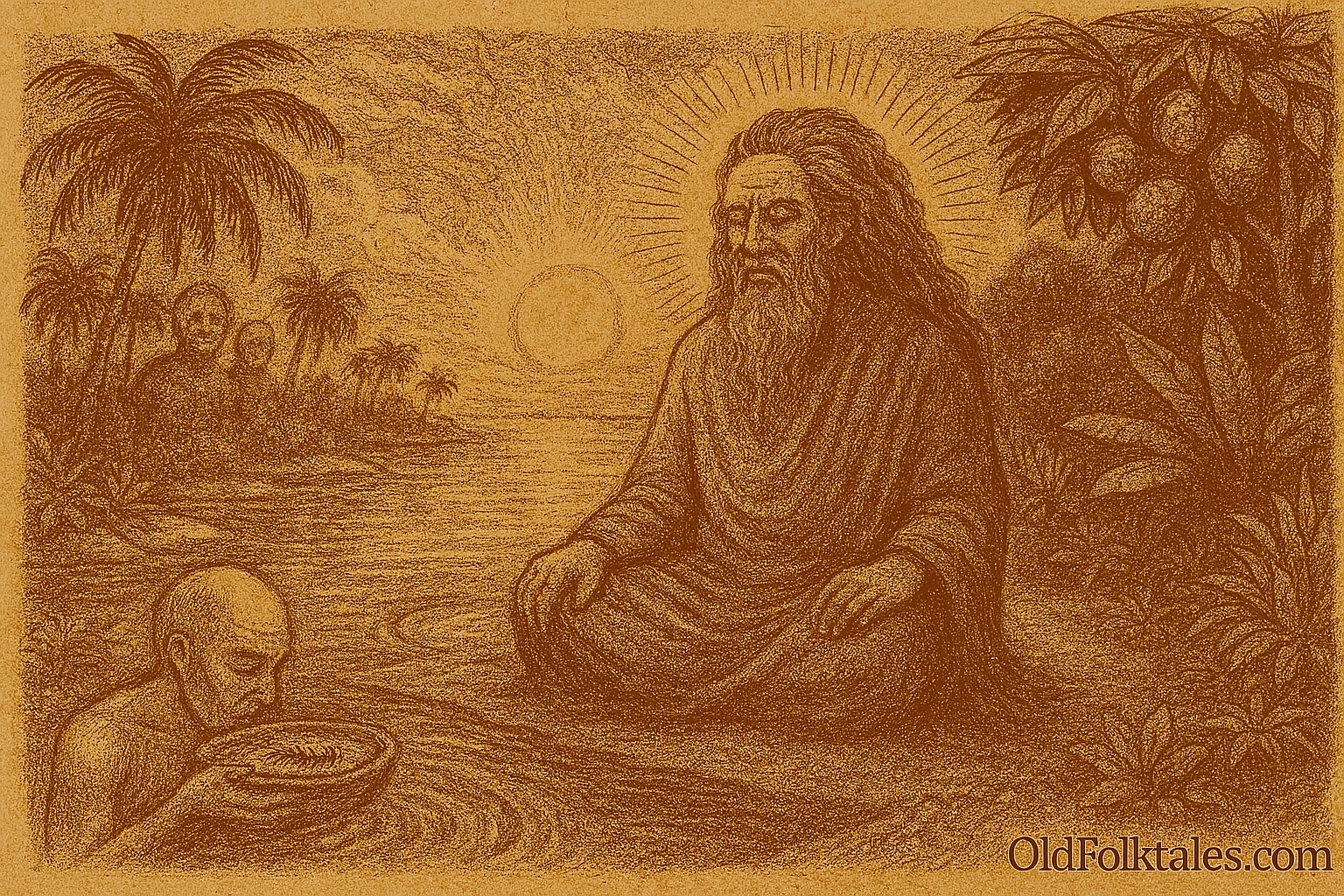
Far beyond the horizon, where the ocean meets the edge of the world and the sun descends into waters that glow like molten gold, lies Pulotu the sacred ancestral land of gods and spirits. This is not a place of shadows or sorrow, not a realm of punishment or despair. Pulotu shimmers with an otherworldly radiance, a paradise bathed in eternal light where the air itself seems to hum with divine presence. It is the spiritual center of the Tongan cosmos, the luminous homeland from which all sacred power flows.
Ruling over this blessed realm sits Tu’i Pulotu, a figure of immense spiritual authority whose very name commands reverence throughout the islands of Tonga and beyond. Tu’i Pulotu is not merely a king or chieftain he is the sacred lord of the ancestral realm, the divine fountainhead from which Tongan chiefs trace their royal lineage and sacred right to rule. His presence in Pulotu ensures the connection between the mortal world and the realm of gods remains unbroken, a golden thread linking past, present, and future.
Click to read all Myths & Legends – timeless stories of creation, fate, and the divine across every culture and continent
The realm of Pulotu exists across the far western sea, beyond the reaches where ordinary canoes can travel. Some say it lies just past the setting sun, where the waters turn from blue to silver and the boundary between worlds grows thin. The journey to Pulotu is not undertaken lightly, nor is it a path that all may walk. This is not simply the destination of the dead, as some afterworlds are. Pulotu is far more extraordinary it is a place that can sometimes be reached by the living, through magic, through vision, or through the guidance of the gods themselves.
Those fortunate heroes and priests who have journeyed to Pulotu and returned to tell of it speak with voices hushed with wonder. They describe quiet lagoons whose waters are so clear they seem made of liquid crystal, reflecting not just the sky above but worlds beyond mortal sight. The shores are lined with pristine white sand that never grows hot beneath the sun, for Pulotu’s light is gentle and perfect, warming without burning.
Lush groves flourish across the landscape trees heavy with fruit that never rots, flowers that bloom eternally without wilting, plants whose leaves shimmer with colors that have no names in the mortal tongue. The air carries fragrances of jasmine, frangipani, and other blooms, mixing with the salt-sweet scent of the sacred sea. Birds with iridescent feathers sing songs that touch the soul directly, bypassing the ears to resonate in the heart.
But perhaps most remarkable is the radiant presence that suffuses every corner of Pulotu. It is not merely light, though the realm glows with perpetual gentle brilliance. It is not merely peace, though tranquility flows through Pulotu like water through a spring. It is the concentrated essence of mana sacred power, spiritual authority, divine energy. To stand in Pulotu is to stand at the source of all that makes life sacred, all that elevates the human spirit toward the divine.
Tu’i Pulotu presides over this realm with wisdom accumulated across ages beyond counting. He welcomes the spirits of ancestors who have completed their journey in the mortal world, those whose deeds and character have earned them a place in this blessed land. These ancestral spirits do not fade or diminish in Pulotu. Instead, they thrive, maintaining their personalities and wisdom, continuing to watch over their descendants in the islands of the living.
The connection between Pulotu and the mortal world of Tonga is profound and unbreakable. The Tongan people understand that their chiefs do not rule by force alone, nor by mere human authority. The sacred power of chieftainship flows directly from Pulotu, carried in the bloodlines that trace back through generations to divine origins. Each Tu’i Tonga the paramount chief of the islands inherits a fraction of Tu’i Pulotu’s sacred authority, making them not merely political leaders but spiritual conduits between worlds.
This divine inheritance is not symbolism or metaphor to the Tongan people; it is fundamental truth. When a chief speaks with authority, it is Tu’i Pulotu’s voice echoing from the ancestral realm. When a chief performs sacred rituals, he opens doorways to Pulotu, allowing blessings to flow from that radiant land into the mortal world. The chiefs serve as living bridges, their bodies standing in the islands of earth and coral, their spirits touching the shores of Pulotu.
Some exceptional individuals powerful priests, gifted navigators, heroes marked by destiny have been granted visions of Pulotu while still drawing breath. These visionary journeys come unbidden, often during times of great need or profound spiritual transformation. The traveler’s body remains in the mortal world, perhaps sitting in meditation or lying in deep trance, while their spirit soars across the western sea to behold the ancestral homeland.
These vision-journeys are gifts of immeasurable value. Those who experience them return transformed, carrying knowledge and wisdom that cannot be learned through ordinary means. They bring back insights about navigation, healing, governance, and the proper conduct of rituals. They receive guidance from the ancestors dwelling in Pulotu, messages meant to help their people thrive and maintain harmony with the spiritual order.
Magic, too, can open the way to Pulotu for those with sufficient knowledge and power. Ancient priests possessed rituals passed down through generations, sacred chants and offerings that could thin the veil between worlds. These were not dark or dangerous magics, but holy practices performed with reverence and pure intention. Through these rituals, select individuals could project their consciousness to Pulotu, standing if only briefly in the presence of Tu’i Pulotu himself, seeking counsel or blessing for their people.
The realm of Pulotu stands as eternal proof that the relationship between gods, ancestors, and mortals is one of continuity rather than separation. Death is not an ending but a return a journey home to the shining land from which all life ultimately springs. The ancestors watch from Pulotu, their love and wisdom still touching the lives of their descendants. Tu’i Pulotu maintains the cosmic order, ensuring that sacred authority flows properly from divine source to earthly expression.
In Tongan tradition, to speak of Pulotu is to speak of hope, heritage, and the unbreakable bonds that tie generations together across the boundaries of life and death. It is to acknowledge that the mortal world is not all there is, that beyond the western horizon lies a realm of perfect beauty where the spirits of the worthy find eternal peace and joy.
The Moral Lesson
The legend of Tu’i Pulotu and the realm of Pulotu teaches us that leadership and authority gain their truest power not from force but from spiritual legitimacy and ancestral connection. It reminds us that we are part of an unbroken chain linking past, present, and future our ancestors watch over us, and our actions today will influence generations yet to come. Pulotu represents the truth that death is not an ending but a transformation, a return to spiritual origins. The story encourages us to honor our heritage, respect sacred authority, and live in ways that maintain harmony between the earthly and spiritual realms, knowing that the bonds of family and culture transcend even death itself.
Knowledge Check
Q1: Who is Tu’i Pulotu and what is his role in Tongan and Fijian mythology?
A1: Tu’i Pulotu is the sacred lord and ruler of Pulotu, the ancestral realm of gods and spirits in Polynesian mythology. He is a figure of immense spiritual authority from whom Tongan chiefs trace their divine lineage and sacred right to rule, serving as the fountainhead of royal power and maintaining the connection between the mortal world and the realm of gods.
Q2: How is Pulotu different from typical underworld realms in other mythologies?
A2: Unlike underworlds focused on punishment or shadow, Pulotu is a shining paradise of beauty and peace, a blessed ancestral homeland rather than a place of suffering. It features quiet crystal-clear lagoons, lush eternal groves, pristine shores, and radiant divine presence. Pulotu is a place of honor and joy where worthy spirits thrive, and it can sometimes be reached by living people through magic or vision, not just through death.
Q3: How do Tongan chiefs derive their authority from Pulotu according to this legend?
A3: Tongan chiefs, particularly the Tu’i Tonga (paramount chief), inherit sacred authority directly from Tu’i Pulotu through divine bloodlines tracing back to the ancestral realm. This makes them not merely political leaders but spiritual conduits between worlds when they speak or perform rituals, they channel power from Pulotu, serving as living bridges between the mortal islands and the sacred ancestral homeland.
Q4: What are the three ways that Pulotu can be reached according to the story?
A4: Pulotu can be reached through three means: first, by death when worthy spirits complete their mortal journey; second, through visionary experiences granted to exceptional individuals during meditation or trance states; and third, through sacred magic and rituals performed by powerful priests who can thin the veil between worlds to project their consciousness to the ancestral realm.
Q5: What do heroes and priests who have visited Pulotu describe about the realm?
A5: Visitors describe Pulotu as having quiet lagoons with crystal-clear waters, pristine white sand shores, lush groves with eternally blooming flowers and fruit, birds with iridescent feathers singing soul-touching songs, and fragrances of jasmine and frangipani. Most importantly, they describe a radiant presence the concentrated essence of mana (sacred power) that suffuses every corner of the realm with divine energy.
Q6: What is the cultural significance of Pulotu to the Tongan people?
A6: Pulotu represents the spiritual center of Tongan cosmology and the source of sacred chiefly authority. It embodies the belief that ancestors continue watching over their descendants, that death is a return home rather than an ending, and that leadership derives legitimacy from divine origins. Pulotu symbolizes the unbreakable bonds connecting generations and the continuity between earthly life and spiritual existence, forming the foundation of Tongan social and religious structure.
Source: Adapted from Tongan and Fijian oral traditions
Cultural Origin: Tonga and Fiji, Western Polynesia (South Pacific Ocean)






