
Before there was light, before there was form, before there was meaning or purpose or life itself, there existed only the infinite void. It was a place, or perhaps not a place at all of formless darkness where sand and water swirled together in endless, meaningless chaos. No sky stretched overhead because there was no overhead. No earth spread below because there was no below. Direction had no meaning. Time had no passage. Nothing existed except the eternal, empty dark.
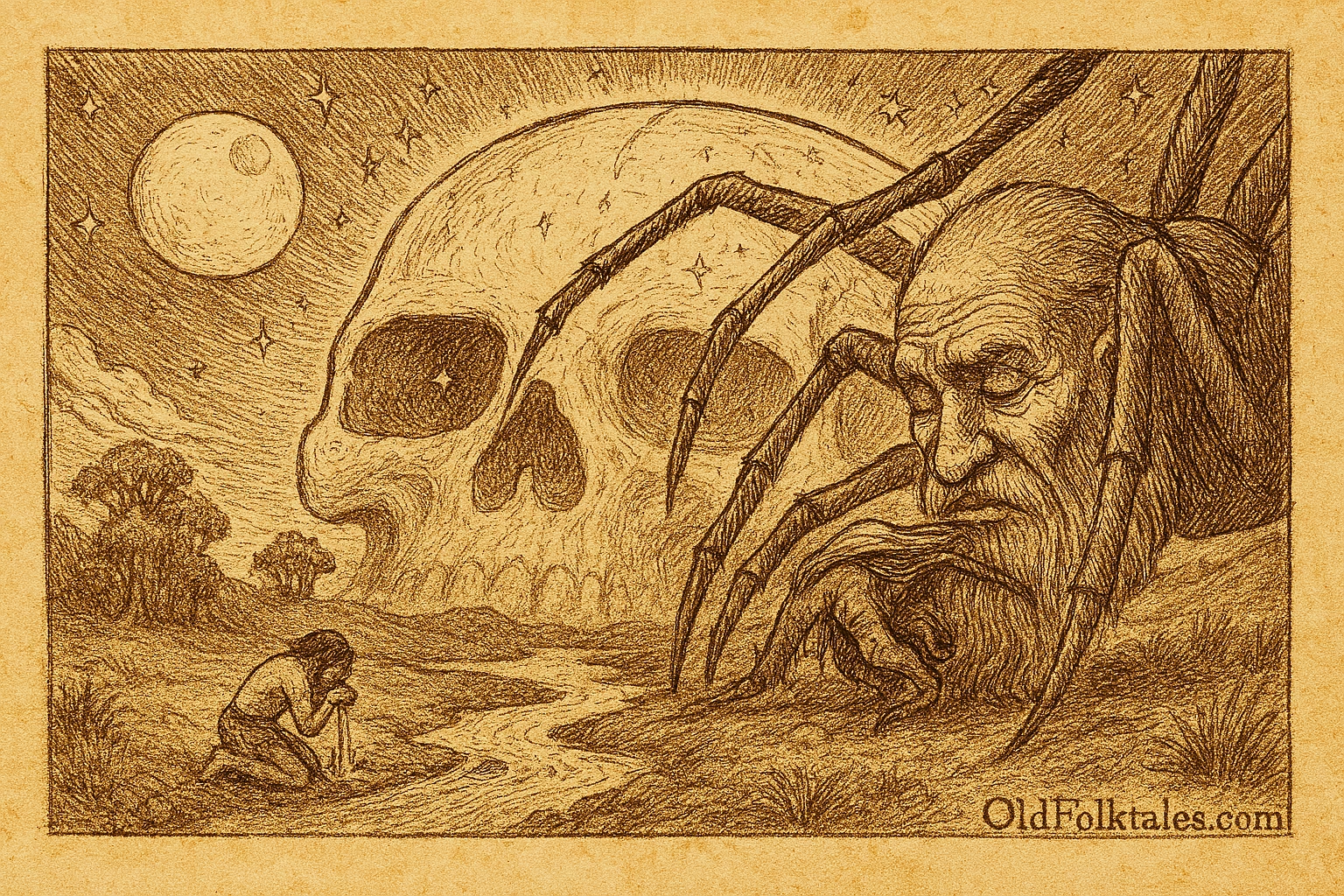
And yet, even in this void, there was one presence. Nareau the Spider moved through the darkness, alone and ancient beyond measure. He was the first consciousness, the first awareness, the first spark of intention in an intentionless universe. Nareau was not merely a spider as mortals know spiders he was the Spider, the cosmic weaver, the architect of existence itself. His form defied description, for form itself had not yet been invented. He simply was, and in his being lay the potential for everything that would come to be.
Nareau looked upon the formless darkness and felt something stir within his divine essence a restlessness, a creative urge, a need to bring order from chaos and meaning from emptiness. But he understood a profound truth: he could not create the world alone. The task was too vast, too complex, requiring powers and perspectives he did not possess. Creation would demand collaboration, would require multiple hands and minds and wills working together.
And so, with deliberate purpose, Nareau began to mold. From the primordial mixture of sand and water, he shaped two beings with his many legs, infusing them with divine essence drawn from his own nature. The first he named Na Atibu, and the second he called Nei Teukez. They were gods in their own right, though younger than Nareau, lesser in some ways but possessing qualities the Spider himself lacked. They were his children, his partners, his fellow creators.
Na Atibu and Nei Teukez awakened in the darkness, blinking consciousness into eyes that had never seen because there was nothing yet to see. They felt Nareau’s presence and understood, without words, their purpose. They were not created to simply exist they were created to create. The urge burned in them as fiercely as it burned in the Spider who had molded them from nothingness.
Together, this divine trinity began the work of making. Na Atibu and Nei Teukez drew upon powers awakening within them, channeling creative force through their newly formed bodies. They spoke words that had never been spoken, words that carried the weight of command and intention. And in response to these words, other gods began to emerge from the primordial darkness.
These new deities were specialists, each possessing dominion over specific aspects of the emerging cosmos. Some held authority over water, others over air. Some understood the nature of stone, others the principles of growth and life. Working in concert, this pantheon of gods began shaping the raw materials of existence into structures and systems.
The sky was their first great work. Where before there had been only darkness pressing in from all sides, now a vast dome began to form overhead, a separation, a boundary, a surface against which light might one day play. The ocean came next, gathering the scattered waters into a single great body, deep and mysterious, its boundaries defined by divine will. Then came the first patterns rhythms and cycles, the foundational rules that would govern how this new universe would function.
But as the work progressed, Na Atibu came to understand something that filled him with both sorrow and determination. The creation was magnificent, yes, but it was incomplete. It lacked substance, lacked permanence, lacked the kind of deep structural integrity that would allow it to endure across ages. The world needed more than divine will to hold it together it needed sacrifice. It needed a god to give not just effort but essence, not just power but self.
Na Atibu looked upon what had been made and what still needed to be, and he made his choice. He would become the sacrifice. He would transform himself from creator into creation, from shaper into substance. It was the ultimate act of love, the final gift a god could give to the universe he had helped bring into being.
The moment of sacrifice was both terrible and beautiful. Na Atibu’s divine body was torn apart, each piece infused with his essence and purpose. His massive skull, repository of divine wisdom and consciousness, was lifted high to become the dome of the sky itself solid, enduring, the roof of the world. His bones, strong and structured, transformed into the first trees, standing tall and proud, their roots digging deep into the emerging earth, their branches reaching toward the heavens he had become.
His eyes, which had seen the birth of existence, did not close in death but instead blazed with eternal light. One eye became the sun, burning golden and fierce, bringing warmth and illumination to the world below. The other became the moon, softer and gentler, ruling the night with silver radiance. Both would travel across the sky-skull of their former owner, marking the passage of days and months and years.
But perhaps most wondrous of all was what became of Na Atibu’s brain the seat of thought, the source of divine intellect and imagination. It did not become one thing but scattered into countless fragments, each piece retaining a spark of consciousness and light. These fragments spread across the inner surface of the sky-skull, becoming the stars. Each star carried within it a thought, a dream, a memory of the god who had given everything for creation. When people of later ages looked up at the night sky, they would gaze upon the very mind of a god, spread out in glittering beauty across the darkness.
From Na Atibu’s body, the world took its final, complete shape. His flesh became soil, rich and fertile. His blood became rivers and streams. His breath became wind. His voice became thunder. Every part of him found purpose and place in the cosmos, transforming from divine being into the very fabric of reality.
Nareau the Spider looked upon what had been accomplished and knew that it was enough. The formless darkness had been conquered. Order had emerged from chaos. The universe existed, structured and beautiful, held together not just by divine power but by divine sacrifice. Na Atibu lived on, not as a god walking and speaking, but as the world itself eternally present, eternally giving, the foundation upon which all future life would build.
And so the people of Kiribati understand this truth: creation is not merely an act of power but an act of sacrifice. The world exists because a god chose to unmake himself, to transform from being into becoming, from immortal deity into mortal matter that could be touched and lived upon and loved. Every tree, every star, every sunrise carries within it the echo of that first great sacrifice, the moment when a god gave everything so that everything could be.
Click to read all Myths & Legends – timeless stories of creation, fate, and the divine across every culture and continent
The Moral Lesson
The legend of Nareau and Na Atibu teaches us that true creation requires sacrifice the willingness to give of ourselves so that something greater can emerge. Na Atibu’s transformation from God to cosmos demonstrates that the highest form of love is not possession but transformation into something that serves others. His story reminds us that we are literally made of stardust and divine essence, that the world around us is sacred because it emerged from willing sacrifice. This myth calls us to consider what we are willing to give up for the greater good, and how our own sacrifices, small or large, contribute to the ongoing creation and sustenance of our communities and world. The cosmos itself is proof that from death and dissolution can come beauty, order, and eternal life.
Knowledge Check
Q1: Who is Nareau in Kiribati mythology and what was his role in creation?
A1: Nareau is the Spider Creator, the first consciousness existing in the formless void before creation. As the cosmic weaver and architect of existence, Nareau began the creation process by molding two divine beings, Na Atibu and Nei Teukez, from primordial sand and water. He recognized that creation required collaboration beyond himself and initiated the divine partnership that would shape the universe.
Q2: What was the state of existence before Nareau began the creation process?
A2: Before creation, only formless darkness existed where sand and water swirled together in endless, meaningless chaos. There was no sky, no earth, no direction, and no passage of time just an infinite void with no form, meaning, or purpose. Only Nareau the Spider existed in this emptiness as the first consciousness and awareness.
Q3: Who were Na Atibu and Nei Teukez and what did they do in the creation story?
A3: Na Atibu and Nei Teukez were the first two divine beings molded by Nareau from the primordial mixture of sand and water. They were gods who worked alongside Nareau to create the universe. Together they brought forth other specialized gods who shaped the sky, the ocean, and the first patterns and cycles that would govern the cosmos.
Q4: How did Na Atibu sacrifice himself and what parts of the world came from his body?
A4: Na Atibu chose to be torn apart as the ultimate creative sacrifice. His skull became the dome of the sky, his bones transformed into the first trees, his eyes became the sun and moon, his brain scattered into the stars, his flesh became soil, his blood became rivers, his breath became wind, and his voice became thunder. His entire divine body was transformed into the physical world.
Q5: What is the symbolic meaning of Na Atibu’s brain becoming the stars?
A5: Na Atibu’s brain scattering into countless stars symbolizes that divine consciousness, thought, and imagination became permanently embedded in the cosmos. Each star carries a spark of the god’s intellect and memory, meaning that when people look at the night sky, they are literally gazing upon the thoughts and mind of the deity who sacrificed himself for creation.
Q6: What is the central cultural teaching of this Kiribati creation myth?
A6: The myth teaches that creation requires sacrifice and transformation that the greatest act of divine love is giving oneself completely for the benefit of others. It demonstrates that the physical world is sacred because it was born from a god’s willing sacrifice, and that from death and dissolution can emerge beauty, order, and new life. The story establishes that we are literally made from divine essence and that sacrifice is essential for creating something greater than ourselves.
Cultural Origin: Kiribati (formerly Gilbert Islands), Micronesia, Central Pacific Ocean






