Saint Jonas’s Festival, known locally as Joninės, Rasos, or Kupolė, is Lithuania’s ancient midsummer celebration. Rooted in Baltic pagan tradition, it predates Christianity by many centuries and stands as one of Europe’s most symbolically rich solstice rites. Celebrated on June 23–24, the festival honours the height of summer, the fertility of fields, and the protective powers believed to surge on the shortest night of the year. Although later linked to St. John the Baptist, its older character survives strongly: the bonfires, flower wreaths, dew collection, and the enchanted search for the fern flower preserve the Baltic worldview of nature as alive, magical, and spiritually potent.
Description
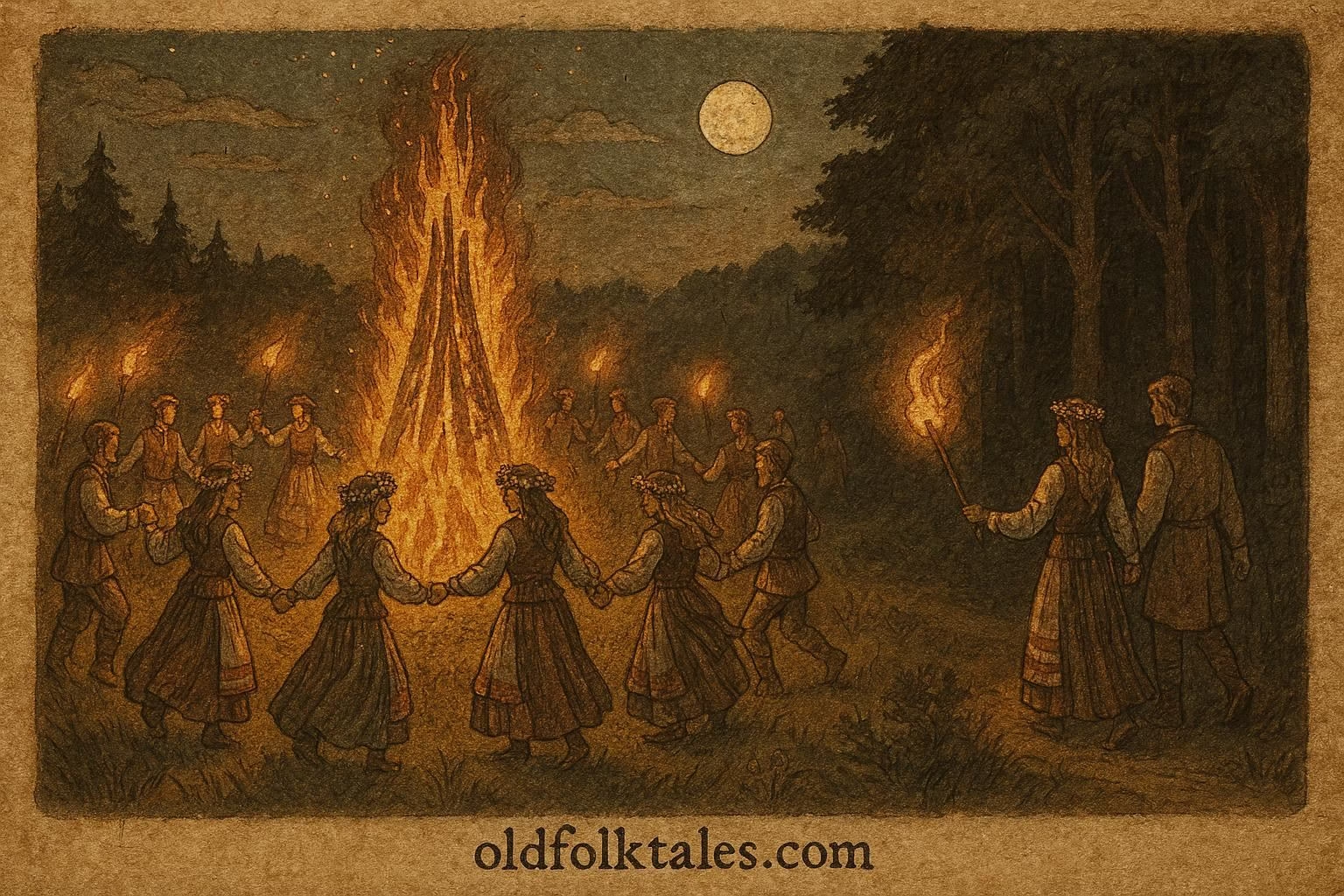
Joninės unfolds on the eve of midsummer. Villages and towns gather near rivers, meadows, or hilltops, where communities build towering bonfires known for their protective power. The lighting of these fires signals the opening of the night, marking a threshold between the physical world and a realm believed to be thinner, more accessible, and filled with wandering forces, both benevolent and dangerous.
Flower wreaths are central to the celebration. Young women traditionally weave wreaths from wildflowers, herbs, and sacred plants. These wreaths carry symbolic links to fertility, protection, and divination. One custom involves floating wreaths on rivers: if two drift together, the omen foretells harmony or marriage; if apart, it warns of separation or change. Men weave their own wreaths as well, but the female wreaths are generally linked with romantic prophecy.
The festival also features torchlit processions through fields and villages, echoes of older rituals meant to purify the land and shield livestock from harm. Communities dance in circles around the flames, leap over fires for luck, and cast herbs or branches into the blaze to strengthen its protective qualities.
At dawn, celebrants collect midsummer dew, believed to carry healing powers. People wash their faces, hands, or even hair in it to draw beauty, long life, and health. Farmers sprinkle dew gathered on cloths over crops to ensure good harvests. These dew-rites reflect an ancient Baltic belief that everything in nature is infused with divine vitality during midsummer.
Perhaps the most iconic element of Joninės is the search for the fern flower, a mythical blossom said to bloom only at midnight on this shortest night of the year. Its finder is granted fortune, knowledge, and spiritual insight. While real ferns do not flower, the motif is symbolic: it represents the pursuit of wisdom, courage, and an encounter with mystery. Lovers often venture into forests under the moonlight, which adds a social and romantic layer to the myth.
Mythic Connection
The festival’s pagan roots lie in Baltic reverence for sunlight, fire, water, and vegetation. It reflects a wider Indo-European solstice tradition, but the Lithuanian interpretation is distinct. The Baltic sun goddess Saule plays a central role. Midsummer marks her highest triumph, when her light is strongest, longest lasting, and most life-giving. The fires lit on Joninės symbolise Saule’s strength and help guide her into the next half of the year.
Herbs and flowers, especially those chosen for wreaths, are believed to peak in potency on this night. This reflects a worldview in which plants possess spirit, intention, and the capacity to bless or protect. By weaving them into wreaths, people form a symbolic alliance with nature’s sacred forces.
The fern flower legend carries layers of meaning. In Baltic folklore, forests are realms of spirits, ancestors, and unseen beings. The fern flower, glowing and hidden, represents a mystical revelation, something found only by those with pure intention or inner strength. The search therefore becomes a form of initiation, a ritual journey mirroring humanity’s quest for truth and harmony with the unseen.
Christian influences came later. The festival was renamed after St. John, and church processions were added in some regions. Yet, unlike many syncretised festivals, Joninės retained its older rituals strongly. Fire remains its heart; dew retains its magic; and the fern flower is still sought by many Lithuanians, even playfully. The festival thus stands as a vibrant example of how ancient spirituality can survive within modern cultural frameworks.
Author’s Note
This article explores the Lithuanian Saint Jonas’s Festival as a window into Baltic spiritual heritage. Its rituals of fire, dew, wreaths, and forest wanderings reveal a culture that saw nature as deeply alive and filled with sacred meaning. The celebration’s continuity shows the enduring human desire to honour cycles of light, growth, and mystery.
Knowledge Check
1. What is the core purpose of Joninės?
To honour midsummer through fire, fertility customs, and nature-based rituals that reflect ancient Baltic spirituality.
2. Why are bonfires important?
They symbolise protection, purification, and the strengthening of the sun at its annual peak.
3. What is the role of flower wreaths?
They serve as tools for divination, protection, and fertility, reflecting the sacred power of midsummer plants.
4. What does the fern flower represent?
A mythic symbol of hidden wisdom, spiritual insight, and the pursuit of inner truth.
5. Why is dew collected on midsummer morning?
It is believed to carry healing, protective, and beauty-enhancing qualities at the solstice.
6. How did Christianity influence the festival?
It added the name “St. John’s Day,” but many pagan elements remained dominant.