Tā moko, the traditional tattooing practice of the Māori of Aotearoa New Zealand, is one of the most spiritually significant body arts in the world. More than decoration, it is a sacred carving of identity, linking the wearer to their whakapapa (genealogy), their iwi (tribe), and their mana (spiritual authority). Its origins reach deep into Māori cosmology, where carving, genealogy, and the body itself are intertwined with mythic ancestors. Historical accounts describe tā moko as a tapu art performed with strict ritual protocols, guided by tohunga tā moko, skilled specialists entrusted with sacred authority.
The practice was traditionally performed with uhi, chisels crafted from bone or sharp stone, creating deep grooves in the skin rather than smooth inked lines. Every pattern carried meaning, mapping lineage, achievements, and status onto the body. Across iwi, patterns and placement differed, shaping a diverse yet unified cultural expression. Today, tā moko remains a living tradition, renewed through cultural revival and the enduring strength of Māori identity.
Description of the Ritual
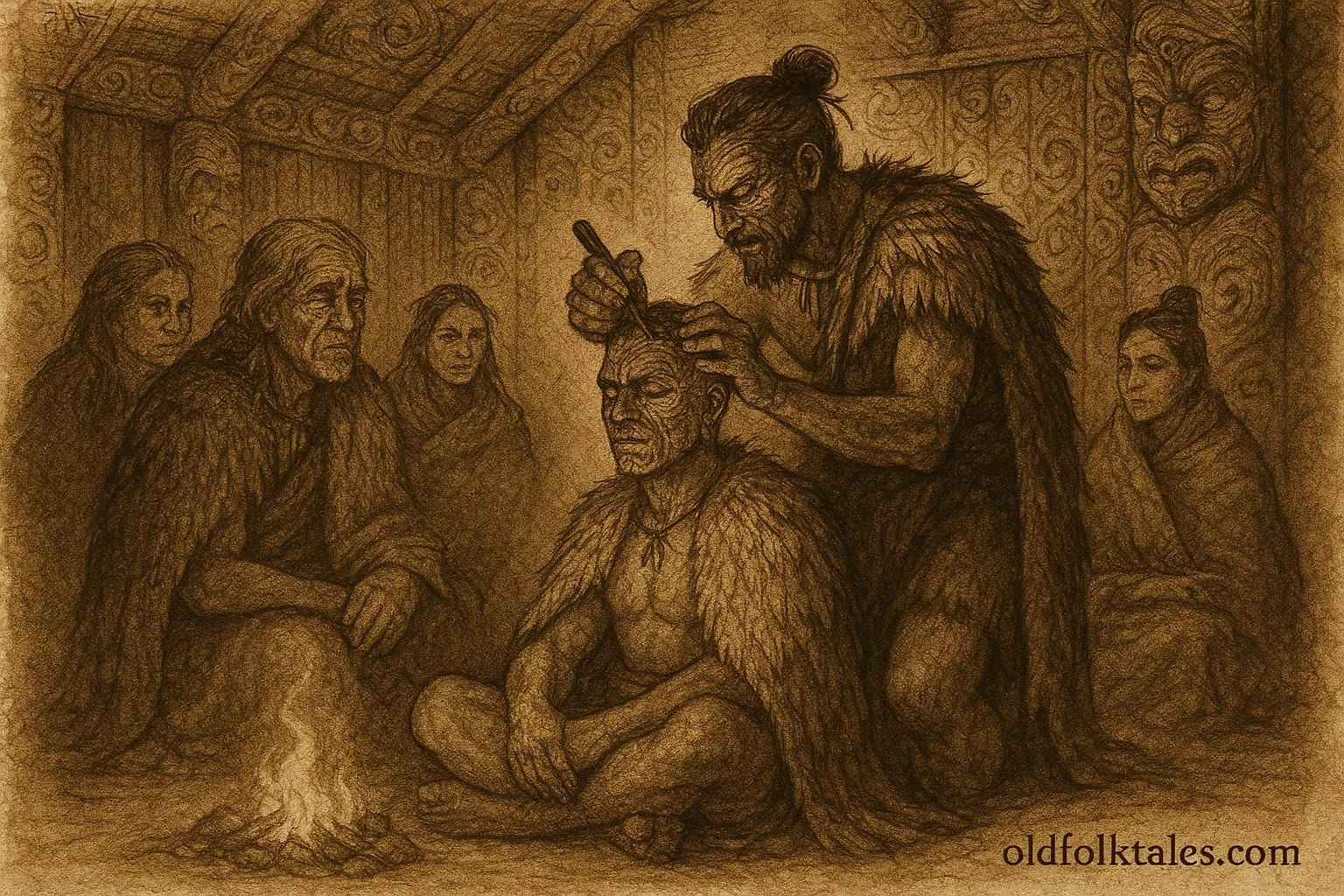
Tā moko was traditionally performed in a profoundly sacred setting. The person receiving moko entered a state of tapu, with strict protocols surrounding food, movement, and behavior. The tohunga prepared the uhi and pigment, often made from soot or charcoal, while reciting karakia (prayers). The recipient sat before the tohunga while family members gathered, offering support and reinforcing the communal significance of the ritual.
The chiseling process created rhythmic cuts as the uhi struck the skin, leaving raised grooves that produced the distinctive textured look of traditional moko. The intensity of the procedure embodied a powerful spiritual lesson: identity is earned, carried, and endured. Pain was not merely physical; it was part of a transformation that elevated personal mana and reaffirmed tribal ties.
Men traditionally received elaborate moko kanohi (full facial moko), mapping each part of the face to aspects of heritage, achievements, and rank. Women commonly received moko kauae (chin moko), representing authority, lineage, and the role of women in preserving whakapapa. Other parts of the body could also be carved, including thighs, buttocks, arms, and back.
Tā moko was not randomly chosen. Each design was story-based, crafted specifically for the individual. Moko acted as a visual biography, declaring who a person was, where they came from, and the responsibilities they carried. Receiving moko was therefore both a rite of passage and a public affirmation of identity.
In modern practice, while machines are sometimes used, traditional uhi carving remains a respected method. The tapu protocols and cultural meaning continue, upheld by contemporary tohunga tā moko trained in ancestral knowledge.
Mythic Connection
The origins of tā moko are rooted in the ancient story of Mataora and Niwareka, one of the most important Māori myths linking humans to the spirit world. Mataora, a man of the living world, sought the forgiveness of Niwareka, a princess of the underworld (Rarohenga). When he reached her home, he saw beings whose faces carried beautifully carved moko. His own paint markings, crude by comparison, smeared and faded. Recognizing his humility and remorse, Niwareka’s family taught him the sacred art of moko before he returned to the world of light.
This myth established moko as a gift from the spiritual realm, given to humanity through reconciliation, humility, and transformation. Because of this divine origin, tā moko remains an act of deep spiritual meaning, not merely an aesthetic choice.
Moko also reflects broader Māori cosmology. The body is a wharenui, a carved meeting house, linking ancestors, land, and the living. To carve moko on the skin is to carve genealogy into the physical world, echoing the carvings on meeting houses, canoes, and sacred objects. Just as carving (whakairo) embodies ancestral presence, tā moko brings that presence onto the living body.
Cultural and Spiritual Meaning
Spiritually, tā moko strengthens mana, reinforcing the individual’s authority, dignity, and ancestral connection. Socially, it signifies belonging, marking identity in a system where genealogy and tribal lines are central to life. The patterns affirm the wearer’s duties and the expectations held by their iwi.
Tā moko also acted historically as a form of recognition and legal identity, especially in times when written documents were nonexistent. A person’s moko declared their heritage in unmistakable terms. The practice therefore contributed to the continuity of Māori society, ensuring that ancestry was visible, respected, and preserved.
The ritual also had protective meaning. Through tapu, the carving process placed the individual under spiritual guardianship. The tohunga’s prayers ensured safety, while the community’s presence affirmed collective responsibility.
Modern Continuity
By the late 19th and early 20th centuries, colonial pressures reduced traditional moko practices. However, the late 20th century saw a powerful revival. Māori artists, cultural leaders, and iwi elders restored the practice through education, cultural renaissance, and the reclaiming of language and traditions.
Today, tā moko thrives as a symbol of cultural strength, survival, and renewal. Modern Māori receive moko to affirm identity, honour ancestors, and maintain the connection between past and present. The revival of moko kauae among Māori women is especially significant, marking leadership, resilience, and ancestral authority.
Author’s Note
Tā moko stands as one of the world’s greatest expressions of sacred identity. Its endurance reflects Māori commitment to whakapapa, land, and collective strength. Each line carved into skin is a continuation of ancient cosmology, proving that identity, when honoured through ritual, can remain alive across generations.
Knowledge Check
1. What does tā moko represent?
It represents genealogy, identity, social status, and spiritual authority.
2. Who traditionally performed tā moko?
Tohunga tā moko, specialists entrusted with sacred carving knowledge.
3. What tools were originally used?
Uhi chisels made from bone or stone, used to carve grooves into the skin.
4. What myth explains the origin of moko?
The story of Mataora and Niwareka, linking moko to the spirit world.
5. Why was tā moko considered tapu?
Because it involved spiritual transformation, ancestral presence, and sacred protocols.
6. How has moko revived in modern times?
Through cultural renaissance, contemporary tohunga, and renewed pride in Māori identity.