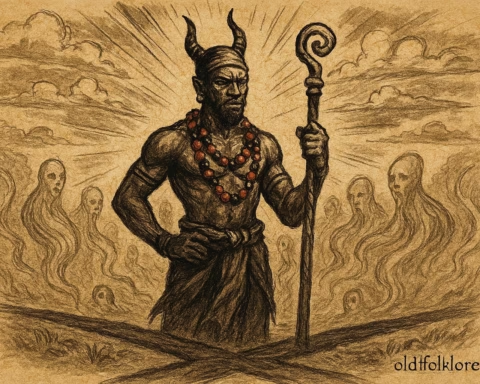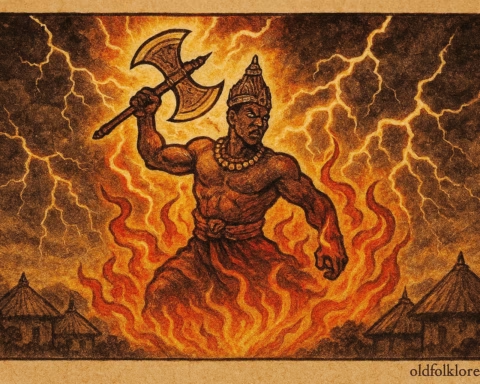
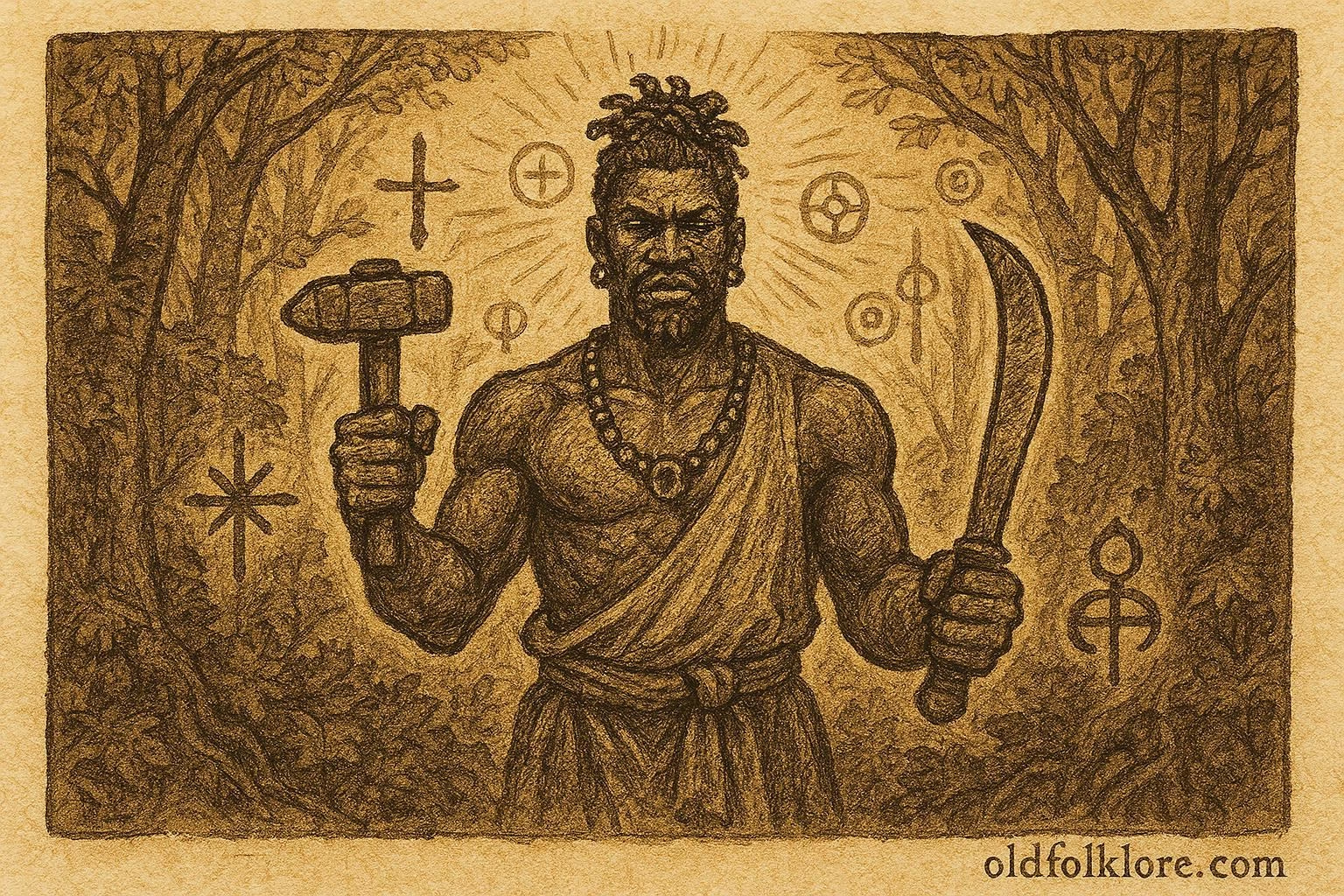
Ọgún (Ògún) is the Yoruba Orisa of iron, war, hunting, and craftsmanship, revered as both a fierce warrior and a patient maker of tools. In Yoruba cosmology, he is the master of iron, the element that shapes human civilization, machetes, farming tools, forging instruments, and the weapons of hunters and warriors all fall under his domain. Because of this, Ọgún is honored as the one who clears paths, both physical and spiritual, allowing societies to move forward where chaos or wilderness once stood.
He is often associated with the forest, the anvil, the forge, and the cutlass, as well as the color red (symbolizing power and vitality). Hunters, blacksmiths, metalworkers, drivers, warriors, and all who work with iron traditionally offer reverence to him. Ritual offerings include palm wine, roasted yams, and in some regions, dogs, reflecting his role as a guardian and companion of hunters.
In the diaspora, Ọgún remains a central figure in Candomblé (Brazil) and Santería (Cuba), syncretized at times with Saint George or Saint Peter, yet always maintaining his identity as the indomitable Orisa of iron and justice.
Mythic Story
Long before the world took its present form, before iron rang beneath the hands of smiths and before hunters walked with confidence into the forests, the Yoruba tell that the Orisa gathered in the heavenly realm, Òrun, to decide how the new world below should be shaped. The earth was young then dense forests, uncut, unreachable, a vast and tangled wilderness with no clear path for humans or spirits.
Among the gathered Orisa was Ògún, son of Odùduwà in some traditions and primordial craftsman in others. His body bore the deep glow of irostrong, unyielding, and hot with purpose. He alone carried with him the mysterious power of metal, the element that would one day transform the lives of all beings.
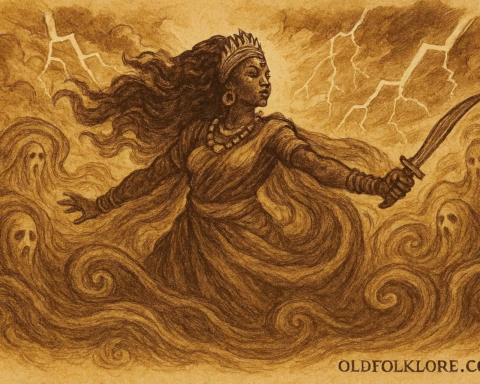
The Orisa wished to descend to the earth and prepare it for humanity, but the path downward was choked with vines, brambles, and shadows. The younger Orisa hesitated; others debated strategies. But Ọgún simply stepped forward, lifting his iron blade, shaped by his own hands, and struck the earth.
With each swing, the forest trembled.
Iron sang.
The wilderness broke open.
Ọgún cut the first road into the world.
As he cleared the path, the Orisa followed behind him, Obàtálá with his wisdom, Ọya with her winds, Ọ̀ṣun with her waters, and Ṣàngó with fire’s thunderous roar. Every road humans would later walk traced back to this primordial moment when Ọgún’s iron declared that creation must move forward.
But the tale does not end with his triumph. For with great power came the burden of responsibility, and no Orisa bore that burden more heavily than Ọgún.
When humans finally settled upon the earth, they built farms, villages, and kingdoms. Yet they struggled with the wildness that remained, wild animals, dense bush, unseen spirits. They turned to Ọgún, who had once cleared the path for the gods, and now asked him to open roads for them as well. He crafted for them the first tools: hoes for the farmers, knives for hunters, and the anvil and hammer for the smiths. Through iron, he gave humanity mastery over the physical world.
But iron could both create and destroy. And this dual nature became the core of Ọgún’s story.
One tale recounts how a great festival was held in a distant kingdom to honor him. The people, eager to please their divine ally, called on Ọgún to join the celebration. He arrived to find dancers, drummers, hunters, and smiths chanting his praise. The wine flowed freely, and the drums trembled with his name. Yet in the chaos of celebration, a dispute broke out, small at first, then louder, then violent. Weapons flashed. People shouted. In the confusion, they forgot who stood among them: the Orisa of iron himself.
Ọgún, overcome by a warrior’s fury and by the very energy the people invoked, drew his blade in defense and confusion. When the frenzy ended, the festival lay in ruin, and many were wounded. Horrified at the destruction wrought during a celebration in his name, Ọgún retreated deep into the forest, vowing never again to dwell openly among humans.
The people mourned his departure. For without Ọgún, iron grows cold, roads close, and the world becomes once more impenetrable.
So they called to Òrìṣà Oko, to Ọ̀ṣun, to Obàtálá, pleading for someone to bring Ọgún back. None could calm his wrath, except Ọ̀ṣun, whose gentle waters soothe where fire burns. She brought palm wine, sweet and fragrant, carried in a calabash. She entered the forest singing softly, not with commands or demands, but with reverence. Her voice reached Ọgún, who remained hidden among the trees.
“Come back,” she sang. “Not as a destroyer, but as the one who opens the way.”
Moved, Ọgún accepted the offering. The sweetness eased his spirit, and the Orisa of iron agreed to return, not to live among humans, but to guide them from the unseen world. From that day forward, devotees say, Ọgún walks ahead of every traveler, every warrior, every smith, his machete clearing dangers both physical and invisible.
Even now, Yoruba hunters whisper his name before stepping into the forest. Blacksmiths ask his blessing before striking metal. Drivers place symbolic iron tokens on dashboards for protection. And in diaspora communities across the Atlantic, drums still echo:
“Ògún yè!
Ògún wà!
Ògún, opener of paths!”
Author’s Note
Ọgún’s story teaches that power must be guided by responsibility. Iron can build or destroy; roads can lead forward or astray. In Yoruba tradition, Ọgún symbolizes the disciplined force required to shape a world, reminding us that strength without wisdom is chaos, and that every path we walk was forged by sacrifice, labor, and divine intention.
Knowledge Check
Q1. What is Ọgún the Orisa of?
A: Iron, war, hunting, craftsmanship, and the opening of paths.
Q2. What element symbolizes Ọgún’s authority?
A: Iron, representing creation, power, and transformation.
Q3. Why did Ọgún retreat into the forest?
A: A festival turned violent, and in confusion he harmed people, leading him to withdraw.
Q4. Who persuaded Ọgún to return?
A: Ọ̀ṣun, through calmness, song, and a calabash of sweet palm wine.
Q5. What roles honor Ọgún today?
A: Blacksmiths, hunters, warriors, drivers, and all who work with metal.
Q6. Where is Ọgún worshipped in the diaspora?
A: In Candomblé (Brazil) and Santería (Cuba), sometimes linked with Saint George or Saint Peter.
Source: Yoruba Oral Tradition, Nigeria (West Africa)
Origin: Yoruba, Nigeria (West Africa)