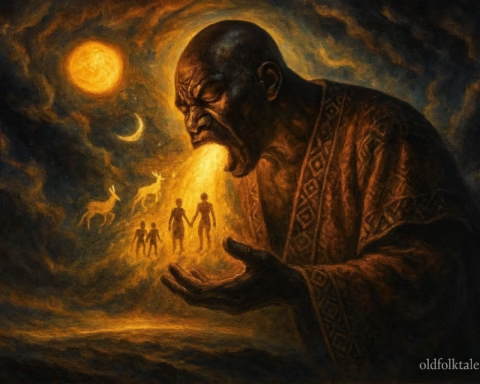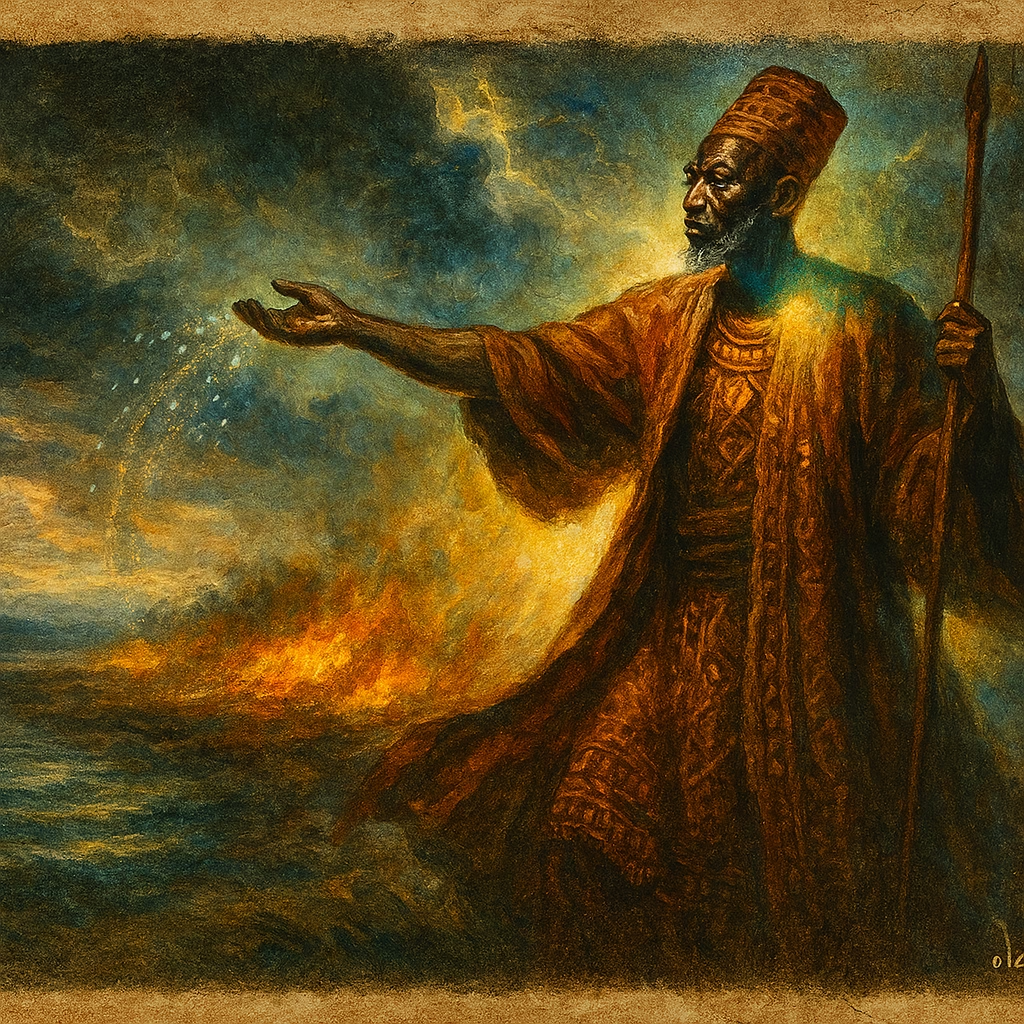
In the age when gods walked the ridges of Tahiti-nui and the sea still remembered the first canoe ever carved, a child was born beneath a sky bruised with storm-light. His name was Rata, heir to a lineage blessed by the gods of forest and wave. His father, Vahieroa, had been taken by the monstrous goblin-fish Pōnuri during a sacred voyage, leaving the infant Rata to grow beneath the shadow of a loss too great for words.
The boy grew into a youth of bright eyes and restless hands, but the wound of his father’s fate lived within him like an ember. Elders told him of Vahieroa’s bravery, of voyages that shimmered like the paths of the stars, but always the tale ended with the same truth: the sea had devoured its hero. And so Rata vowed, even as a child, to carve his own fate against the ocean that had stolen his blood.
When he reached manhood, Rata made his vow aloud.
“I will avenge my father. I will carve a canoe worthy of the gods. I will journey to the undersea realms and bring justice upon Pōnuri.”
But the canoe he envisioned was not one a mortal could shape from ordinary wood. He sought the sacred uru trees of the deep forest, trees whose roots whispered to the spirits and whose trunks held the memory of creation.
Rata entered the forest alone, carrying only an adze and the weight of his oath. But when he felled the first of the sacred trees, the forest erupted in furious murmurs. The Tiʻitiʻi, the Little People of the Woods, emerged, tiny, glowing, fierce, bearing the authority of the forest gods.
“Who dares cut the uru of our care?” they demanded, surrounding him in a halo of shimmering sparks.
Rata bowed his head. “I am Rata, son of Vahieroa. My father was taken unjustly by Pōnuri. I seek the wood to avenge him.”
The forest spirits conferred among themselves. They knew the story of Vahieroa, for the woods whisper to the waters and the waters whisper to the deep. At last, they spoke:
“You should have asked. But your heart burns with righteous purpose. Leave the forest now. Return at dawn.”
Rata obeyed. When he returned the next morning, he found an impossible sight: the uru wood already carved into a canoe of supernatural beauty. Its sides shimmered like moonlit tidewater; its prow curved like the beak of a divine bird; its hull was so smooth it seemed grown rather than hewn.
The Tiʻitiʻi stood beside it, solemn and proud.
“This is your vessel,” they said. “Born of divine hands, shaped by your purpose. Treat it as a living being.”
Rata placed his palm on its side and felt not wood, but a steady heartbeat.
Thus began his voyage.
Across the vast Pacific, Rata sailed with a crew of loyal warriors. Winds bent in respect to his purpose. Stars rearranged themselves to guide him. Yet the voyage was not without moral weight. At night, he wrestled with the spirit of vengeance within him.
Is justice anything like peace? he wondered.
If I slay the monster who slew my father, what becomes of the son who follows me?
But still he pressed on, guided by the love for a father he never knew.
At last, Rata reached the undersea realm of Pōnuri. The waters darkened, thickened, and then parted as if opening a mouth. Rata’s canoe plunged into the depths, its divine wood shining like a star fallen into the abyss.
There, the monstrous goblin-fish emerged, vast as a mountain, fanged like a nightmare. Its eyes glowed with ancient malice.
“Vahieroa’s spawn,” Pōnuri growled. “You come to feed the deep.”
Rata lifted his spear, carved from the same sacred uru wood.
“I come to end what you began.”
The battle was a storm in the darkness. Pōnuri struck with whirlpools, lightning-fanged currents, and crushing waves. Rata’s canoe danced through them, alive under his feet, guided by the spirits who had shaped it. Each time Rata thrust his spear, the uru wood pulsed with divine power.
Finally, with a cry that shook the depths, Rata drove his spear into Pōnuri’s heart. The monster dissolved into drifting ash, swallowed by the abyss.
But in the silence that followed, Rata felt no triumph, only the heavy ache of release. Vengeance had been served, but grief lingered.
Returning to Tahiti, Rata’s canoe rose from the depths and carried him home on a path of calm, glowing waters. When he reached the shore, the people hailed him as a hero reborn from the deep.
Rata looked upon them and raised his hand.
“Let this canoe be a symbol. Not of vengeance, but of mastery, courage, and harmony with the spirits who shape our world.”
And so the uru-wood canoe was placed in a sacred house, tended by priests of forest and wave. It became a reminder that even in stories of revenge, the deeper truth is the forging of a hero’s soul.
Author’s Note
The tale of Rata stands as one of Tahiti’s most profound heroic epics. While revenge drives the story, its legacy centers on the sacred relationship between humans, nature, and the divine, echoing the Polynesian belief that craftsmanship, courage, and humility bind the world together. Rata remains a symbol of righteous purpose shaped through respect for the natural world.
Knowledge Check
-
What tragedy motivates Rata’s quest?
-
Who aids him in crafting the magical canoe?
-
Why is the uru wood significant in Tahitian tradition?
-
What inner conflict does Rata struggle with during his voyage?
-
How does Rata ultimately defeat Pōnuri?
-
What symbolic meaning does the canoe carry at the end of the story?
Origin: Tahitian Epic Cycles (Polynesia)
Primary Source: Ancient Tahiti by Teuira Henry (Bernice P. Bishop Museum, 1928)