Before the turning of ages, before seafoam learned to shimmer and stars dared to burn, there existed only Tagaloa-i-Lagi, Tagaloa of the Highest Heaven. He was motion, breath, light, and the first thought that stirred the void. Around him drifted the endless dark, a place without shape or memory. Yet in that quiet abyss, Tagaloa felt a stirring: the need to create, to order, to bring rhythm to the silence.
With a sweep of his divine hand, he shaped the heavens, lani layered upon lani, luminous and endless. He dwelled in the summit of these celestial realms, watching the emptiness below. But what was light without a horizon? What was sky without land? Tagaloa felt the ache of incompleteness. And so he descended.
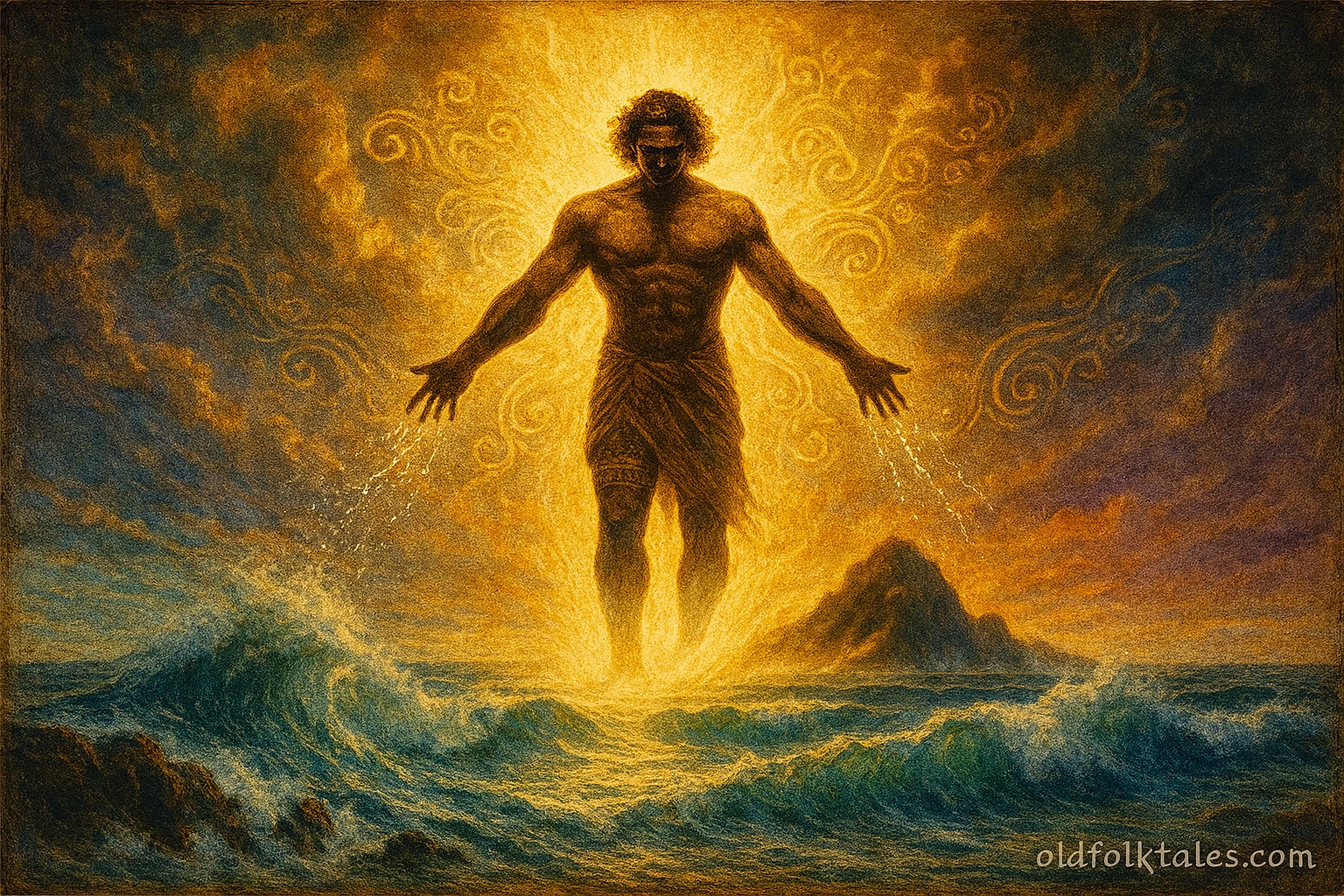
He carried with him the seed of creation, radiant as molten pearl. Touching the deep waters with it, he commanded: “Rise.”
The seas trembled. A small mound of earth surged upward, trembling like a newborn heart. This first land, the sacred beginning of Samoa, shone under the Sky-Father’s gaze.
Yet creating the world was not enough; it needed life. Tagaloa descended again, kneeling upon the fresh soil. He molded coral, reef, and stone. From living flame he drew birds whose feathers flushed crimson at dawn. From deep-sea silence he shaped fish of silver-blue. The winds he instructed to dance across the land, and they became the first spirits of motion.
But Tagaloa knew that creation required order, a balance not only of form but of law. And so the hero-god confronted his first great challenge: the shaping of harmony among the realms.
For even as land and life blossomed, forces of chaos stirred. The sea surged, restless and proud, attempting to reclaim the new earth. The winds clashed in rivalry, each seeking to dominate the skies. And beneath the soil, unnamed powers tugged and twisted, eager to break free.
Tagaloa did not shrink from this conflict. He rose to the heavens and returned carrying the Tulafale of Creation, the first laws. These were not written in script or carved in stone but carried in cosmic truth: every being must have a place, every force a purpose, every life a connection.
He placed guardians at the borders of land and sea: coral reefs, glowing with divine essence, to shield the islands from destruction. He commanded the winds to travel in ordained paths, gentle trade winds, fierce storms, cleansing breezes, each with its season. He pressed his palm to the trembling earth, calming its deep rumblings and marking where mountains would rise and where valleys would sleep.
Yet the greatest struggle came from within himself.
For Tagaloa, infinite though he was, felt the weight of responsibility. To create life meant to create fragility. To impose order meant to limit freedom. And within him rose a question that even gods fear: Would his creation honor him, or would it suffer because of him?
In this moral storm, the Sky-Father’s heart wavered.
To resolve this, Tagaloa performed the oldest rite of divinity, he looked into the future. He saw the islands grow lush with forests and ringed with living reefs. He saw people born of earth and breath, walking the shores with curiosity and courage. He saw them fishing, feasting, chanting, weaving stories of origin. He saw them calling him Tagaloa-a-Lagi, acknowledging him not merely as creator but as protector and foundation.
But he also saw storms, wars, and wandering. He saw mistakes, suffering, and forgetting. And it pained him.
Yet he understood: no creation could flourish without challenge. No people could grow without choosing their own paths. The Sky-Father accepted the sorrow and joy intertwined within existence. His moral struggle resolved into purpose.
Thus he descended once more and shaped humankind. From red earth and divine breath he formed them, giving them knowledge of land, sea, and sky. He taught them fa‘atonuga, the sacred order of life, so they would live in harmony with the world he had shaped.
Satisfied that the islands were strong, Tagaloa withdrew to the heavens. But he did not abandon the world. Each dawn carries the glow of his gaze; each tide follows the rhythm he set. The birds that soar above Samoa still echo his first breath. And the people, generation after generation, look to the sky and remember the Sky-Father who shaped the islands not through conquest, but through balance, courage, and compassion.
In the ages since, Tagaloa-i-Lagi has remained the great cosmic architect, the one whose struggle birthed harmony, whose sacrifice paved the path of life, and whose laws still hum beneath every wave and wind of Samoa.
AUTHOR’S NOTE
This retelling honors Tagaloa as the primordial architect of the Samoan cosmos, a figure whose creative power is matched by deep moral consciousness. His legacy endures in Samoan cosmology, chiefly traditions, and the understanding that harmony between humans and nature is a sacred responsibility. In Samoa today, Tagaloa remains a symbol of cosmic balance, divine order, and the ancestry of land itself.
KNOWLEDGE CHECK
-
Who is Tagaloa-i-Lagi and what realm does he rule?
-
How does Tagaloa create the first land of Samoa?
-
What forces challenge the stability of his creation?
-
What moral struggle does Tagaloa face regarding his role as creator?
-
How does he establish balance among land, sea, and sky?
-
What lasting influence does Tagaloa have on Samoan culture and worldview?
Origin: Samoan Creation Epics, Based on accounts in Augustin Krämer’s The Samoa Islands (1902; English trans. 1994)
Cultural Origin: Samoa (Polynesia)