In the age when the nine realms still echoed with the tread of gods and giants, before the last embers of creation dimmed, there came into the world a child fated to shape the destiny of kings. This was Völsung, born of a line already touched by the wild breath of the divine. His mother, the radiant Ljod, dreamed of a wolf-shaped spirit with eyes like burning coals, who circled her in a ring of flame. When she awoke, Odin’s ravens beat their wings above the roofbeam, and the wise said the dream foretold the birth of one destined to stand with both beasts and gods.
From infancy, Völsung’s strength was like the root of Yggdrasil, unyielding, ancient, growing toward fate. He learned to walk within days, to run before the moon’s cycle turned, and to hunt before he spoke his first verse. Yet his most distinguishing mark was the calm fire flickering behind his eyes: the certainty of one who feels a divine hand guiding every breath.
This ancestry was made clearer when he came of age. On the night of midwinter, with snow deep as a warrior’s shield and stars burning sharp as spearheads, a great she-wolf descended from the forest. Her fur shone silver-blue, her breath steamed like stormwind. Instead of attacking, she knelt, placing her muzzle to Völsung’s brow. Those who watched trembled, for they saw the boy’s shadow blend with that of the wolf, as though his spirit had returned home to its primal origin. From that moment, the people knew: he carried the blessing, and burden, of the wolf-god.
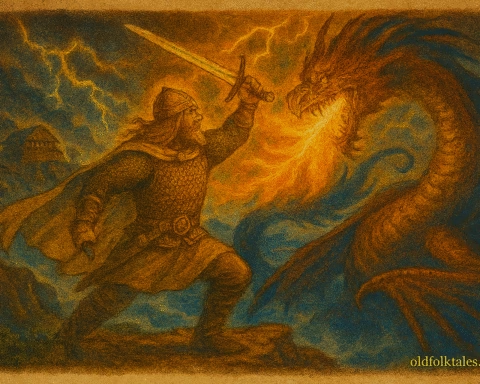
Völsung grew into a lord whose hall, built around a living oak, rang with the songs of victory. Warriors traveled great distances to serve under his banner, for he was said to possess uncanny foresight. Yet divine favor does not shield one from the turning of fate. It was during a feast of midsummer that a one-eyed wanderer entered his hall, an old man cloaked in storm clouds, with a sword whose edge shimmered with cold fire. Without a word, he thrust the blade into the oak at the hall’s heart. The steel sank as if into water. Then the stranger vanished like smoke on wind.
“Let him who can draw it forth claim it,” his voice echoed though his lips no longer moved.
Many tried. None succeeded.
But when Völsung’s young son, Sigmund, stepped forward, the sword slid free as if eager to leap into his hand. Völsung knew then that the gods had not finished weaving their line’s destiny. Yet he felt a chill, Odin does not give gifts without price.
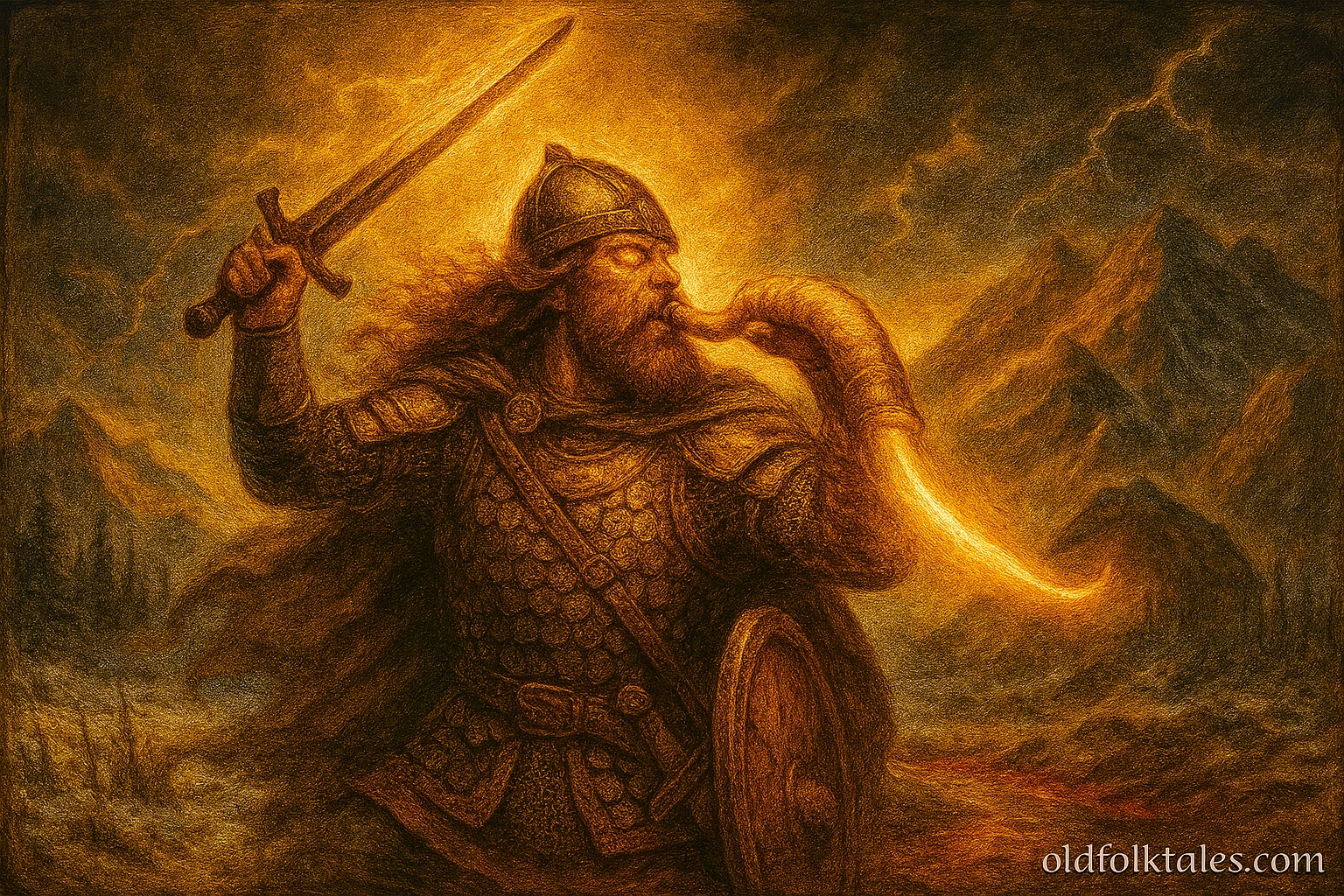
Years later, when Völsung was in the twilight of his strength, his greatest challenge came not from gods nor beasts but from treachery. King Siggeir of Gautland, jealous of Sigmund’s divine-forged blade and threatened by Völsung’s renown, plotted against him. He invited Völsung and his sons to feast in peace, but the peace was poison. Völsung walked willingly into the trap, knowing the designs of fate but refusing to hide from them. Honor demanded he meet his doom standing.
The ambush unfolded beneath cold moonlight. Völsung’s warriors fell around him like the leaves of autumn. Still he fought on, an old wolf who refuses the winter’s claim. Each blow he struck rang with the fury of the gods. But arrows cut him down, and at last he fell upon the earth, his blood sinking into the soil as though returning to its ancient source.
Yet in that final moment, a deeper conflict stirred within him, not fear of death but the agony of leaving his people to darkness. Had his divine strength served them well? Or had it drawn destruction upon them? His moral struggle tightened around his heart like frost. But then, from the shadowed trees, a lone howl rose, deep, resonant, the voice of the she-wolf who had blessed him. Völsung exhaled, knowing his spirit would not perish but run wild and eternal. His fall became not an end but a symbolic rising, ensuring his line would carry forward the fire of his legacy.
His sons were bound and left to perish, save for Sigmund and the youngest, who survived through cunning and divine mercy. Sigmund’s escape marked the continuation of the Völsung saga, a tale destined to culminate in the dragon-slayer Sigurd, the breaking of curses, and the forging of both kingdoms and tragedies. Völsung’s blood, mixed with wolf and god, flowed on.
Thus the founder of the Volsung lineage passed from Midgard, but not from memory. For even in death, a hero touched by the divine does not fade. Instead, he becomes woven into the world’s deep story, into stone, wind, and song.
AUTHOR’S NOTE
This retelling honors Völsung as the mythic root of a lineage tied to gods, beasts, and heroes. His divine origin, moral resolve, and symbolic death create the foundation for the greater Volsung saga, culminating in figures like Sigmund and Sigurd. In Norse tradition, legacy is as heroic as battle, and Völsung’s greatest triumph is the destiny he sets in motion.
KNOWLEDGE CHECK (6 Questions)
-
What divine sign marked Völsung’s semi-godly origin at birth?
-
How did the she-wolf affirm Völsung’s spiritual heritage?
-
What was the significance of the sword thrust into the oak?
-
Why did King Siggeir plot against Völsung?
-
What moral struggle did Völsung face at the moment of death?
-
How did Völsung’s symbolic outcome shape the future of his lineage?
CULTURAL ORIGIN: Old Norse / Icelandic epic tradition from the Völsunga Saga.
SOURCE: Jesse L. Byock, The Saga of the Volsungs (1990).