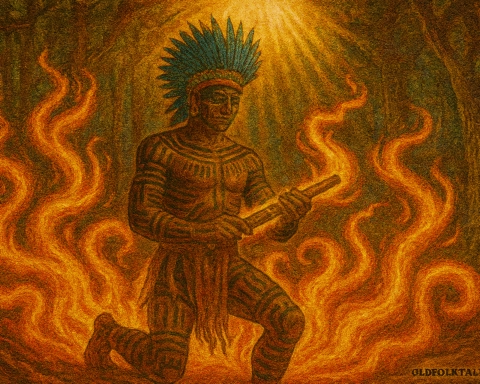
In the beginning, before the towns rose and the fields were tilled, the earth was wild, untamed, and shadowed by chaos. Rivers ran where they willed, forests stretched unbroken, and the hum of life was muffled beneath the weight of disorder. From the celestial realm of Olódùmarè, the Supreme Creator, a spark descended, a divine flame forged in the heart of heaven itself. This spark took form as Ogun, son of Orisha and destiny, whose body bore the strength of mountains and whose eyes glimmered like molten metal.
Ogun was not born into the clamor of mortal life. He emerged from the sacred fire, a warrior already armed with iron, the first iron, kissed by divine hands. He carried in his fists the power to carve paths where none existed, to break the walls of tyranny, and to wield justice where chaos had reigned unchecked. Yet, though strong and fearless, Ogun’s spirit wrestled with the enormity of his charge: to bring order to the mortal world without extinguishing its soul.
The first challenge came from the wilderness itself. Forests thick and unyielding sought to reclaim any mark of civilization. Rivers rose as though they were alive, flooding the lowlands, and mountains seemed to shift their roots to bar the paths of men. To this, Ogun answered with iron and will. He lifted his great machete, hewed through tangled thickets, and struck stones into shapes that could hold fire, water, and shelter. The echo of his hammering resounded like thunder, announcing to the world that civilization would not tremble before the wild.
Yet, Ogun’s labor was not merely physical; it was moral. The first human settlements, drawn by the glint of his work, brought their own failings, jealousy, cruelty, and injustice. Chiefs sought to rule without honor, and villagers quarreled over land and wealth. Ogun’s eyes, blazing like a forge, fell upon the guilty. To the oppressors, he became a sword; to the righteous, a shield. He struck those who sought to twist the law and guided those whose hearts were steadfast. In this way, iron was not only the material of civilization but the instrument of justice.
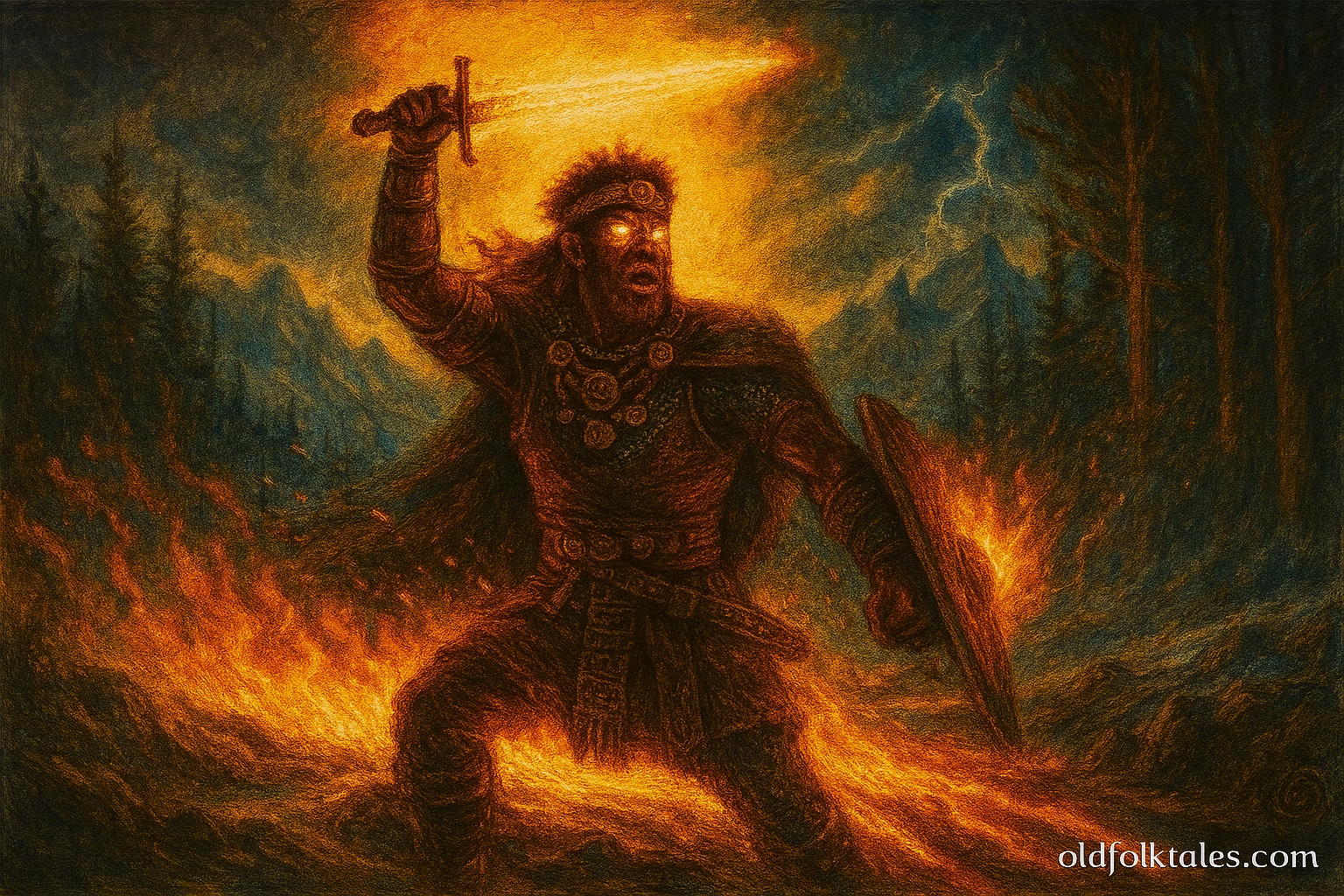
Among the greatest tests of Ogun’s power was the Battle of the Broken Path. A rival force of spirits, jealous of the mortal world’s awakening, rose to scatter humanity once more. They hurled storms, poisoned rivers, and called beasts from deep within the earth to trample the nascent villages. Ogun confronted them upon the hills, his armor ringing like the sky’s own thunder, and his sword ablaze with fire borrowed from the sun. The battle raged for seven days and nights. Ogun’s strength was divine, yet the enemy’s cunning was unmatched.
In the darkest hour, as his enemies pressed him to the earth, Ogun remembered the forge from which he had sprung. He struck the ground with a hammer forged from heaven’s heart, and iron surged from the earth itself, forming walls, plows, and weapons for the humans he protected. The spirits were cast down, their malice scattered like dust before the wind. In that moment, Ogun’s moral struggle was laid bare: the balance of creation required both might and wisdom, both strength and justice. Only by tempering power with virtue could the world endure.
With victory won, Ogun did not return to the heavens. Instead, he lingered among mortals, teaching the use of iron for tools, for plows, for building homes, and for defending what was right. His presence was felt in the clang of the blacksmith’s hammer, in the spark of the forge, and in the careful shaping of swords and tools that carried the weight of civilization. He became not only a god of war but a patron of progress, a protector of kings who ruled with fairness, and a reminder that justice and skill are inseparable.
Legends say that whenever a village prospers, a hammer rings in the distance, and the iron of Ogun’s hand guides the hands of those who build, fight, and protect. He is both feared and revered, for his justice is swift, and his wrath, unyielding. Yet, his legacy is not merely that of war, it is the birth of order from chaos, the shaping of the world by divine hands, and the eternal reminder that civilization is the product of courage, labor, and morality.
Author’s Note
Ogun stands as a timeless figure in Yoruba mythology, a god whose influence is both practical and moral. His myth is not merely a story of martial prowess but a reflection on the duties of power and the responsibility of creation. Through iron, he shaped paths, tools, and weapons, but through his moral resolve, he shaped society itself. Ogun’s legacy endures in blacksmiths, warriors, rulers, and all who seek to balance strength with justice. He is the eternal pathbreaker, reminding us that civilization arises not from brute force alone, but from the disciplined application of courage and morality.
Knowledge Check
-
Who is Ogun in Yoruba mythology, and what domains does he oversee?
-
How did Ogun’s divine origin influence his powers and responsibilities?
-
Describe the first major challenge Ogun faced in the mortal world.
-
What moral struggle did Ogun experience when humans displayed cruelty or injustice?
-
What was the significance of the Battle of the Broken Path in Ogun’s story?
-
How does Ogun’s legacy continue to influence humans according to Yoruba tradition?
Origin: Yoruba Mythology, Nigeria
Source: William Bascom, African Religious Systems (1969)