Yuki-Onna, literally “Snow Woman”, is one of Japan’s most enduring yōkai, a spirit who steps out of white-out blizzards with the beauty of untouched snow and the lethality of winter itself. Her earliest roots lie in Japan’s older snow-country folklore, long before Lafcadio Hearn recorded his famous retelling in Kwaidan (1904). In local tradition, she may be a ghost, a nature spirit, a winter demon, or the lingering soul of someone who perished in the cold. Despite these variations, her core nature remains constant: she is cold, ethereal, and otherworldly, a being whose presence blurs the boundary between life and death on icy nights.
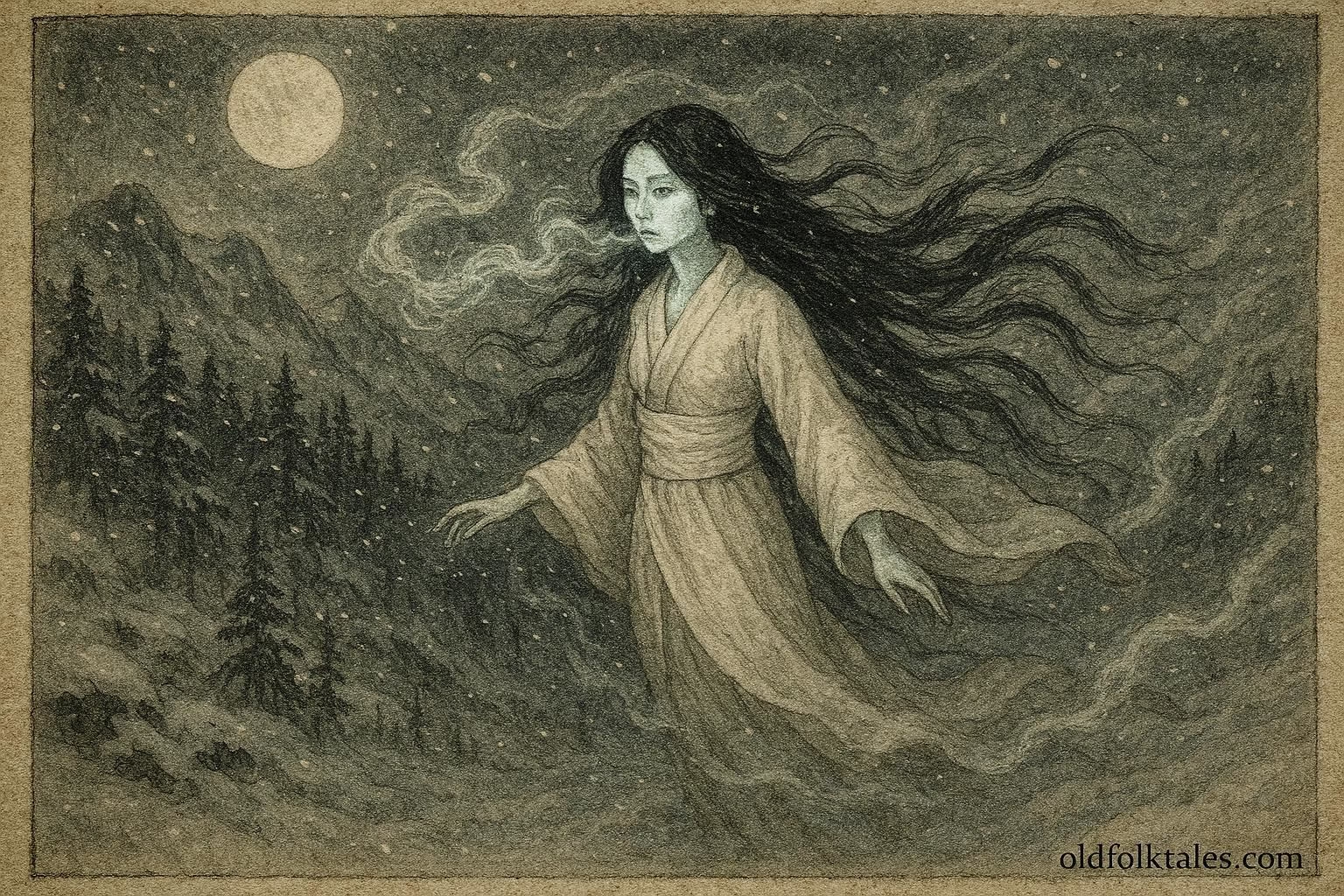
Most descriptions portray Yuki-Onna as impossibly beautiful. She appears as a tall, slender woman draped in white kimono, her skin pale as frost, her long black hair drifting like winter wind. In some tales, her feet make no prints in the snow; in others, she has no feet at all, an attribute associated with Japanese ghosts (yūrei). Her eyes shine with an eerie, icy light, and her breath is said to be so cold it can freeze a person solid in moments. Many rural snow-country communities once believed that seeing a woman walking alone in a blizzard was a dire omen, because a human could not survive such conditions unless she was something supernatural.
Journey through the world’s most powerful legends, where gods, mortals, and destiny intertwine
Her behavior changes depending on the region and the time of the story. In some early folktales she is merciless, appearing during fierce storms to lure travelers off dangerous mountain passes. With a touch or a breath, she drains their life the way winter drains warmth from the world. Such stories were often used as warnings: blizzards were not to be taken lightly, and travelers risked their lives if they underestimated the mountains.
Yet Yuki-Onna is not merely a monster. In many narratives she has a deeply tragic dimension. Some legends claim she is the spirit of a woman who died in snow, perhaps a young bride lost in a storm or a mother separated from her child. Her wandering form becomes an embodiment of sorrow, coldness, and longing. In certain villages the Snow Woman is said to pass silently through town on winter nights, pausing outside the houses of families in mourning, as if sharing in their grief.
Lafcadio Hearn’s Kwaidan introduced Western audiences to one of the most famous versions: a young woodcutter and an older companion are trapped in a snowstorm and take shelter in a hut. During the night, a mysterious woman in white enters, killing the older man with an icy breath while sparing the younger on the condition that he never speak of her. Years later, he marries a beautiful woman, only to discover during a moment of confession that she is Yuki-Onna herself. In Hearn’s version she does not kill him for breaking his promise, though she leaves him with a chilling warning: “If your children had not been asleep, I would have killed you.”
This tale captures the duality of Yuki-Onna: deadly yet capable of mercy, terrifying yet bound by emotional complexity. Her relationships with humans often contain a mix of tenderness and danger. In certain regional tales, she marries a man, bears him children, and lives a quiet life until her supernatural identity is revealed, after which she vanishes into the winter winds. These stories speak to a cultural motif found throughout Japanese folklore: the “heavenly maiden” or female spirit who marries a mortal under fragile circumstances. Such unions symbolize the delicate balance between humans and the natural forces they attempt to live alongside.
Other stories emphasize her role as a moral figure. Yuki-Onna often punishes those who act cruelly, particularly people who harm children, behave dishonestly, or show greed. A famous Niigata version tells of a man who tries to attack her, believing her beauty makes her vulnerable; instead, she freezes him instantly. In another story she spares a poor woodcutter but kills a cruel rich man who mistreats travelers. In this way she functions as a supernatural judge, much like other Japanese yōkai who reward goodness or punish wrongdoing.
Symbolically, Yuki-Onna represents the power and danger of winter. She mirrors the natural environment of Japan’s snow country, where blizzards, avalanches, and cold are serious annual hazards. Her legends served as cautionary tales to discourage risky travel during storms and to remind communities of the importance of humility before nature. She also represents impermanence, an important concept in Japanese aesthetics. Like snow itself, beautiful but fleeting, Yuki-Onna’s presence suggests that wonder and danger often coexist.
In literature and modern media, Yuki-Onna remains a versatile figure. Sometimes she is portrayed sympathetically, as a lonely spirit longing for warmth yet trapped in a world of ice. At other times she is shown as a fearsome winter predator. Across all versions, her elegance and deadly grace continue to fascinate audiences. She is one of the most iconic yōkai because she embodies both the allure and ruthlessness of nature, beautiful to behold, but never fully human.
Cultural Role and Symbolism
- Natural force: Embodiment of winter, storms, and the life-threatening cold of Japan’s snow regions.
- Moral teacher: Punishes cruelty and arrogance; rewards kindness or honesty.
- Symbol of impermanence: Beautiful but transient, like snow that melts with dawn.
- Boundary figure: Represents the thin veil between the living and the dead, and between human and spirit worlds.
Author’s Note
Yuki-Onna represents one of the most elegant intersections between environment and folklore. Her stories carry the wisdom of communities shaped by harsh winters, reminding us that beauty, nature, and danger are often intertwined. While Hearn’s literary version popularized the tale worldwide, it is the deeper Japanese cultural memory of the snow country that keeps Yuki-Onna alive.
Knowledge Check (Q&As)
- Q: What does “Yuki-Onna” literally mean in Japanese?
A: “Snow Woman.” - Q: In many tales, what deadly power does Yuki-Onna possess?
A: She can freeze victims with her icy breath. - Q: What cultural concept does she symbolize?
A: The power and danger of winter, as well as impermanence. - Q: Which collector’s book contains the best-known Western version?
A: Kwaidan (1904) by Lafcadio Hearn. - Q: Why do some tales portray her as tragic?
A: She is sometimes said to be the spirit of a woman who died in snow. - Q: What moral lesson appears in many Yuki-Onna stories?
A: Respecting nature and avoiding cruelty or deception.
Source: Lafcadio Hearn, Kwaidan: Stories and Studies of Strange Things (1904, public domain); Japanese yōkai folklore (Edo–Meiji era).
Origin: Japan, especially snowy regions such as Niigata, Aomori, Yamagata, and the Japanese Alps.