In the vast, sun-drenched landscape of the Bushman territories, where rivers were precious threads of life winding through the dry earth, there lived a family blessed with extraordinary fortune ten daughters, each more beautiful than the last. These sisters were inseparable, moving through their days like a flock of elegant birds, their laughter ringing out across the plains like music.
The bonds between these young women were strong and tender. They shared everything: their chores, their secrets, their dreams of the future. They braided each other’s hair in intricate patterns, ground millet together while singing ancient songs, and gathered water from the river in the cool hours of dawn. But most of all, they loved to play together, finding joy in one another’s company as only sisters can.
One afternoon, when the sun blazed mercilessly overhead and the heat shimmered in waves across the land, the ten sisters decided to escape the oppressive temperature by going down to the river. The water called to them with its promise of coolness and relief. They ran laughing through the tall grasses, their feet light on the dusty path, eager to feel the refreshing embrace of the flowing water.
At the riverbank, they shed their worries along with their sandals and waded into the gentle current. The water was deliciously cool against their sun-warmed skin. They splashed and played, diving beneath the surface and emerging with their hair streaming like dark rivers down their backs. They chased one another through the shallows, their voices bright with happiness, completely absorbed in their innocent games.
The river sparkled in the afternoon light, and for a time, nothing existed for the sisters except this perfect moment of freedom and joy. The world beyond the riverbank seemed very far away indeed.
As the sisters played in the water, laughing and calling to one another, a figure appeared on the riverbank. An old man, bent with age and travel, approached the water’s edge with slow, careful steps. His face was deeply lined, weathered by countless seasons under the African sun. His clothes were tattered and dusty from long journeying. Everything about him spoke of hardship and weariness.
The old man’s throat was parched, dry as the desert sand, and his voice came out as little more than a hoarse croak when he called to the girls. “Dip me up some water, pretty girls,” he rasped, his words cracking with desperate thirst. “I am very thirsty and have traveled far.”
It was a simple request, the kind that any person with compassion would honor without a second thought. In the harsh lands where water was life itself, no one was ever turned away from a river thirsty. To share water was to share life this was understood by all.
But the nine eldest sisters, caught up in their play and seeing only the old man’s unfortunate appearance, reacted with shocking cruelty. They looked at him with disdain, taking in his wrinkled face, his stooped posture, his weathered skin, and his ragged clothing.
“How ugly he is!” one sister giggled, her voice carrying clearly across the water. The others joined in the mockery, their laughter sharp and unkind.
“Just like an old frog!” another cried, and they all dissolved into fits of cruel mirth, pointing at the old man and making faces. They fell about laughing in the shallows, holding their sides, finding endless amusement in his misfortune and his need.
Not one of them moved to help him. Not one of them lifted a hand to cup the water he so desperately needed.
But the youngest of the ten sisters did not laugh. While her older sisters mocked and jeered, she stood apart in the river, her face burning with shame. She was horrified by her sisters’ rudeness, appalled by their cruelty to someone in need. This was not how they had been raised. This was not the way of their people.
She wanted to speak up, to stop her sisters’ mockery, to rush forward and bring the poor old man the water he requested. But she was the youngest, and their laughter was so loud, so overwhelming, that her voice felt small and powerless. She could only stand there, her heart aching with embarrassment and sorrow, wishing her sisters would remember their kindness, would remember that every stranger might be someone’s grandfather, someone’s beloved elder.
The old man stood on the riverbank, watching the nine sisters laugh at his expense. His eyes, which had seemed dim and tired, suddenly blazed with an otherworldly light. For this was no ordinary traveler the old man was a powerful magician, one who walked the earth testing the hearts of mortals, rewarding kindness and punishing cruelty.
The Terrible Transformation
In less than a twinkling of an eye, before any of the sisters could draw another breath, the magician’s power exploded forth like lightning. The nine cruel sisters who had mocked him felt a strange sensation coursing through their bodies a rooting, a stiffening, a reaching upward. Their skin roughened and darkened, becoming bark. Their arms stretched skyward and sprouted countless thin branches. Their hair transformed into cascading curtains of delicate leaves that swept down toward the water they had refused to share.
One by one, the nine sisters became tall, slender trees along the riverbank willows with long, drooping branches that seemed to bow in eternal sorrow. Their transformation was complete in moments, and where nine laughing girls had stood, nine trees now grew, their branches hanging low as if in perpetual grief and shame.
The youngest sister, the one who had not participated in the mockery, stood frozen in horror, watching her sisters’ transformation. She alone remained human, spared because her heart had been kind even when her sisters’ hearts had been cruel.
The youngest daughter stumbled from the river, her body shaking with sobs, and ran all the way home. She burst through the door of her family’s dwelling, tears streaming down her face, and fell into her parents’ arms. Between gasping breaths, she told them the terrible story of what had happened at the river the old man’s request, her sisters’ mockery, the magical transformation that had stolen nine daughters in the space of a heartbeat.
The grief that seized the parents was immediate and overwhelming. Their home, which had always rung with the voices and laughter of ten daughters, now echoed with emptiness. Nine of their beloved children had been transformed into trees, lost to them forever.
The mother wailed with anguish while the father grabbed a chopper from where it hung on the wall. Together, they ran desperately to the riverbank, their hearts pounding with wild hope that somehow they might reverse what had been done. Perhaps if they could cut down the trees, their daughters would be freed from the enchantment. Perhaps there was still a chance to save them.
The father approached the nearest tree the willow that had once been his eldest daughter. He raised the chopper high and brought it down with all his strength against the slender trunk. But when the blade bit into the bark, something terrible happened. Instead of the clean white wood of an ordinary tree, blood oozed from the splintered bark, red, warm, unmistakably human blood.
The father cried out and dropped his chopper, staggering backward. His daughter was still somehow alive within the tree, still feeling, still capable of pain. Three times he tried to cut, three times the blood flowed, and three times his heart broke anew. He could not harm his children, even in this transformed state. He could not cause them pain.
Heartbroken beyond measure, the parents made a devastating decision. They sent their only remaining daughter far away, to a distant land where she would be safe from the magician’s potential wrath. Though it tore their hearts to be separated from her their last living daughter they could not risk losing her too.
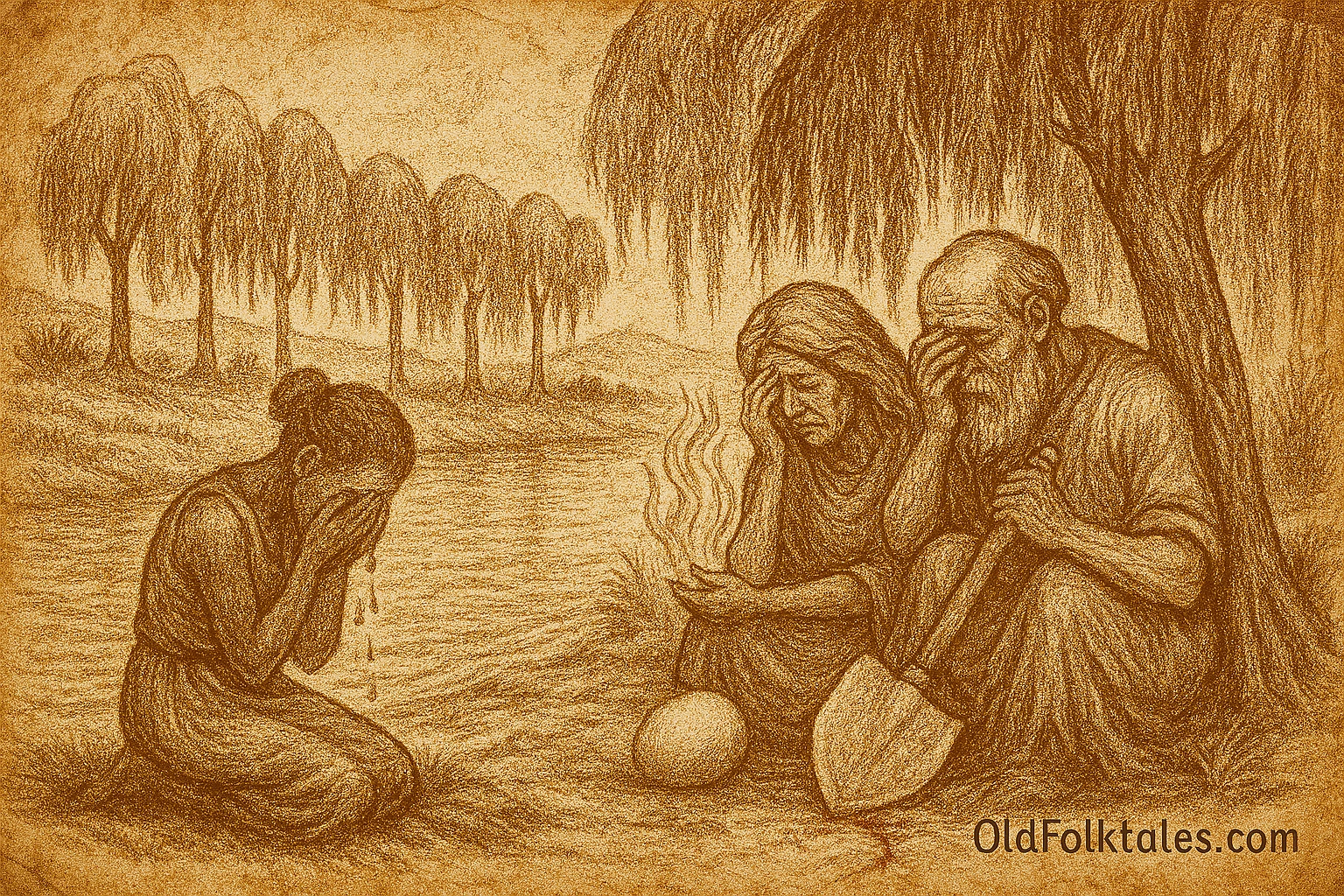
But the parents themselves could not leave. They could not abandon their transformed daughters, the nine willows now rooted to the riverbank. And so they built a small shelter beneath the drooping branches and there they remained, dwelling in perpetual tears. Day after day, year after year, they sat beneath the weeping willows, mourning their lost children.
The trees’ long branches hung low, sweeping down toward the water, and when the wind blew, they swayed in a motion that looked heartbreakingly like weeping. Some say the dew that collects on their leaves each morning is not dew at all, but tears the tears of nine sisters who learned too late the price of cruelty, and the tears of parents who will grieve forever beneath the shadows of their transformed children.
And so, the weeping willows remain along the riverbanks of Bushman lands, their drooping branches forever bent in sorrow, a living reminder of a terrible day when mockery and unkindness brought down a magician’s curse, transforming beauty into tragedy in the span of a single heartbeat.
Click to read all Myths & Legends – timeless stories of creation, fate, and the divine across every culture and continent
Moral lesson
This tale carries a profound and timeless lesson about the importance of kindness, respect, and compassion for all people, regardless of their appearance or circumstances. The nine sisters who mocked the old man judged him solely by his physical appearance his weathered face, his ragged clothes, his seeming weakness. They failed to see the human being before them, someone in genuine need of a simple kindness that would have cost them nothing to provide. Their cruelty earned them a terrible fate: transformation into trees that would forever weep for their thoughtlessness. The youngest sister’s compassion saved her, teaching us that true character is revealed not in how we treat those who can reward us, but in how we treat those who appear vulnerable or powerless.
Knowledge Check
Q1: What is the origin and cultural significance of the Weeping Willows story in Bushman folklore?
A1: The Weeping Willows is a traditional folk tale from the Bushman (San) people of Southern Africa. This cautionary tale serves as a moral lesson about the importance of kindness, hospitality, and respect for strangers core values in Bushman culture. In the harsh desert environment where the San people lived, sharing water was a sacred obligation, making the sisters’ refusal particularly grave. The story has been passed down through generations to teach children about the consequences of cruelty and the virtue of compassion regardless of someone’s appearance.
Q2: Who was the old man at the river and why did he transform the sisters into willows?
A2: The old man who approached the sisters was actually a powerful magician who walked the earth testing the hearts of mortals. When he asked the ten sisters for water a simple request from someone clearly in need nine of them cruelly mocked his appearance, comparing him to “an old frog” and laughing at his misfortune. As punishment for their heartless behavior and refusal to show basic hospitality, the magician transformed these nine sisters into weeping willow trees. Only the youngest sister, who felt ashamed of her sisters’ cruelty, was spared from this fate.
Q3: What does the blood from the trees symbolize in this African folk tale?
A3: When the grief-stricken father attempted to chop down the willow trees to free his daughters, blood oozed from the splintered bark instead of normal tree sap. This horrifying detail symbolizes that the sisters’ humanity remains trapped within the trees they are still alive and can still feel pain despite their transformation. The blood serves as a powerful reminder that the curse is irreversible and that the sisters must live forever as trees, conscious of their fate. This makes the parents’ grief even more unbearable, as they cannot free their children without causing them suffering.
Q4: Why was the youngest sister the only one not transformed in this Bushman legend?
A4: The youngest sister was spared from the magical transformation because she demonstrated compassion and moral character that her older sisters lacked. While the nine older sisters mocked the old man’s appearance and laughed at his suffering, the youngest sister “was ashamed of her sisters’ rudeness.” Her empathy and recognition that their behavior was wrong even though she was too young to stop them showed the purity of her heart. This teaches that kindness and respect for others, regardless of their appearance or status, protects us from the consequences of cruelty.
Q5: What is the significance of the parents’ decision to stay beneath the willows forever?
A5: The parents’ choice to dwell beneath the drooping willows “in tears forever” represents the eternal nature of grief when children are lost through preventable tragedy. They cannot abandon their transformed daughters, even though the trees can never return to human form. By sending their only remaining human daughter away to safety while choosing to stay with the willows themselves, they demonstrate unconditional parental love and the unbearable burden of loss. Their perpetual mourning beneath the trees adds to the story’s sorrowful power and serves as a lasting reminder of the terrible cost of unkindness.
Q6: How does the Weeping Willows tale reflect Bushman cultural values about hospitality and water?
A6: This story powerfully reflects the sacred importance of water and hospitality in Bushman (San) culture. In the harsh, arid environments of Southern Africa where the San people lived, water was literally the difference between life and death. Refusing to share water with a thirsty traveler was not merely rude it was a profound violation of cultural and moral obligations. The sisters’ mockery was even worse because they were actively playing in abundant water while refusing a desperate man’s simple request. The severe punishment they received emphasizes how seriously Bushman culture takes the duty of hospitality, teaching that sharing resources especially life-giving water with strangers is a fundamental human responsibility.
Source: Adapted from “Myths and Legends of Southern Africa” told by Penny Miller
Cultural Origin: Bushman (San) People, Southern Africa (primarily Botswana, Namibia, South Africa, and surrounding regions)