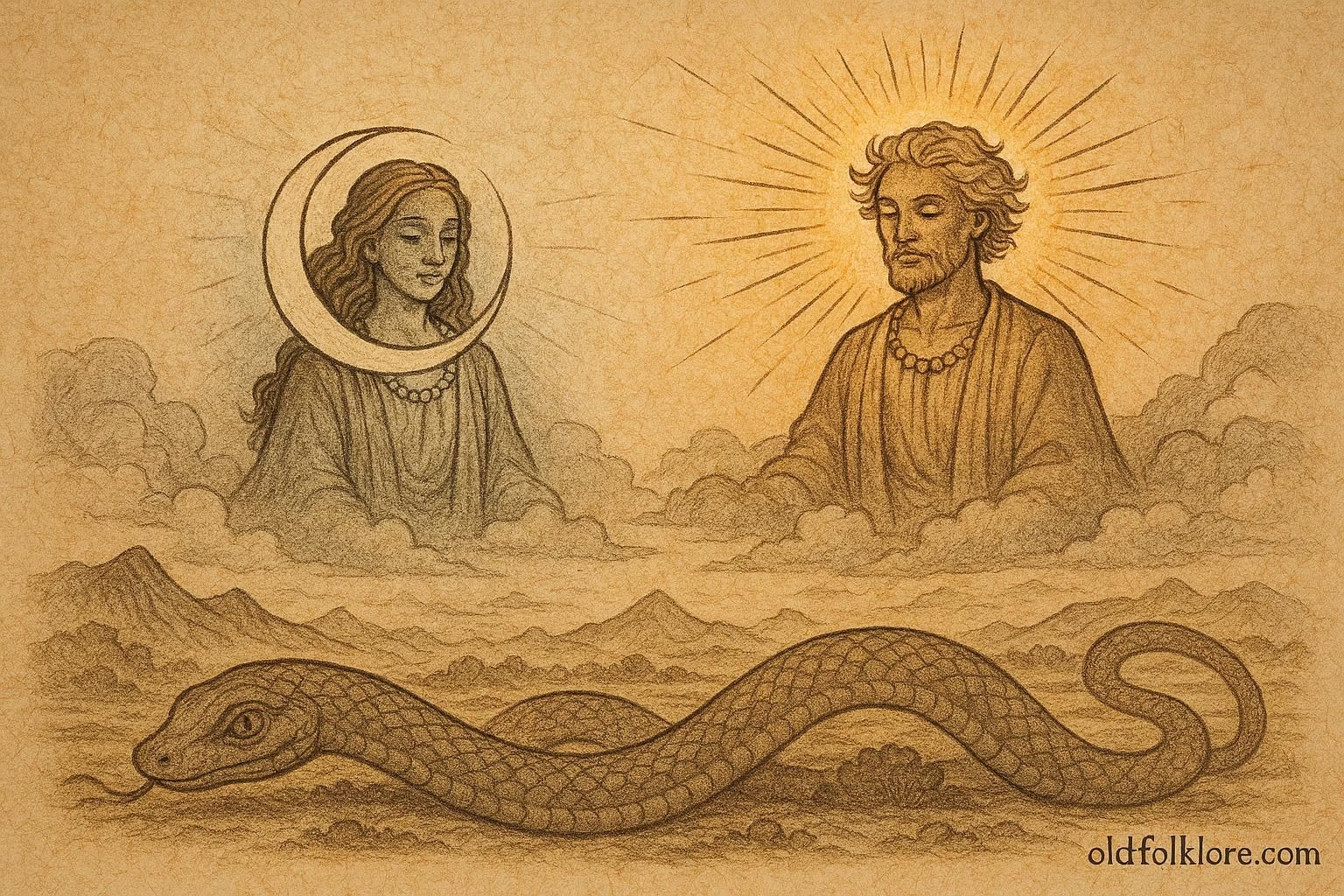
In the cosmology of the Fon and Ewe peoples of West Africa, Mawu-Lisa embodies the sacred duality at the heart of existence. They are twin aspects of the supreme creator: Mawu, the gentle, feminine power of the moon, coolness, night, mercy, and rest; and Lisa, the masculine radiance of the sun, heat, strength, day, and human resilience.
Sometimes worshipped as two distinct deities, and sometimes regarded as one androgynous being, Mawu-Lisa expresses the union of opposites, a cosmic equilibrium where softness and strength, night and day, creation and instruction move together.
Mawu shapes life with tenderness, forming the world from clay and breathing vitality into humans and creatures. Lisa follows as the divine teacher, guiding humanity in craftsmanship, forging, survival skills, and discipline. The serpent Da, the great cosmic rainbow serpent, is closely tied to their work, coiling beneath creation to hold the earth steady.
Across the region, Mawu-Lisa is honored in shrines that emphasize balance and dual sacred forces, sun and moon symbols carved side by side, calabashes filled with white clay for Mawu, iron tools for Lisa, and images of Da as the stabilizing serpent. Their myth forms the cosmological foundation of Dahomey, Togo, and Ewe-speaking Ghana.
MYTHIC STORY: The Birth of the World from Mawu-Lisa
Before the beginning, before the turning of the moon or the rising of the sun, there was only the silent vastness where possibility slept. Into that stillness came Mawu, the soft radiance of the moon, moving like a breath through darkness. Where her presence passed, the void brightened with cool silver glow, and in her hands she carried the gift of creation.
Mawu traveled across the emptiness with her calabash of divine clay. She shaped the earth gently, molding mountains as rounded as sleeping beasts, spreading valleys where rivers would one day wander, and smoothing plains for future forests. Her fingers pressed life into the soil, trees with wide canopies, small shy animals, grand ones that would rule the grasslands, and humans shaped carefully from the warm breath of her spirit.
But when Mawu gazed upon her work, she felt a heaviness. The world was beautiful, yet incomplete. Humans, newly formed, stumbled like children. Their hands were clumsy, their minds uncertain, their survival fragile. She knew her nurturing power had brought them into existence, but something more was needed to strengthen them.
So Mawu called out across the newborn sky, and Lisa appeared in a burst of golden fire. He was the sun’s heat, the blaze of strength, the force that shapes iron and hardens the will. Where Mawu’s touch cooled, Lisa’s presence warmed; where she softened, he tempered. They stood together above the unfinished world, two halves of the same cosmic breath.
Lisa descended among humans and taught them how to endure. He showed them how to forge metal, how to carve tools from iron and wood, how to hunt, build, and defend. Under his instruction, people learned discipline and resilience. When the sun blazed fiercely, they remembered his lessons and continued their work, honoring the partnership between strength and gentleness.
But as Mawu-Lisa watched the world, they saw that the earth trembled, for its foundation was unstable. Mountains shifted like restless sleepers, and oceans spilled into valleys not meant for them. If nothing were done, all of creation would crumble.
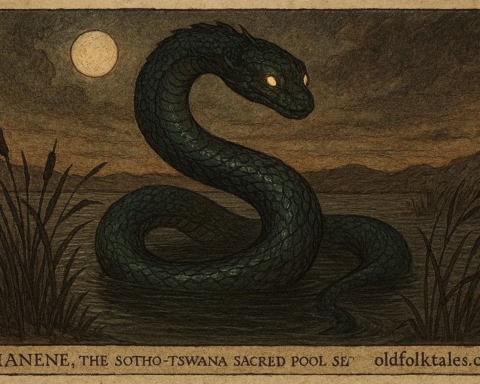
So Mawu-Lisa turned to the great cosmic serpent Da, a radiant rainbow being who spanned the horizon with shimmering scales. Da agreed to support the earth, coiling beneath it in vast spirals. Forty-four thousand coils were wrapped beneath and above the earth, balancing it perfectly. Where Da coiled tightly, mountains rose; where the coils relaxed, plains stretched outward. And the world grew steady.
For a time, all was harmonious. The coolness of Mawu’s moon soothed the land at night, and the strength of Lisa’s sun empowered it by day. Humans thrived under this divine rhythm, working in the warmth and resting beneath the gentle glow of the moon.
But humanity carried within them both softness and fire, and sometimes their newfound strength swelled into arrogance. Some grew prideful of their skills, believing themselves equal to the gods who taught them. Seeing this, the twins acted once again. Mawu tempered their pride with mercy, reminding them through dreams and gentle guidance of their origins. Lisa, sterner, allowed occasional hardships to sharpen their humility.
Through these blended lessons, humans learned balance: mercy with fortitude, rest with labor, reverence with innovation. The world matured under the watchful harmony of Mawu-Lisa.
Yet another crisis came. The earth, though supported by Da, grew heavy with the weight of mountains, seas, creatures, and human ambition. Da strained under its weight, and the world began to tilt. To save creation, Mawu-Lisa placed Da beneath and around the earth, commanding the serpent to shift constantly, redistributing weight. The serpent’s movement created trembling, storms, and tides, natural motions of a living world upheld by divine equilibrium.
With this final act, the world stabilized, and the twin deities ascended to their celestial realms. Mawu rose to the moon to watch over night, offering dreams, coolness, and mercy. Lisa returned to the blazing throne of the sun, giving heat, vitality, and the strength required to endure the challenges of living.
Together they rule the cycles of existence: day and night, work and rest, strength and compassion. Their union remains a reminder that the world itself is shaped by duality in harmony, the interwoven forces that make life possible.
Author’s Note
Mawu-Lisa’s myth reveals a worldview grounded in balance. The sun and moon are not rivals but partners, shaping humanity through complementary gifts. Creation requires gentleness and power, mercy and discipline. The tale teaches that harmony is the foundation of existence, and that imbalance, whether in nature or human behavior, disrupts the world’s delicate equilibrium.
Knowledge Check
Q1: What cultures worship Mawu-Lisa?
A: The Fon of Benin and the Ewe of Togo and Ghana.
Q2: What does Mawu represent?
A: The moon, coolness, night, mercy, and creation.
Q3: What does Lisa represent?
A: The sun, heat, strength, discipline, and technical skill.
Q4: Who supports the earth in the myth?
A: Da, the cosmic rainbow serpent.
Q5: Why did Mawu call Lisa?
A: To strengthen and teach humans after she created them.
Q6: What central theme does the myth express?
A: Balance, the harmonious pairing of opposite forces.
Source: Fon/Ewe Mythology, Benin, Togo, Ghana.
Source Origin: Fon/Ewe, Benin, Togo, Ghana