Bwiti is a spiritual tradition practiced among the Fang, Mitsogo, Punu, and related peoples of Gabon, southern Cameroon, and parts of Congo. Although it has evolved over centuries, its foundation remains centered on iboga, a root regarded as both a plant-sacrament and a bridge to the ancestral realm. Bwiti functions as a religion, a philosophy, a moral framework, and a system of healing, woven tightly into the social and cosmological worldview of Central African forest cultures.
Description
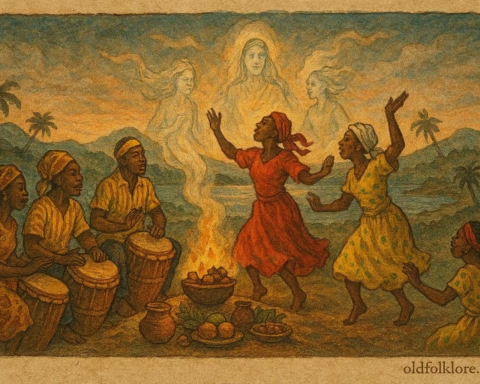
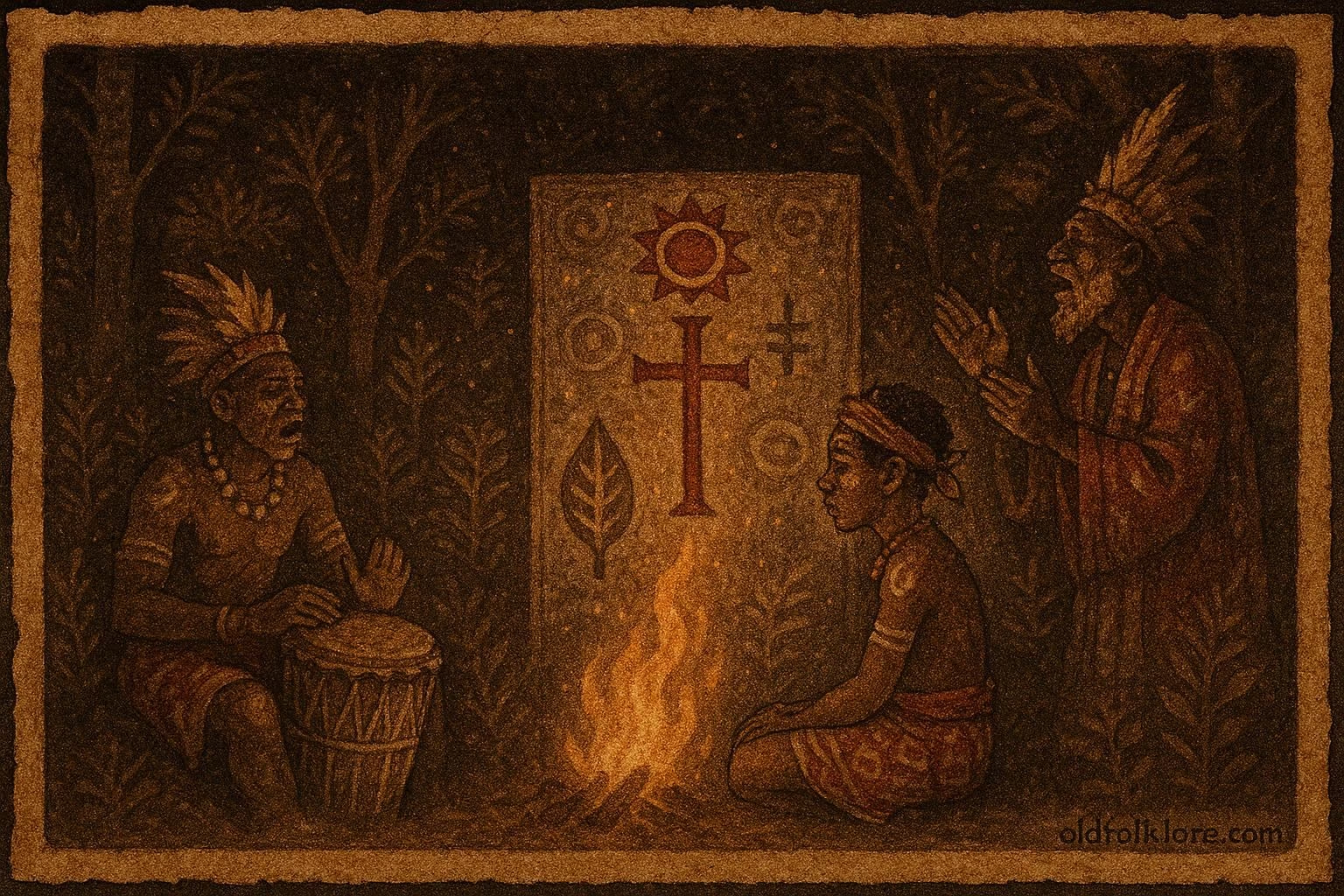
Bwiti initiation is one of Central Africa’s most evocative ceremonial journeys. It unfolds primarily at night, the hours believed to be most permeable to the voices of the ancestors and the subtle movements of the spirit world. The community gathers in the nganga’s (ritual leader’s) temple hut, lit by fire and decorated with woven mats, sacred relics, and symbolic forest motifs. The atmosphere is rhythmic and deliberate: drums pulse, harps and mouth-bows echo, and elder-initiates chant melodic lines that guide participants into a deep contemplative state.
The initiate, accompanied by experienced elders, enters a ritual sequence that emphasizes preparation, reflection, and spiritual readiness. This process includes storytelling, moral instruction, and the recitation of important clan histories. The heart of the rite is the night-long visionary experience, traditionally guided through the ritual use of iboga. Across the ceremony the initiate listens to sacred songs, engages with communal symbolism, and receives guidance through the elders’ interpretations of dreams, visions, and symbolic imagery.
The ceremony is both individual and communal. Though one person undergoes the initiation, the entire community participates. Drumming supports the initiate through the long night; chanting and dancing mark transitions from one phase of experience to the next. This shared involvement reinforces the idea that personal transformation strengthens collective balance. Elders emphasize themes of death and rebirth, not as physical realities but as spiritual processes, symbolic shedding of past confusion and awakening to ancestral insight.
By dawn, the initiate emerges from the ordeal renewed. The community greets them with songs of reintegration, affirming their new standing within the moral and spiritual fabric of the group. In this way, Bwiti initiation serves multiple purposes: it conveys cosmological knowledge, restores personal equilibrium, and reaffirms social harmony. The rite is not merely an individual passage but an affirmation of cultural continuity.
Modern Bwiti expressions vary. In urban Gabon, the ceremony may take place in organized temples with established lineages, while rural communities preserve older forest-based forms. Yet in all settings, the underlying philosophy, guided reflection, ancestral memory, and communal renewal—remains constant.
Mythic Connection
At the mythic heart of Bwiti lies the spirit of the iboga plant itself. According to oral tradition, iboga was discovered through ancestral guidance or animal revelation, stories differ by region, but all agree that the plant is not merely botanical; it is spiritual. The Fang narrative often describes iboga as a gift from the first ancestor, intended to illuminate the hidden structure of the world. Among the Mitsogo, iboga is associated with forest spirits who reveal cosmological truths to those who approach with reverence.
These myths frame iboga not as a medicinal root alone but as an intermediary between worlds. The visions experienced during initiation are interpreted as direct encounters with ancestors, tutelary spirits, or the symbolic forms that govern nature. In this worldview, the forest is alive with intelligence; its plants, animals, and unseen beings participate in the moral and spiritual development of humanity.
Bwiti initiation reenacts the primordial cycle of death and rebirth. The initiate symbolically “dies” to confusion, fragmentation, and past wrongdoing, then “rebirths” into clarity. This parallels the mythic journeys of culture heroes who descend into the underworld or spirit realm before returning with knowledge. Such cosmological narratives teach that wisdom is never simply learned, it must be experienced in the depths of the self, guided by ancestral presence.
Because Bwiti emphasizes lineage continuity, initiation also strengthens the link between generations. Elders interpret visions as messages not only for the individual but for the entire community. In this way, the ritual ensures that the moral compass of the group is continually renewed, reflecting harmony between humanity, nature, and the spiritual universe.
Author’s Note
This article examines the Bwiti Iboga initiation as a spiritual tradition rooted in ancestral cosmology, symbolic rebirth, and communal renewal. It highlights how the rite reflects relationships among forest peoples, their sacred landscapes, and the unseen forces believed to shape human destiny.
Knowledge Check
1. What peoples practice Bwiti?
Fang, Mitsogo, Punu, and related groups in Gabon and surrounding regions.
2. What central plant is used symbolically in the initiation?
Iboga, regarded as a sacred plant-spirit and visionary guide.
3. Why are the ceremonies held at night?
Night is believed to be spiritually permeable, allowing clearer connection with ancestors.
4. What themes define the ritual’s symbolism?
Death and rebirth, moral renewal, and ancestral knowledge.
5. How does the community participate?
Through drumming, chanting, guidance, and reintegration ceremonies.
6. What is the mythic origin of iboga?
Traditions describe it as a gift from ancestors or forest spirits granting insight.