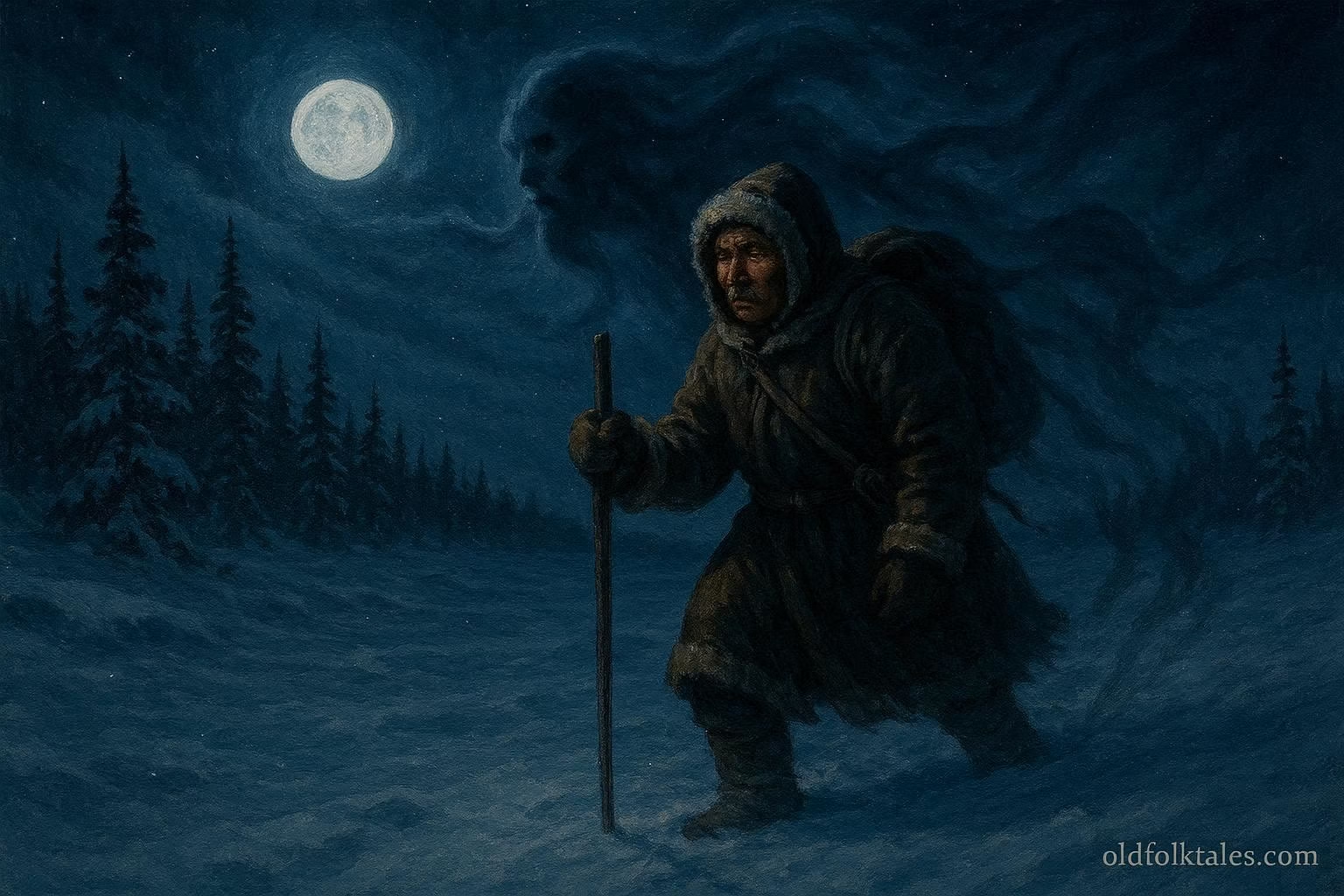
Across the snow laden plains of Siberia the Evenki people tell stories of Taxtuma the Night Whisperer. It is said that when the moon hangs low over the tundra and the pine trees cast long frozen shadows a presence stirs among the drifts. It moves like a smudge of darkness across the white world never fully seen yet deeply felt. Taxtuma is not a spirit of loud violence nor one that startles with grotesque form. Instead it slides silently into the thoughts of wandering humans planting seeds of fear that grow until the mind loses its direction.
Travelers describe feeling its presence long before they hear its whisper. It begins with a subtle unease like the tundra itself is exhaling a breath too cold and too ancient to belong to the living. The wind carries faint murmurs that do not sound like wind at all. They seem to form half shaped words drifting around the ears like smoke from an unseen fire. Many insist they hear their own name repeated softly as if spoken by a distant relative or a memory of someone long gone.
Among the Evenki it is said that Taxtuma was born from the loneliness of the steppe itself. Ages ago when the world was younger a hunter disappeared in a winter storm. His final thoughts were filled with fear and desperation and these thoughts clung to the air refusing to fade. From them Taxtuma took shape a being fed by fear wandering forever through the tundra seeking minds to nest within. Though its origins are ancient its influence remains sharp as a fang and as cold as the northern winds.
Encounter dragons, spirits, and beasts that roamed the myths of every civilization
Elders warn that Taxtuma does not approach groups. It preys upon those who travel alone those whose spirits are worn down by hardship sorrow or deep quiet. The Night Whisperer tests the strength of the human mind. It seeks the smallest crack within a person’s resolve then slips in like a winter breeze through a poorly sealed tent. Once inside it whispers thoughts of doubt. It tells the traveler that their path is wrong that their companions no longer value them that danger waits behind every step. It feeds suspicion and fear until the mind trembles.
One of the most famous tales tells of a young reindeer herder named Alget. Proud and eager to prove his skill he ventured across the tundra alone to retrieve a wandering part of the herd. At first the journey was simple. The frozen land reflected the pale moonlight and the herd’s tracks were clear. But as the night deepened the air thickened with a strange heaviness. Alget felt something watching him not with eyes but with intention.
The whisper came soon after. It drifted into his mind like a memory not his own. Something is coming it murmured. Something behind you. He spun around but the tundra lay still covered in ice and silence. He continued walking faster now but the voice returned. You will not find the herd. They are gone. Turn back before the darkness takes you.
Alget tried to ignore it but with every step the whisper grew clearer. It spoke with the tone of his late uncle a man whose counsel he had once trusted. This made the influence stronger for Taxtuma often imitates familiar voices to break human defenses. Soon Alget doubted every choice he made. He no longer trusted his memory of the path or the direction of the stars. His heart beat fiercely and his breath quickened. Fear fogged his mind like frost covering a window.
Back in the village the elders sensed something wrong. The Evenki believe that the spirit world stirs restlessly when one of their people is in danger. A shaman named Mirgikan prepared to follow Alget into the night. He carried a drum carefully stretched with reindeer hide and painted with symbols of protection. The drumbeat he created was not meant for human ears alone. It was a call to the spirits of the land a reminder that the Evenki walk in balance with the unseen forces of the world.
Mirgikan found Alget wandering in circles unable to recognize his own footprints. The young herder’s eyes were unfocused as if he could see only the shadows within his mind. Taxtuma’s presence clung to him like a cold fog. The shaman struck his drum with firm steady beats and chanted words taught to him across generations. The air shimmered with energy. The whispers grew louder for a moment then faltered shrinking into silence.
Alget collapsed to his knees as the darkness loosened its grip. The shaman helped him stand and guided him back to the village. For several days Alget remained quiet his mind slowly clearing like a thawing river. The elders did not blame him for the encounter. Instead they reminded him that the tundra does not judge but it demands respect. No one is meant to face the great loneliness of the land without the support of their people.
Since then the Evenki teach all travelers that the first defense against Taxtuma is companionship. A mind supported by community is far stronger than one isolated in silence. The second defense is inner clarity. Those who walk with unresolved fears or unspoken grief are more vulnerable to the Night Whisperer than those who travel with purpose and peace.
Even so Taxtuma continues to roam the frozen plains whispering into the darkness seeking minds that drift away from the warmth of others. Its presence is a reminder that the greatest battles often occur in silence beneath the surface of thought. It teaches that courage does not always rise from strength but from the willingness to face one’s own hidden fears and return to the community that offers grounding and support.
Explore the shadows of world mythology, where demons test the soul and spirits watch over mankind
Author’s Note
Taxtuma symbolizes the quiet dangers that arise from fear uncertainty and isolation. This story speaks to the need for community shared strength and emotional clarity in a world where unseen forces both internal and spiritual can cloud the path ahead.
Knowledge Check
1. Who is Taxtuma in Evenki lore?
Taxtuma is a shadowy spirit that whispers doubt and fear into the minds of travelers.
2. How does Taxtuma usually influence humans?
It manipulates emotions by planting fear and confusion in the mind.
3. Why are lone travelers more vulnerable to Taxtuma?
It feeds on isolation and seeks minds that are unprotected by community presence.
4. How did Alget become targeted by Taxtuma?
He traveled alone and began to feel fear which the spirit exploited.
5. What tool did the shaman use to drive Taxtuma away?
A ritual drum accompanied by sacred chants.
6. What lesson does the story teach about inner strength?
Clarity purpose and community support protect the mind from harmful influences.