In the ancient villages that stretched across the plains of India and Sri Lanka, the elders often told stories of the Pretas, the Hungry Spirits. These beings were not always ghosts or creatures of the night. Many had once been ordinary people who lived lives filled with attachment, greed, envy, or selfish longing. When they died, their desires clung to them so tightly that they could not move on to peaceful realms. Instead, they were reborn as Pretas, cursed to wander the world in endless want.
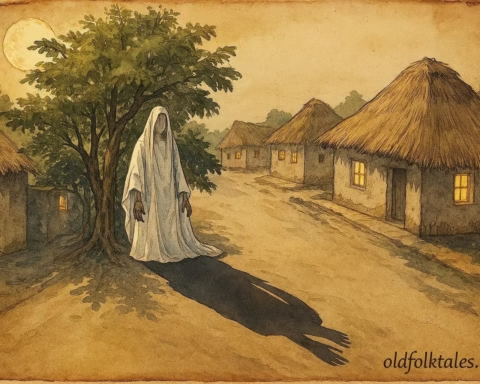
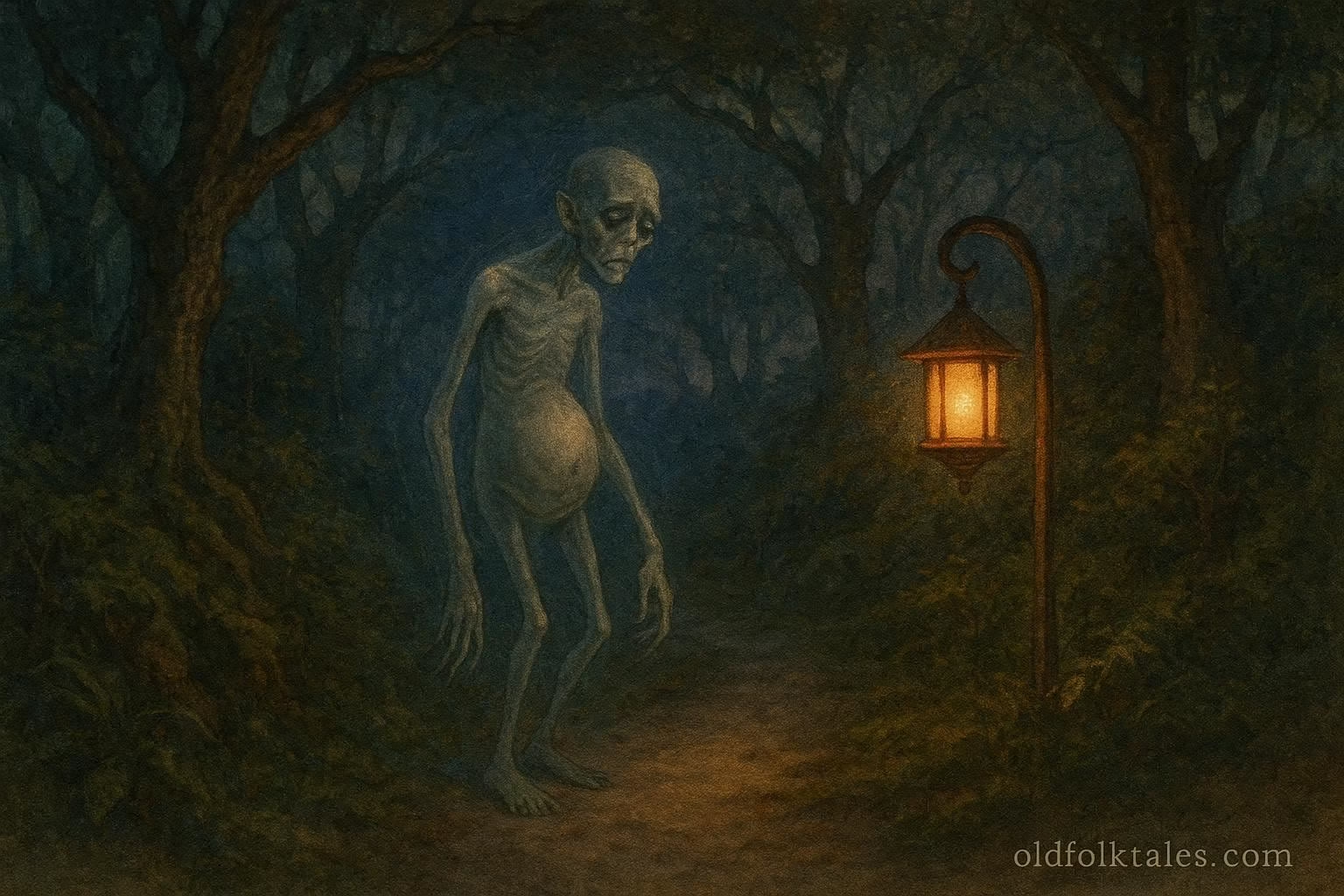
Some Pretas looked like thin shadows with swollen bellies and tiny mouths that could barely swallow a grain of rice. Others had long necks, cracked lips, or hands forever reaching for food that vanished as soon as they touched it. They drifted between the human world and the unseen realms, always hungry, always thirsty, always longing for what they could never have.
People rarely saw a Preta fully, but there were signs. A sudden chill on a warm night. A rustle of leaves though no wind blew. A faint whimpering sound that seemed neither human nor animal. In villages where greed and envy ran strong, such signs were common. Parents warned their children to act with kindness and restraint, for they believed that longing without discipline invited the touch of the Hungry Spirits.
Encounter dragons, spirits, and beasts that roamed the myths of every civilization
One such village stood near a forest where tall sal trees whispered ancient truths. In this village lived a man named Devapala. He was known for his ambition. He wanted the largest fields, the wealthiest harvest, and the highest respect among the elders. But ambition ruled him too strongly. Every time he gained something, he wanted more. Every time he reached a goal, his eyes searched for another. His neighbors admired his success yet feared the emptiness behind his smile.
One harvest season, Devapala grew jealous of his cousin Surendra whose fields had yielded more grain than his own. Though Devapala already had enough grain to last his household for months, his heart tightened with envy. In secret, he visited the forest shrine where offerings were placed for wandering spirits. Instead of giving, he took. He carried away fruits, rice, and honey meant for unseen visitors, believing that by starving the spirits, he could redirect fortune toward himself.
But the spirits he offended were not silent.
That night, as Devapala carried the stolen goods home, the forest grew strangely dim. A shape appeared between the trees. Thin arms, a swollen belly, and a mouth no bigger than a seed. Its eyes glowed with hunger. Devapala froze, unable to breathe. The Preta drifted closer, whispering with a voice like dried leaves, Why do you take what is not yours When your heart is full yet you crave more
Devapala tried to speak but no words came. The Preta circled him, its presence heavy with sorrow and warning. If you feed your greed you will feed me it whispered. For every desire without discipline grows into another hunger that cannot be filled.
Terrified, Devapala ran home. But the presence followed him for days. His sleep grew short. His thoughts twisted. Every craving became sharper. Every small disappointment felt unbearable. He saw shadows in the corners of his home, shapes curling and reaching with invisible hands. His wife urged him to seek the advice of the village priest.
The priest listened carefully and nodded with calm understanding. The Pretas are drawn to uncontrolled longing he explained. When you took what was meant as an offering you opened yourself to their realm. There is only one cure. You must learn to give without expectation and desire without attachment.
He instructed Devapala to return the stolen offerings and bring additional gifts for the Pretas. More importantly, he was told to practice generosity every day for forty days. A bowl of rice to the poor. Water for travelers. Grain for birds. Service to those in need, done with sincerity, not for reward.
Devapala obeyed. At first it was difficult. His mind still whispered of loss and fear. But as he continued his acts of giving, something within him shifted. His cravings grew softer. His envy weakened. His heart, once restless, grew calm.
On the thirty ninth day he returned to the forest shrine with fresh fruit and fragrant flowers. As he placed them upon the stone, the same Preta appeared, its eyes no longer burning with hunger but glimmering with gratitude. You have loosened the chains of your desire it murmured. And in doing so you have released me from mine.
The figure faded into the trees. The wind carried a peaceful warmth. Devapala walked home with a lighter spirit than he had known in years.
From that time on, he lived with humility. He became a man who shared more than he kept and worked with gentleness instead of hunger. The village prospered in harmony, and the elders continued to teach that the greatest danger was not the Pretas themselves but becoming like them.
For desire without wisdom becomes a thirst that no water can quench and a hunger that no meal can satisfy.
Explore the shadows of world mythology, where demons test the soul and spirits watch over mankind
Author’s Note
This story teaches that longing is natural, but craving without restraint becomes a burden. Generosity and awareness are the path to spiritual balance.
Knowledge Check
1. What causes a person to become a Preta?
A person becomes a Preta when excessive greed and desire cling to their spirit after death.
2. What physical traits are Pretas known for?
They often appear with swollen bellies, tiny mouths, and thin bodies.
3. Why did the Preta follow Devapala?
Because he acted from greed and stole offerings meant for the spirits.
4. What practice helped Devapala free himself from the Preta’s influence?
Daily acts of generosity done without expectation.
5. What lesson does the story teach about desire?
Desire without discipline becomes an endless and destructive hunger.
6. How did the village priest help Devapala?
He taught him to give sincerely and restore balance through generosity.
Source
Adapted from Buddhist Cosmology in the Digha Nikaya ancient text
Cultural Origin
South Asian Peoples India and Sri Lanka