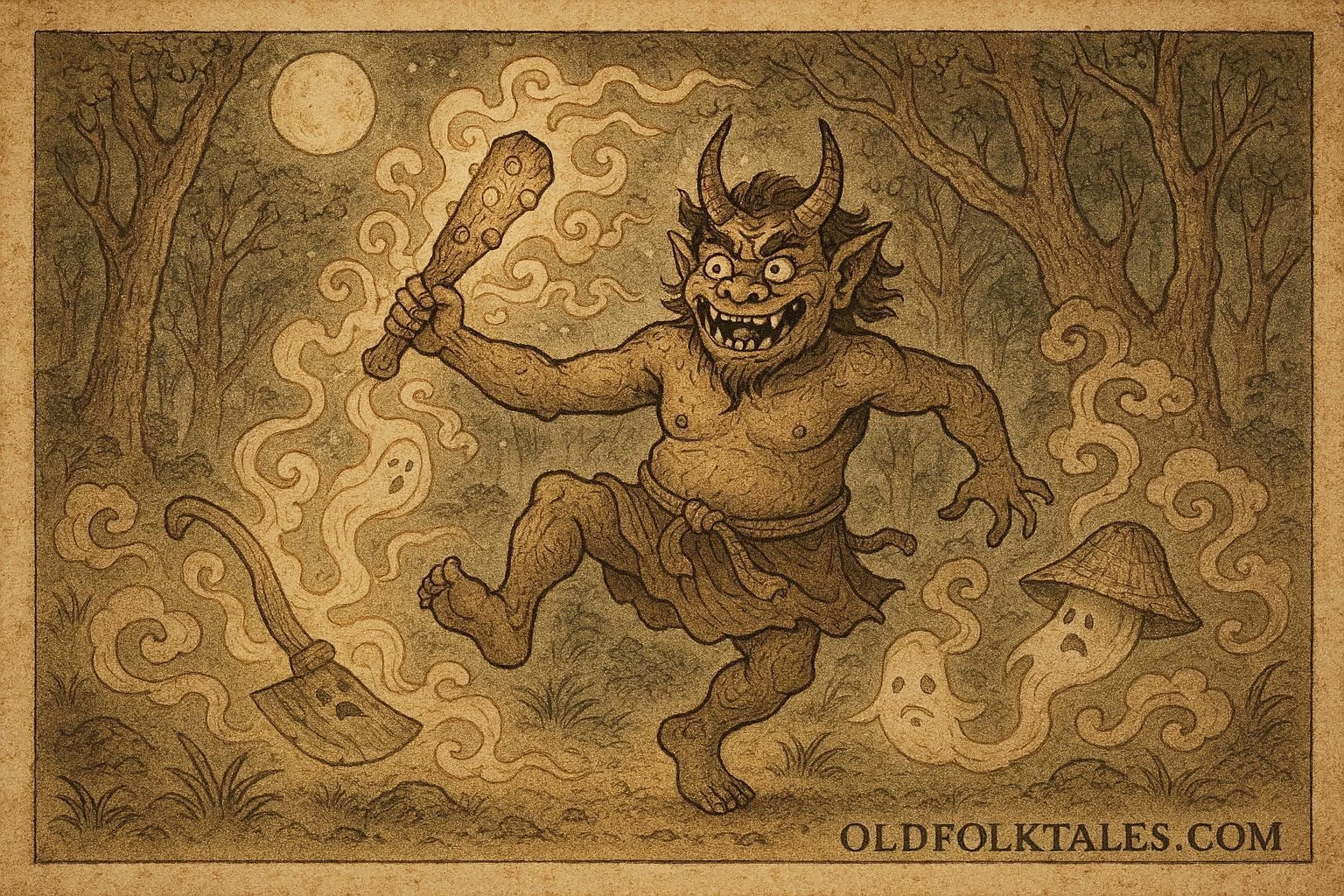
Dokkaebi, often translated as “Korean goblins”, are among the most recognizable and beloved beings in Korea’s vast folklore tradition. Unlike Western goblins, they are neither undead nor born from malice. Instead, they are spirits arising from things: old household objects, discarded tools, rice-straw brooms, worn-out utensils, or even abandoned farm implements. When an object lives long enough, experiences human touch and emotion, or simply absorbs the energy of time, it may awaken with spirit. Through this animistic worldview, everyday items can become supernatural, gaining personalities, quirks, and sometimes astonishing magical power.
Visually, dokkaebi are depicted in multiple ways depending on region and era. In classical art from the Joseon dynasty, they appear as horned humanoids with exaggerated expressions and bulging eyes. Some are squat and round like mischievous tricksters; others stand tall with wild hair and broad grins. Their bodies are often blue, green, or red, echoing ancient color symbolism associated with spirits and protective talismans. In many village legends, they possess only one leg, a feature shared with their cousin spirit, the dokkakgwi, and often used to explain their hopping, irregular movement during nighttime wanderings.
Learn the ancient stories behind deities of light, storm, and shadow from cultures across the world
The most iconic items associated with dokkaebi are their magical tools:
- Dokkaebi bangmangi (도깨비 방망이): a club that can summon food, wealth, or objects instantly, sometimes with unintended comedic consequences.
- Dokkaebi hat (도깨비 감투): a cap that makes the wearer invisible, provided one knows how to put it on correctly (many stories involve a foolish villager wearing it backwards).
Despite their oddities, dokkaebi possess immense strength. They are known to challenge humans to wrestling matches (ssireum). In these contests, the trick is not to overpower the spirit but to outsmart it. Folklore teaches that dokkaebi are not very clever, they can be fooled by logic riddles, illusions, or simply being told that “the other team” is winning somewhere else. A common motif shows a traveler escaping a dokkaebi by pointing to a distant light and shouting, “Your friend is calling you!”, upon which the goblin hops away in confusion.
Although mischievous, they are rarely evil. Instead of harming humans for pleasure, they delight in pranks, chaos, and curiosity. They sneak into kitchens to drink rice wine; they knock on doors at night for fun; they appear on lonely mountain paths to startle travelers; they cause minor disasters like sudden windstorms or misplaced objects. Their humor, while sometimes disruptive, reflects the Korean storytelling tradition in which supernatural forces mirror the unpredictability of life.
In many stories, dokkaebi reward people who show kindness, politeness, or humility. A helpful old man who shares food or warmth with a goblin might be granted a magical club that produces infinite riches. A woodcutter who refuses to cheat a traveler may receive protection or a bag of rice that never empties. Conversely, greedy or arrogant individuals are punished: a corrupt landlord may find his rice stores turned into stone, or a bully may be forced into a humiliating ssireum match he can never win.
This moral structure aligns with Korea’s traditional Confucian values, which emphasize righteousness, humility, and proper conduct. It also connects to shamanistic beliefs that spirits mediate the relationship between humans and the natural world. Dokkaebi, like nature itself, can be benevolent or dangerous depending on how people treat them.
Many folktales explore relationships between humans and these goblins. One famous story involves a poor man who gives his last bowl of rice wine to what he thinks is a lost traveler, only to discover it was a dokkaebi in disguise. In gratitude, the goblin gifts him with a magic club. The man becomes wealthy but remains modest, so the dokkaebi stays a loyal friend. Another tale tells of a woman who tricks a persistent dokkaebi into fearing its own reflection by showing it a painted mask. Believing the face to be another monster, the goblin flees and never returns.
These narratives reveal how dokkaebi represent the unpredictable elements of the world, weather, luck, fortune, and the strange moments that cannot be explained. Rather than being terrifying, they embody the playful yet powerful forces behind everyday life. The idea that objects can gain spirits reflects Korea’s deep-rooted animism, in which everything, mountains, rivers, tools, utensils, possesses a life force (gi). A dokkaebi is the playful awakening of that energy.
Symbolically, dokkaebi straddle the line between nature and culture. They dance between forests and farmland, between wilderness and village. They invite people to remember that the world is alive in ways humans cannot always see. They test honesty, reward virtue, and delight in surprise. In a cultural landscape shaped by farming communities, mountain villages, and seasonal extremes, dokkaebi embody forces that are both nurturing and chaotic.
While modern media often portrays dokkaebi as cute or humorous, their roots are far older and much deeper. They belong to the mythic structure that shaped Korean imagination for centuries, spirits that laugh, wrestle, feast, and wander through moonlit forests. They are neither gods nor demons, but something uniquely Korean: magical tricksters who remind people that joy, luck, and mischief coexist in the world.
Cultural Role & Symbolism
- Moral trickster: They test honesty, humility, and kindness.
- Animistic spirit: Born from old objects, representing Korea’s belief that everything has life-force.
- Nature intermediary: Existing between wilderness and human life.
- Symbol of luck and chaos: Bringers of fortune, or misfortune, based on human behavior.
Encounter dragons, spirits, and beasts that roamed the myths of every civilization
Author’s Note
Dokkaebi remain one of Korea’s most distinctive folkloric beings because they express the playful, unpredictable side of the supernatural. They remind us that the world is full of hidden life, and that good fortune often comes not through strength but through humility, humor, and kindness.
Knowledge Check (Q&As)
- Q: What are dokkaebi traditionally created from?
A: Inanimate objects like brooms or tools that acquire spirit. - Q: What magical item can dokkaebi use to create things?
A: The dokkaebi bangmangi (magic club). - Q: Are dokkaebi inherently evil beings?
A: No, they are mischievous but not malicious. - Q: What challenge do dokkaebi often give humans?
A: Wrestling matches (ssireum). - Q: What moral value do they reinforce?
A: Humility and kindness. - Q: What worldview underlies dokkaebi myths?
A: Korean animism and shamanistic spirituality.
Source: Compiled from Korean folklore studies; Samguk Yusa references; Environmental Literacy Council; Korean animistic and shamanist tradition.
Origin: Korea (pre-modern, Joseon dynasty folklore with earlier shamanistic roots)