Timkat is one of the most important festivals in the Ethiopian Orthodox Tewahedo Church. Celebrated every January 19 (or 20 in leap years), it marks the Epiphany, the baptism of Christ in the River Jordan. Its origins extend deep into Ethiopia’s early Christian period, reflecting over 1,600 years of liturgical continuity. Across the highlands and cities, Timkat blends solemn theology, vivid performance, and communal renewal. While rooted in the Gospel story, it also incorporates older Ethiopian water-blessing customs, giving the festival a uniquely layered spiritual texture.
Description
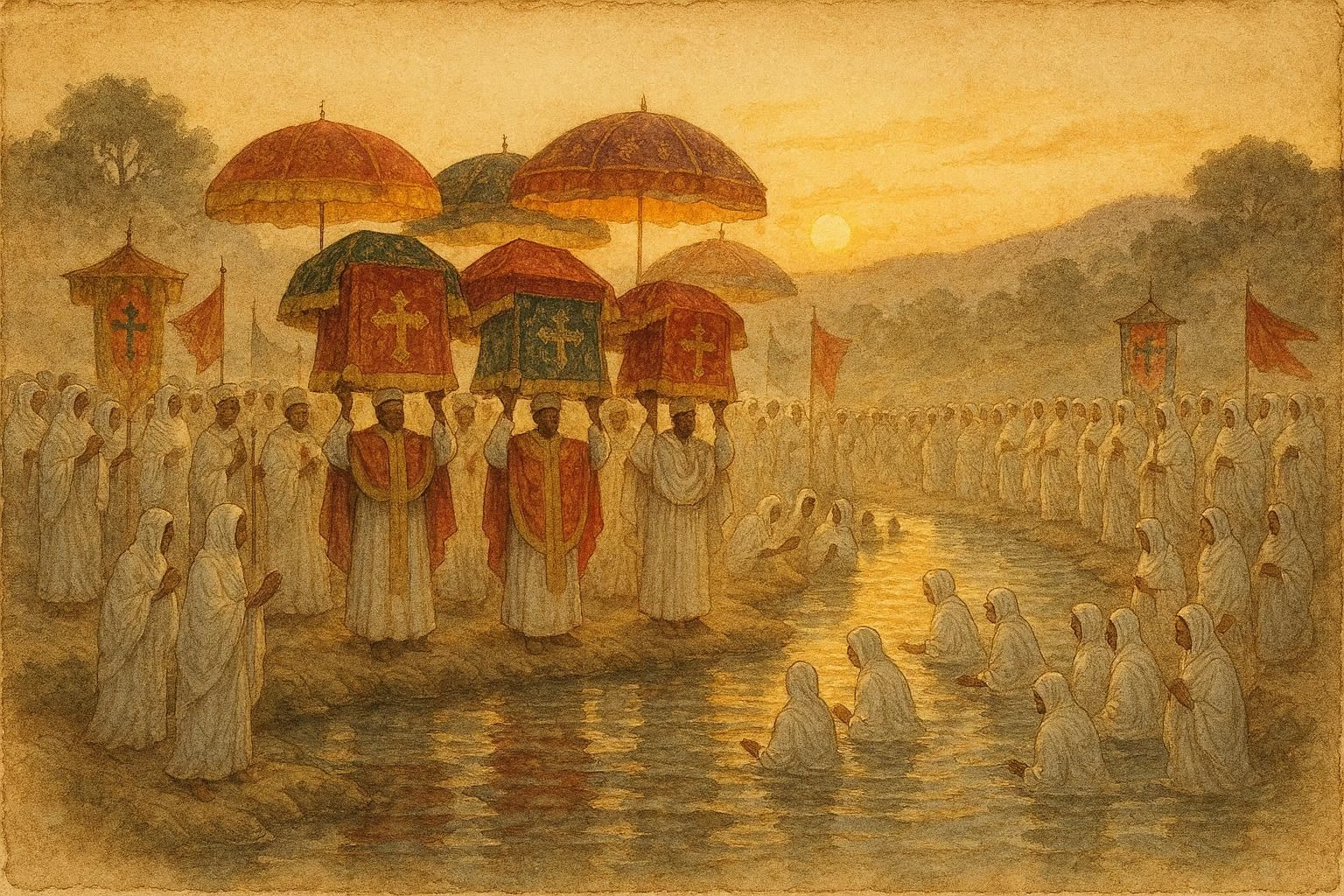
Timkat unfolds as a sequence of processions, blessings, chants, and communal participation. The celebration begins on the eve of Epiphany with the Ketera processions. Priests carry the tabot, a sanctified replica of the Ark of the Covenant, wrapped in fine cloth upon their heads. Every church has at least one tabot, and its presence is the spiritual centerpiece of the festival. Crowds escort the clergy through the streets, singing hymns and shaking sistras while drums maintain a steady, ancient rhythm.
The processions move toward a riverbank, sacred pool, or public bath where the night vigil will take place. Temporary encampments form around the water, decorated with white cloth, church umbrellas, and banners. As dusk becomes night, the community gathers for prayers and chants drawn from the Ethiopian Deggua tradition. Many people remain awake until dawn, listening to scripture and watching the tabot rest in its ceremonial tent.
Before sunrise, the high priest blesses the water. This moment is the emotional and spiritual height of Timkat. The blessing recalls Christ’s baptism and symbolizes divine light entering the natural world. When the water is sanctified, priests sprinkle the crowd using processional crosses or small bundles of grass. Some participants step into the water in symbolic reenactments of baptismal renewal. Others lift their hands, praising God and seeking purification for the year ahead.
After the blessing, joyous dancing and drumming begin. The tabots are carried back to their churches in triumphant processions, accompanied by the faithful wearing white shamma cloths. Children sing, elders chant, and entire communities celebrate with feasting, reconciliation, and visits among neighbors. Timkat transforms public spaces into sacred landscapes, uniting theology, tradition, and social harmony.
Mythic Connection
At its core, Timkat is a ritual reenactment of the baptism of Christ, a moment when divine presence sanctified natural water. Ethiopian Orthodox theology teaches that the Jordan River’s blessing echoes through time, touching every body of water during Timkat. This belief roots the festival in a cosmic vision of renewal: the natural world becomes a vessel of grace, and humanity reconnects with the sacred through creation itself.
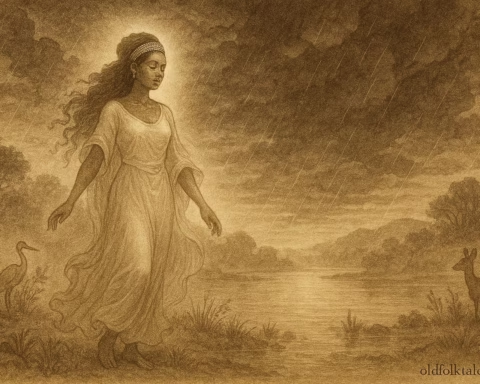
Beyond the Christian narrative, Timkat resonates with older Ethiopian cultural motifs. Water has long been associated with cleansing, fertility, and blessing in the region’s pre-Christian traditions. Even today, many communities view flowing rivers and springs as dwelling places of protective spirits or ancestral forces. Timkat bridges these symbolic worlds. When the tabot approaches the water, it mirrors both the biblical Ark and the older idea of sacred presence moving through the landscape.
The tabot itself deepens the mythic dimension. Representing the Ark of the Covenant, it symbolizes God’s covenantal presence among the people. Its public journey during Timkat reenacts Israel’s ancient processions while also echoing Ethiopia’s own Solomonic lineage traditions. In this sense, Timkat is both a reenactment of sacred history and a declaration of Ethiopia’s spiritual identity.
The ritual also carries ecological symbolism. The blessing of the water reflects communal hopes for rain, prosperity, and agricultural abundance. The spiritual renewal experienced at Timkat is intertwined with the land’s renewal, linking faith to nature’s rhythms. Thus, Timkat becomes a bridge between heaven and earth, ancient memory and living practice, community and creation.
Author’s Note
This article explores Timkat as a layered religious festival shaped by Ethiopian Orthodox theology, early Christian history, and longstanding water-based symbolism. It traces how the ritual unites sacred narrative with ecological renewal, emphasizing the tabot procession, water blessing, and communal participation. The reflection highlights Timkat’s enduring role in expressing Ethiopia’s spiritual identity and its integration of ancient motifs with Christian meaning.
Knowledge Check
1. What is the central symbol of Timkat?
The tabot, representing the Ark of the Covenant, carried in solemn processions.
2. What event does Timkat commemorate?
The baptism of Christ in the River Jordan, marking Epiphany.
3. Why is water important during Timkat?
Blessed water symbolizes purification, renewal, and divine presence entering creation.
4. What is Ketera?
The eve procession when tabots are carried to rivers or pools for the night vigil.
5. How does Timkat connect with older traditions?
It resonates with pre-Christian water-blessing customs and fertility symbolism.
6. What social role does Timkat play today?
It fosters communal unity through shared ritual, feasting, reconciliation, and public celebration.