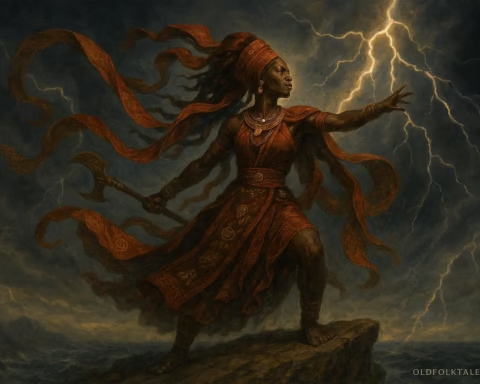
Before the first dawn ever parted the cloak of night, when the world was still shaped by gods and shadows, Tawhaki was born under the shimmering breath of the heavens. His mother, a celestial maiden descended from the Sky-Realms, carried lightning in her veins. His father, a mortal chief of noble line, carried courage in his heart. From this union, Tawhaki entered the world glowing faintly with the promise of stormfire. Elders whispered that he was destined to cross realms, his gaze always lifted toward the heavens as though he were listening to voices far above mortal hearing.
From childhood, Tawhaki showed signs of divine inheritance. When he laughed, sparks flickered in the air. When he cried, clouds gathered as though responding to his sorrow. His strength grew with every moon: he could bind a canoe with one arm, run faster than wind chasing the sea, and stand unharmed beneath falling rain that burned others like molten stone. Yet with his gifts came envy. His elder brothers, consumed by jealousy, betrayed him, leaving him beaten and near death in a lonely forest. Tawhaki survived, but the scars cut deeply into his spirit.
When marauding enemies later brought harm upon his family, sorrow turned into resolve. To protect those he loved and avenge the wrongs done to them, Tawhaki sought a path not walked by any mortal: the pathway to the heavens. His grandmother, luminous and ancient, revealed the hidden vine that reached upward through the layers of the sky. She warned him of its trials, winds sharp as obsidian, guardians who tested purity of spirit, and illusions crafted to break the unworthy. But Tawhaki bowed with reverence.
“I seek not power for pride,” he said, “but justice, healing, and the wisdom to wield the lightning within me.”
Thus began Tawhaki’s ascent.
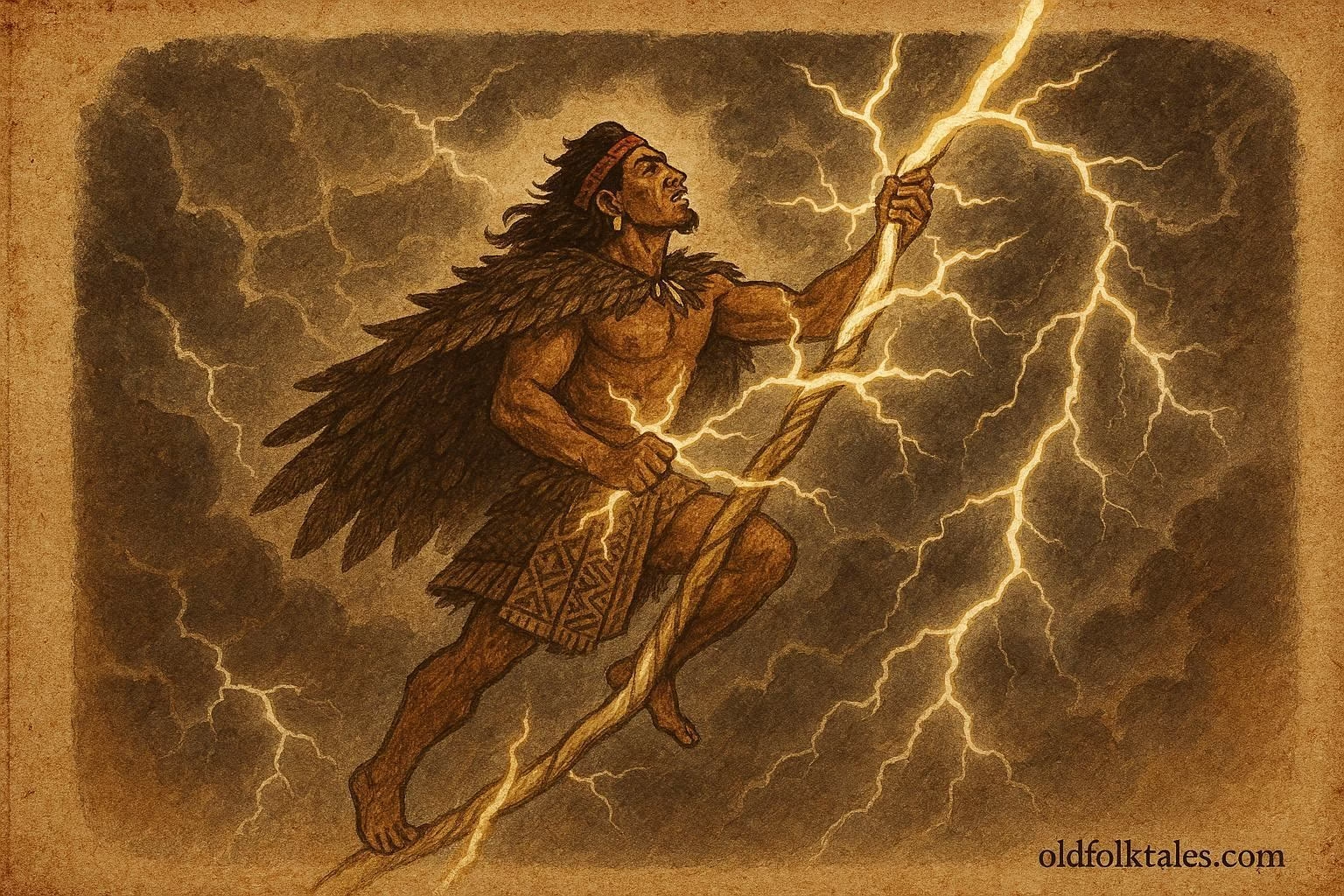
He grasped the vine, warm as breath, firm as bone, and climbed. The first sky-layer trembled beneath him. Here, the Wind Sisters circled him like hawks, their hair spinning whirlwinds. They questioned him with voices that cut like frost.
“Why do you ascend, sky-born mortal?”
“For knowledge,” Tawhaki answered, “to mend what has been broken.”
Hearing truth in his voice, they parted, and the vine lifted him onward.
The second sky-layer shimmered like a silver sea. Spirits of Illusion rose from its surface, weaving mirages: his deceased loved ones calling his name, enemies kneeling before him, visions of glory and dominion. Tawhaki faltered. The desire to claim revenge burned hot, filling him with a storm’s rage. For a moment, he felt his divine lightning crackle uncontrollably.
But then he remembered his grandmother’s words: “The lightning is not your anger, it is your clarity.”
With a cry that echoed across realms, Tawhaki dispelled the illusions. Waves collapsed. Spirits dissolved. The vine stretched upward again.
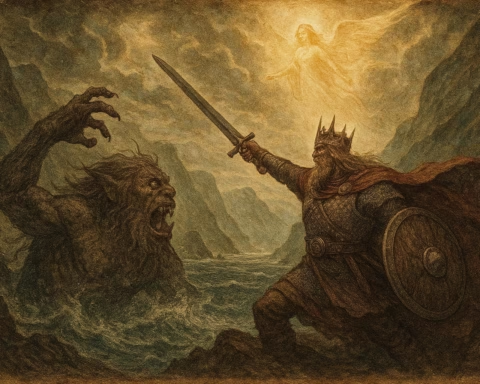
The third sky-layer was darker than a moonless night. Here dwelled the Guardian of Shadows, a towering being formed of the doubts of all mortals. It mocked Tawhaki, speaking with the voice of his brothers, of his own fears.
“You are unworthy. Climb back to your earth. The heavens do not open for those born in anger.”
Tawhaki’s heart trembled, yet he did not retreat. Instead, he spoke softly, the first calm he had felt since beginning his ascent.
“I am not here to prove myself. Only to become the one I must be.”
At his words, the darkness roared, fractured, and dissolved like smoke in sunlight.
Then the sky opened.
Tawhaki stood at last in the highest realm, where clouds glowed with their own light and the sky itself hummed with sacred song. There, the divine lightning coiled like living serpents. The celestial ancestors welcomed him, bathing him in radiance that ignited his inner fire. They taught him the language of storms, the pathways of thunder, the compassion needed to wield a power both destructive and healing.
Newly transformed, Tawhaki returned to the world below, not as a mere warrior, but as a bridge between earth and sky. With lightning dancing along his arms, he drove away the enemies who had brought suffering to his people. His voice boomed like thunder, his steps left sparks upon the earth. No weapon could strike him; no storm could overwhelm him. He restored peace, leaving enemies humbled rather than destroyed, for he remembered the illusions that nearly twisted his heart.
When the work was done, Tawhaki did not remain. Guided by an ancient pull, he climbed once more to the heavens, ascending beyond mortal reach. There he dwells still, they say, standing at the edge of storms, guardian of knowledge, beacon of justice, wielder of sacred lightning. And sometimes, on nights when thunder trembles and lightning splits the sky, the people look upward and whisper:
“Tawhaki walks the heavens again.”
Author’s Note
This retelling honors Tawhaki’s role across Māori and wider Polynesian traditions as the heroic sky-climber who embodies enlightenment, courage, and moral clarity. His journey symbolizes the ascent from human pain to divine purpose, reminding us that true power is guided by wisdom, not vengeance. The lightning he commands reflects insight, transformation, and the lifelong quest for balance between humanity and the divine.
Knowledge Check
-
What is the nature of Tawhaki’s divine ancestry?
-
Why did Tawhaki choose to climb to the heavens?
-
How did the Wind Sisters test Tawhaki during his ascent?
-
What moral struggle did Tawhaki face in the realm of illusions?
-
What crucial understanding allowed him to overcome the Guardian of Shadows?
-
How does Tawhaki’s final transformation reflect his symbolic role in Polynesian tradition?
Cultural Origin: Māori and wider Polynesian epic tradition.
Source: John White, Ancient History of the Maori (1890).