The Gumiho (구미호), sometimes spelled Kumiho in older romanization, is one of the most iconic and complex figures in Korean mythology. She is a fox spirit with nine tails, a creature both feared and desired, and a symbol of the dangerous intersection of beauty, appetite, and transformation. While similar in broad outline to the Japanese kitsune and Chinese huli jing, the Korean Gumiho possesses unique moral dimensions and narrative roles within Korean folklore, particularly involving themes of predation, deception, and the possibility of redemption.
Appearance
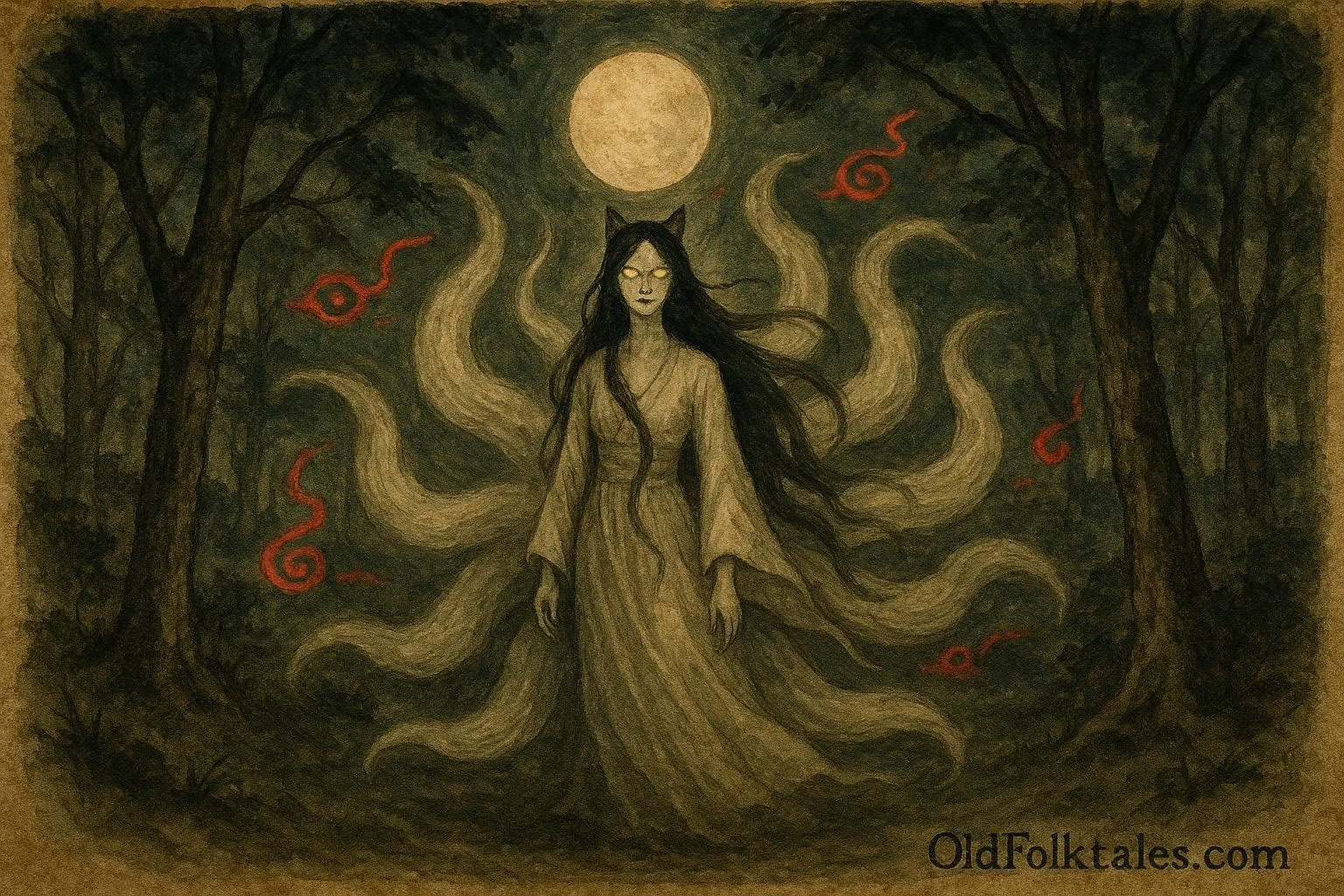
In her natural form, the Gumiho is a large fox, often strikingly beautiful even as an animal. Her nine tails fan out behind her like a feathery crown, soft at a distance yet razor-sharp in silhouette. Each tail represents centuries of spiritual development, magical ability, or accumulated power. Some tales say the number of tails corresponds to her age; others insist she must reach a thousand years of life before nine tails emerge.
Relive the heroic sagas of every age – stories of triumph, tragedy, and timeless valor
However, the Gumiho is most famous for her shapeshifting, especially into the form of a young woman of haunting beauty. Her skin is pale as moonlight, her movements fluid, and her voice melodic. But beneath this perfected disguise lies the animal hunger of the fox spirit. Many storytellers describe small signs that reveal her true nature:
-
A faint flick of invisible tails in firelight
-
The reflection of fox eyes in her pupils
-
A shadow that does not match her human form
-
A momentary glimpse of claws or fangs
In some literary retellings, she carries a fox marble or orb (yeowoo guseul), which contains her consciousness, magic, or the life force she steals from humans. To possess this orb, some stories say, grants the human temporary wisdom or visions, but it is extremely dangerous to attempt.
Powers
The Gumiho possesses a range of supernatural abilities, many linked to the ancient fox-spirit archetype:
1. Shapeshifting: The most iconic ability. She can become a woman, a child, a gust of wind, or even a corpse to lure victims.
2. Seductive Influence: Rather than hypnosis, her charm works through supernatural charisma, beauty enhanced by magic, and an uncanny ability to imitate genuine affection.
3. Consumption of Life Essence: In older tales, she feeds upon the heart, liver, or blood of humans. These organs symbolized vitality in Korean medicine and shamanism. Eating them strengthens her power or prolongs her life.
4. Enhanced Longevity and Intelligence: A thousand-year fox was believed to gain mystical awareness, prophetic insight, and profound cunning.
5. Limited Weather or Illusion Magic: Some variants describe her summoning mist, causing disorientation, or creating false environments.
Behavior
The Gumiho’s behavior changes across eras and regions. In older Joseon-era stories, she is overwhelmingly predatory, an embodiment of danger disguised as beauty, usually targeting young men. Yet even these tales often hint at loneliness, suggesting a being caught between worlds.
In modern interpretations, especially in contemporary Korean dramas and novels, the Gumiho seeks something nobler: to become human. This shift reflects cultural changes as well as older but less well-known folktales in which a Gumiho attempts to live morally.
Myths and Story Motifs
The Seducing Predator: Many tales follow a similar pattern: a man meets a mysterious, enchanting woman who lives alone or appears on a lonely road. She offers shelter or companionship. Days later, her victim is found pale, drained, or missing organs.
The Human-Seeking Gumiho: Some stories say she can become human if she refrains from killing or eating flesh for 100 days (or 1,000 days, depending on region). If she succeeds, she will lose her tails and become mortal.
But temptation, betrayal, or human cruelty often ruin her attempt, turning her once again into a predator. These stories carry Buddhist and Confucian undertones about self-restraint and the moral struggle for transformation.
The Fox Marble Exchange: A rare but dramatic motif: the Gumiho offers her fox orb to a human lover, either as a test or as a path to mutual transformation. But taking the orb without permission curses or kills the human.
The Cursed Bride: In some narratives, a man unknowingly marries a Gumiho. When he finally sees her true form, a glimpse of tails or a reflection, she either flees in sorrow or attacks in rage.
Cultural Role
The Gumiho sits at the philosophical intersection of desire, morality, danger, and transformation.
1. A Warning Against Deceptive Beauty: In traditional Korean morality tales, the Gumiho warns against lust, gullibility, and superficial judgment. Men who chase beauty blindly are punished.
2. A Symbol of Transformation: Although often portrayed as malevolent, she is not irrevocably evil. Her potential to become human symbolizes inner change, discipline, and spiritual evolution—core themes in Korean shamanistic and Confucian thought.
3. A Commentary on Femininity and Power: The Gumiho reflects historical anxieties about female agency, beauty, and sexuality in patriarchal contexts. Yet modern reinterpretations reclaim her as a figure of empowerment, nuance, and emotional depth.
4. A Nature Spirit Rooted in Animism: Her fox form ties her to ancient wilderness spirits, emphasizing respect for animals, mountains, and the unseen forces of the natural world.
Author’s Note
The Gumiho is a creature that refuses a simple moral label. She can be frightening, tragic, yearning, or fiercely alive. Her struggle to become human resonates with anyone who has ever tried to overcome their darker impulses or seek belonging in a world that mistrusts them. Writing her story is an exploration of the blurred boundaries between predator and victim, monster and human, desire and danger.
Knowledge Check (Q&A)
1. Q: How many years must a fox often live before becoming a Gumiho?
A: Commonly 1,000 years in Korean folklore.
2. Q: What is the Gumiho’s most famous supernatural ability?
A: Shapeshifting, especially into a beautiful woman.
3. Q: What human organs does she traditionally consume?
A: The heart or liver, symbolizing life essence.
4. Q: What does the Gumiho symbolize culturally?
A: Deceptive beauty, transformation, moral struggle, and agency.
5. Q: Can a Gumiho become human?
A: Yes, if she refrains from evil for a set period in some variants.
6. Q: What object may contain her magical essence?
A: The fox marble (yeowoo guseul).
Source: Adapted from Korean oral folklore, historical references (e.g., Samguk Yusa motifs), and contemporary academic summaries (Mythlok, Koreabridge).
Origin: Korea (ancient fox-spirit traditions with influence from East Asian fox mythology)