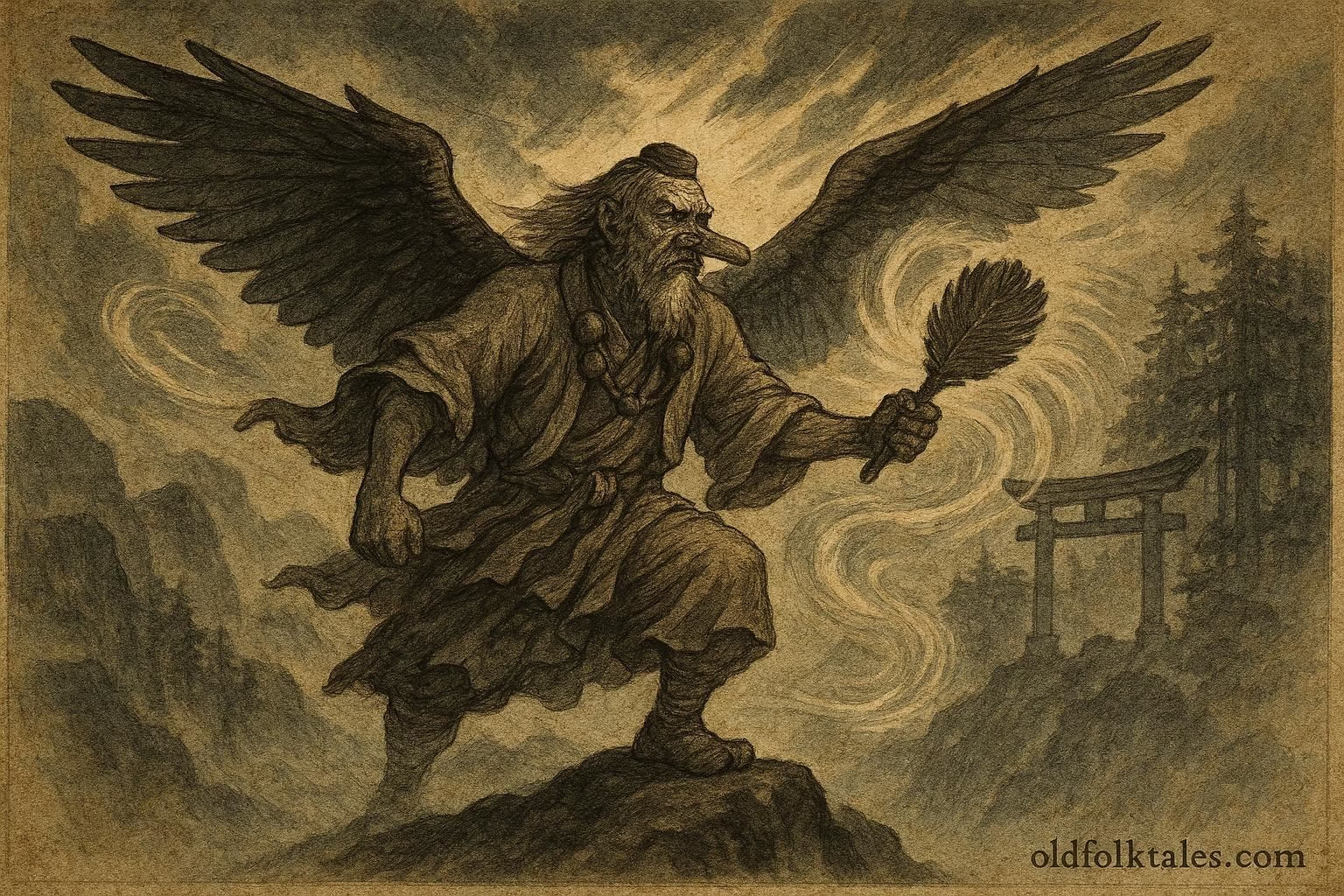
Among the most iconic spirits of Japanese folklore, Tengu (天狗) stand as complex, shape-shifting beings of the mountains, part guardian, part trickster, part ascetic spirit. Unlike many mythic creatures that retain a stable form, the Tengu shifts depending on historical period, religious context, and local tradition. The earliest records, such as the Nihon Shoki (720 CE), describe them as heavenly dog-like beings, ominous, comet-like omens of war or disaster. Over centuries, however, their imagery evolved into the two famous types recognizable today: the kotengu (bird-like, with wings, beak, and talons) and the daitengu (more human-like, often red-faced with an exaggeratedly long nose).
Physically, tengu are usually tall, broad-shouldered, and decorated in the clothing of yamabushi, the mountain ascetics of Japan’s syncretic Shugendō tradition. They wear conical tokin caps, white robes, or feathered mantles, and they carry a shakujo staff, a fan of feathers, or a short sword. The feather fan is particularly notable, as it is believed to have the power to summon windstorms, topple trees, or, depending on the tale, grant flight. Their wings vary in depiction: some have crow-like black wings, while others have radiant or stylized wings associated with Shinto kami.
Their abilities are diverse and often contradictory, reflecting their complicated role in Japanese religion. Tengu can fly, vanish, mimic voices, possess humans, or erode mental clarity. They have immense physical strength and frequently engage in martial arts, particularly with the sword or staff. It is said that a powerful tengu can move silently through dense mountain forests, cause sudden gusts of wind, or hypnotize travelers. At the same time, they are known as teachers of legendary warriors,the most famous being Minamoto no Yoshitsune, who, according to tale, trained under Sōjōbō, the Great Tengu of Mt. Kurama.
Behaviorally, tengu oscillate between mischief and wisdom. Some lure travelers off mountain paths with illusions; others steal monk’s robes, taunt arrogant priests, or teach painful lessons to the overly proud. Yet there are also village traditions where tengu protect sacred groves, warn inhabitants of disasters, or chase away malevolent spirits. In these contexts, they serve as mountain guardians, linked to ancient Shinto beliefs in nature-kami and the dangerous holiness of remote places.
In Buddhist writings of the medieval period, however, tengu were viewed more negatively, as corrupted monks who allowed pride, ego, and spiritual ambition to lead them astray. After death, such monks became tengu as punishment, fated to wander the mountains causing illusions and tormenting the living. This moralistic interpretation strongly influenced later depictions. Over time, villagers adopted both sides of this duality: the tengu as a punisher of arrogance and the tengu as a protector of the sincere.
A tengu’s origin also varies between stories. Some are fallen monks; others are transformed birds; others are ancient mountain spirits with no human origin. Their personalities differ just as widely: kotengu are often portrayed as wilder, less intelligent, and more feral, while daitengu are revered and feared as wise leaders capable of deep spiritual insight.
Because they inhabit sacred mountains, Tengus are deeply associated with untamed nature. They embody the unpredictable power of the high peaks, where storms arise suddenly, where travelers lose their path, and where spiritual enlightenment hinges on humility and perseverance. Historically, mountains were believed to be places where the living world meets the spirit world, and tengu guard this boundary. Temples built in mountain regions often have carvings or paintings of tengu watching from the trees or cloud banks.
In many Edo-era tales, tengu test humans. A proud warrior may lose to a tengu only to learn humility; a greedy monk may be kidnapped and dropped precariously on a mountain peak to teach restraint; a pure-hearted child may be spared and rewarded. Through these stories, tengu become moral agents, spirits whose trials ultimately guide or correct the human heart.
Despite their fearsome reputation, they are not mindless demons. They are intelligent, cunning, and knowledgeable in spiritual discipline. Their connection to yamabushi is particularly profound; some historians argue that the tengu represents the supernatural side of shugendō ascetic practice, embodying the mastery of nature, discipline, hardship, and the spiritual dangers of pride.
Thus, the tengu’s very form, half bird, half ascetic, symbolizes the meeting of the natural and spiritual worlds, representing both danger and enlightenment.
Cultural Role
In Japanese culture, Tengu symbolize:
- Humility vs. Arrogance: They warn against spiritual pride, ego, or self-importance, especially among monks, samurai, or leaders.
- The Sacredness and Peril of Nature: As mountain spirits, they represent the untamed, divine force of the forests and high peaks.
- Threshold Guardians: They guard liminal spaces, mountain passes, sacred groves, temple surroundings, where spiritual and human worlds overlap.
- Martial Discipline & Insight: Their association with warrior training emphasizes mastery, discipline, and mental clarity.
- Syncretic Religion: Tengu represent centuries of interaction between Shinto, Buddhism, and Shugendō, embodying the complexity of Japanese spirituality.
Explore the mysterious creatures of legend, from guardians of the sacred to bringers of chaos
Author’s Note
The Tengu is one of the richest figures in Japanese folklore because it refuses to be one thing. Its story is a reminder that spiritual power, like the mountains themselves, is both beautiful and dangerous. In studying the tengu, we see how Japan’s layered religious history, nature worship, Buddhist moralism, and ascetic tradition, melded into a single, enduring mythic spirit.
Knowledge Check (Q&A)
- Q: What are the two major types of tengu?
A: The bird-like kotengu and the human-like daitengu. - Q: Which legendary warrior is said to have trained under Sōjōbō?
A: Minamoto no Yoshitsune. - Q: What item do tengu often carry that can summon wind?
A: A feather fan. - Q: In Buddhist lore, what human flaw often turns monks into tengu?
A: Spiritual pride or arrogance. - Q: What environment do tengu primarily inhabit?
A: Mountains and deep forests. - Q: What moral theme do many tengu stories teach?
A: Humility and respect for sacred places.
Source: Summarized from historical Japanese texts (Nihon Shoki, Heike Monogatari), yamabushi folklore, and academic reference summaries.
Origin: Japan, earliest references in the 8th century, evolving through Heian, medieval Buddhist literature, and Edo-era iconography.