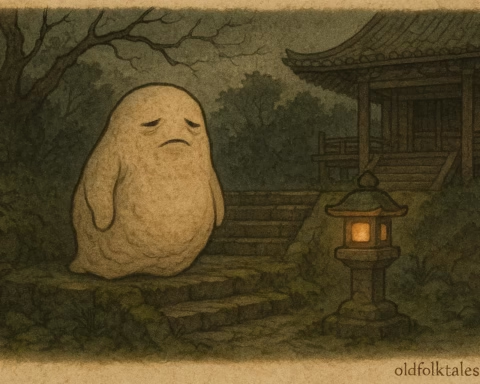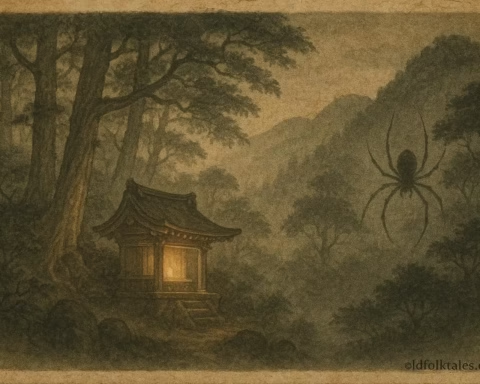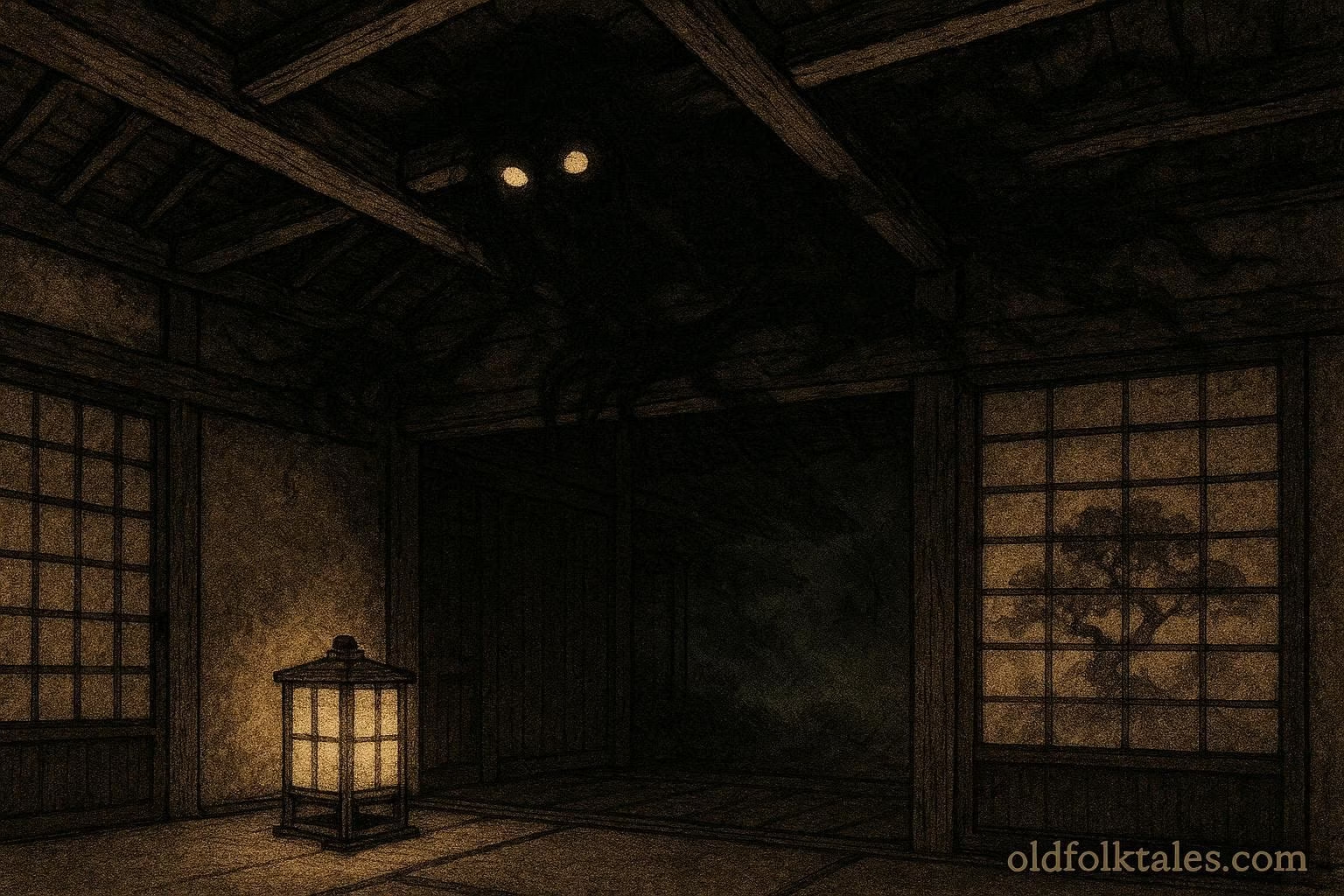
In the quiet homes of Edo period Japan, where night lamps flickered and shadows drifted across wooden floors, people whispered about a spirit that watched from above. It was called Shōkera, the Ceiling Creeper, a small but unsettling being that lurked in the rafters, gripping narrow beams with thin, wiry fingers. Its eyes glowed like tiny embers and peered down through cracks in the ceiling, waiting for the right moment to judge the household.
Unlike other spirits who haunted forests, rivers, or abandoned shrines, Shōkera chose the intimate spaces of family life. It slipped into homes without sound, curling itself among the beams as soon as twilight deepened. Some claimed it rode in with the evening breeze. Others believed it lived there already, dormant until a household’s discipline faltered. Its purpose was simple yet fearsome: to ensure families upheld ritual purity, cleanliness, and moral responsibility.
Every night, when families gathered to eat or prepare for sleep, Shōkera would observe. It watched how offerings were made at the kamidana shrine. It noted whether blessings were spoken with sincerity. It listened to the tone of conversations, seeking signs of disrespect or neglect. It even gauged the state of the home, for Shōkera believed that disorder of the living space reflected disorder of the spirit.
Learn the ancient stories behind deities of light, storm, and shadow from cultures across the world
One old tale from the village of Kurobe tells of a family who forgot their evening purification ritual for three nights in a row. The mother fell ill with a sudden fever. The children became restless, their dreams filled with scratching noises from above. On the fourth night, as the father trimmed the wick of the lamp, he noticed flakes of dust drifting from the ceiling. When he looked up, he saw a pair of glowing eyes staring down at him through a narrow crack.
Terrified, he gathered his family and performed the forgotten ritual with trembling hands. He apologized aloud, promising to restore discipline and honor in the household. The next morning the fever lifted, and the scratching stopped. Though Shōkera did not appear again, its presence had left a mark on the family’s memory.
Another story tells of a young apprentice who lived alone in a small attic room above a teahouse. He was known for his laziness, often falling asleep without tidying his tools or offering thanks to the household spirit. One night he woke to the sound of soft crawling just above his head. He opened his eyes and saw something shifting through the gaps in the rafters. A long face, thin as a withered leaf, stared down at him with unblinking eyes.
Frozen in fear, he watched as Shōkera slowly descended, its limbs bending at strange angles. It squatted on the floor and tapped its long finger against one of his neglected ritual tools. The apprentice understood instantly. Gathering his courage, he sat up, bowed, and confessed his neglect. Shōkera vanished without a sound, leaving only the faint smell of old wood behind. From that day, he became one of the most disciplined workers in the teahouse.
The presence of Shōkera was not always threatening. Some believed it acted as a guardian, encouraging families to live with order, gratitude, and spiritual clarity. When a household followed its rituals carefully, Shōkera remained still and silent, offering protection from misfortune. It was said that such homes felt unusually calm at night, as though the beams themselves hummed with approval.
Yet homes that grew careless or chaotic often experienced the opposite. Misplaced objects, strange drafts, unexplained illnesses, or sudden accidents were all considered signs that Shōkera had stirred. People believed the Ceiling Creeper did not punish out of malice but out of duty, correcting households that drifted away from harmony.
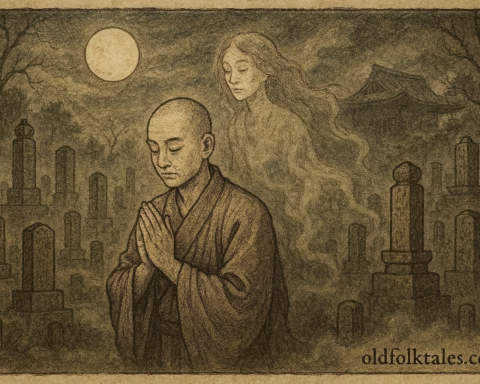
In one famous account, a wandering monk visited a home where the occupants had been suffering misfortune for months. Tools broke without reason, food spoiled faster than usual, and children complained of soft footsteps above them at night. The monk entered the main room, kneeled on the tatami mats, and looked up. After several long moments of silence, he nodded and said, “You have forgotten your balance. Someone watches and waits.”
Under the monk’s guidance, the family restored their rituals, cleaned every room carefully, and offered rice and incense at their household shrine. That night, the footsteps ceased. The children slept peacefully for the first time in weeks. Though no one saw Shōkera leave, they felt the relief like a warm breeze passing through the home.
Today, the legend of Shōkera survives as a reminder of mindfulness within daily life. It teaches that order and ritual are not empty habits but anchors that keep a home steady. Whether one believes in the Ceiling Creeper or not, its lesson endures: neglect invites disorder, while discipline brings harmony.
And so, in houses across Japan, people still tell stories of the spirit in the rafters. When the night grows still and the shadows lengthen, a few parents even tap the ceiling gently, reminding children to finish their tasks with care. “Do not let Shōkera peer down on you tonight,” they say with a knowing smile. But beneath the smile lies an ancient truth, whispered throughout generations: someone is always watching, especially when we forget to watch ourselves.
Author’s Note
The legend of Shōkera highlights a universal human value: the practice of mindful living. Whether through daily rituals, tidiness, or gratitude, the discipline of the home reflects the discipline of the spirit. This story preserves the idea that harmony begins with small daily acts.
Knowledge Check
1. What is Shōkera’s role in the household?
It watches from the rafters to enforce ritual purity and discipline.
2. How does Shōkera punish neglectful families?
Through misfortune such as sickness, strange noises, or accidents.
3. What causes Shōkera to appear more actively?
Neglect of rituals, disorder, or disrespect within the home.
4. How did the family in Kurobe appease Shōkera?
By performing their purification ritual and restoring discipline.
5. What did the apprentice learn from encountering Shōkera?
The importance of responsibility and maintaining spiritual order.
6. How can homes avoid Shōkera’s influence?
By practicing mindfulness, gratitude, and daily ritual discipline.
Source
Adapted from Edo Period Ghost Compendiums such as the Gazu Hyakki Yagyō by Toriyama Sekien
Cultural Origin
Japanese Peoples, Japan